TCPA Rules for Buying Real Estate Leads in 2026

TCPA rules for buying real estate leads govern how you can call, text, and leave messages for a seller whose contact information you purchased instead of generated yourself.
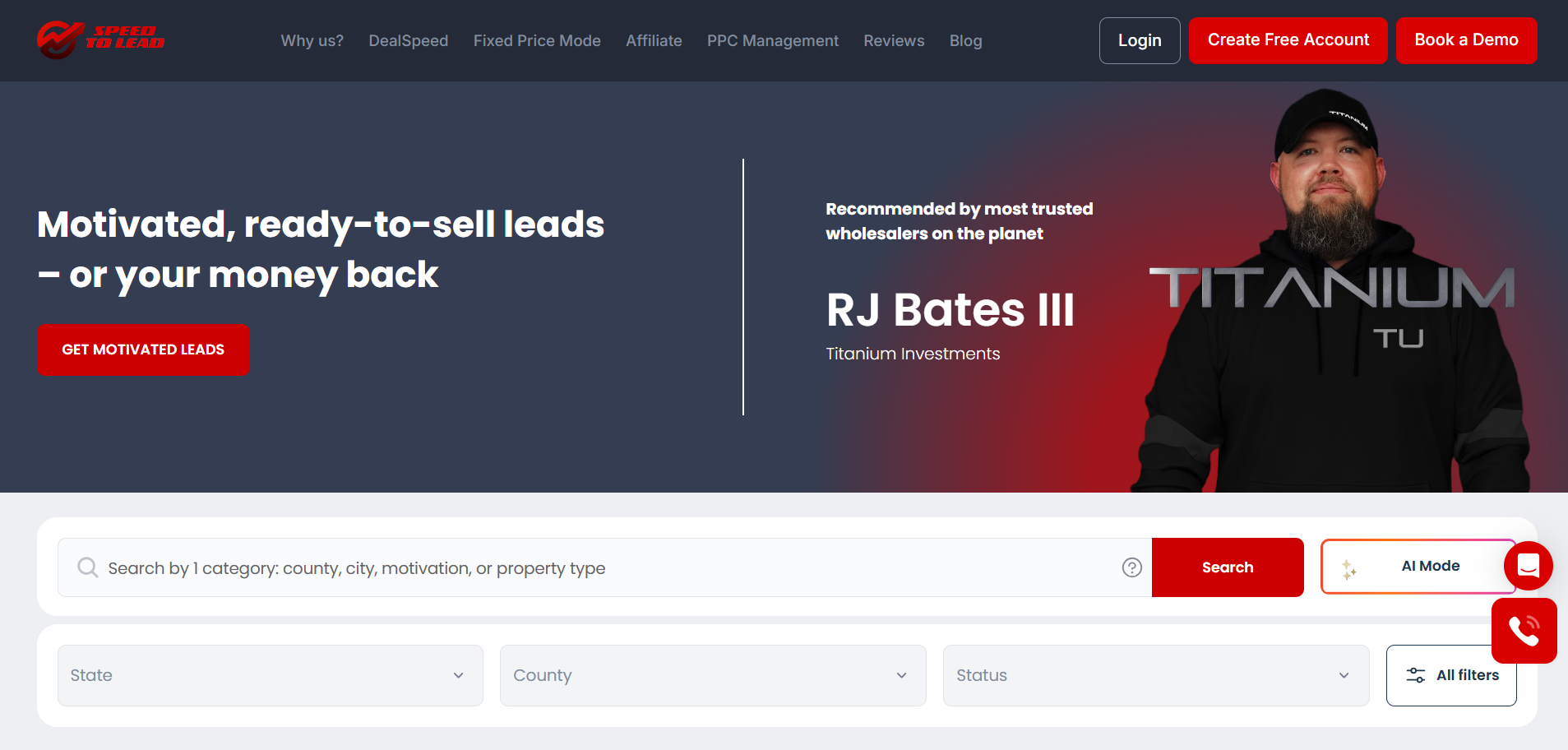
iSpeedToLead is the motivated seller lead marketplace built for investors who want full visibility into a lead’s origin, verification status, and score before they ever dial.
That visibility matters more in 2026 than it did two years ago, because the federal consent rules were rewritten, partly struck down in court, and then quietly replaced by a patchwork of state statutes.
This article breaks down what actually applies today, what the courts changed, and how to vet a lead source so you are not inheriting somebody else’s compliance problem.
One note before we start: this is an operational guide, not legal advice. Run your final calling and consent workflows past a TCPA attorney who knows your states.
The TCPA does not regulate whether you can buy a lead. It regulates what happens in the sixty seconds after you buy it.
That distinction trips up most investors. The purchase is a data transaction. The call is a regulated communication, and the person making the call, you, carries the obligation.
Three things follow from that:
Statutory damages run $500 to $1,500 per call or text, and because they stack per attempt, a single bad campaign scales into six figures faster than most acquisition budgets scale into deals.
Here’s the point most compliance content misses: your real exposure is created upstream, at the moment the lead was generated, not downstream in your dialer settings.
Three federal developments reshaped the landscape, and only one of them made life harder for lead buyers.
The FCC’s 2023 order would have required a consumer to consent to one named seller at a time, closing what the agency called the lead generator loophole. It never took effect. On January 24, 2025, the Eleventh Circuit vacated the rule in Insurance Marketing Coalition v. FCC, finding the agency had exceeded its statutory authority, and the FCC later deleted the vacated language and reinstated the prior version of the rules.
So the pre-2023 standard for prior express written consent governs federally in 2026. That is a reprieve, not a green light, and the concept could return in narrower form.
The consent revocation rules that took effect in April 2025 are the ones that bite day to day. A consumer can revoke consent in any reasonable manner that clearly expresses the desire to stop receiving calls or texts, and words like stop, quit, end, revoke, opt out, cancel, and unsubscribe are per se reasonable, with no requirement that the consumer use those specific terms.
The broader “revoke-all” requirement, which treats one opt-out as applying to all future messages from that caller, has been delayed twice. On January 6, 2026, the FCC extended its effective date to January 31, 2027 while the agency reviews comments on whether the rule should be modified.
Practically: honor every opt-out, in whatever form it arrives, and log it.
On June 20, 2025, the Supreme Court held in McLaughlin Chiropractic Associates v. McKesson that federal district courts must independently interpret the TCPA and are generally not bound by FCC interpretive rulings. Long-settled FCC positions are now arguable in either direction.
For investors, that means less certainty, not more freedom. Two courts can now reach two answers on the same practice.
Federal compliance is no longer the finish line. It is roughly half the work.
More than 15 states now enforce their own mini-TCPA statutes, many with broader autodialer definitions, stricter consent rules, and steeper penalties than the federal statute. Texas amended its rules effective September 1, 2025, and Florida and Oklahoma continue to enforce consent standards under their own statutes regardless of what happened to the federal one-to-one rule.
Two specifics that catch wholesalers:
Between January 1 and November 30, 2025, 2,588 TCPA lawsuits were filed, a 0.4% decrease from 2024, and Goodwin expects state-level mini-TCPA litigation to increase in 2026 as more states pass TCPA-style protections.
Flat federal filings plus rising state filings is not a quiet market. It is a market where the venue moved.
The vetting question is not “are your leads TCPA compliant.” Every vendor says yes. The question is whether they can tell you where each specific lead came from.
A lead that arrived through a homeowner’s Google search is a different compliance object than a lead that arrived through outbound dialing. If your vendor cannot tell you which one you just bought, you cannot apply the right standard to the call.
iSpeedToLead sources through six channels: cold calling, Google PPC, Facebook and Meta paid social, YouTube and TikTok, email outreach, and SEO. Source attribution is displayed per lead inside MyCRM, alongside the verification data and score.
Bad data is a compliance issue, not just a productivity one. Reassigned and invalid numbers are a recurring source of claims from callers who believed they had consent from a different person entirely.
Every lead on the platform runs through triple verification against 50 billion data points, and 97.5% of published leads carry a verified property address, with 85% or more matching public property records.
Do not outsource this to assumption. Maintain your own internal Do Not Call list, check the National DNC Registry, and check the state registries in every market you dial.
Document the scrub with timestamps. In litigation, the audit trail is the defense.
If a seller says stop on a call and your texting platform never hears about it, you have a documented violation waiting. Opt-outs need to propagate across every channel you use on that record.
MyCRM logs status, notes, calls, and messages against a single lead record, which is the structure that makes revocation enforceable across your team instead of trapped in one rep’s phone.
Automated multi-channel outreach raises the consent standard, not lowers it. iSpeedToLead’s AI Follow-Up System runs sequences across SMS, email, calls, and voicemail, targeting response rates above 15% and conversion rates above 5%, and it is genuinely effective at keeping pipeline warm.
It is also your outreach, under your name, subject to your consent posture. Configure it with your counsel’s input before you point it at a state you have never dialed.

Four realistic options, each with a different risk profile:
The marketplace model is the only one of the four where you can evaluate provenance on a lead-by-lead basis. That is the structural argument for it in a year when provenance is the whole compliance question.
Jerry Norton of Flipping Mastery frames the acquisition side plainly:
“Pay-per-lead is one of the hottest, most popular marketing channels in wholesale real estate today.”
The platform serves more than 12,000 active investors across 48 contiguous states, and every lead is sourced, verified, and scored before it reaches the live lead marketplace.
Four things matter specifically for compliance-conscious buyers:
Fewer dials against better-qualified records is a compliance strategy as much as a productivity one. Misty Arellano spent under $2,000 on the platform and landed three contracts, two of them novations listed on MLS. Dallas Turley closed $60K across four deals.
Now the honest part. No lead source, including this one, transfers consent to you or makes you compliant by association.
You are the caller. You own the DNC scrub, the calling hours, the opt-out handling, and the state-by-state analysis. What a marketplace can do is give you the provenance and the documentation to make those decisions from facts instead of guesses, which is exactly what most list-based workflows cannot do.
Start with one market and one channel. Prove the workflow, then widen it.
TCPA compliance in 2026 is a sourcing decision before it is a dialing decision, and the investors who understand that are the ones buying leads they can actually document.
iSpeedToLead was built so that the lead’s origin, verification, and score are all visible before money moves, which is the information a compliance-minded acquisition process runs on.
Book a demo to see the source attribution, verification data, and DealPredictor scoring on live leads in your target market.
Read Next:
Yes. The TCPA applies to real estate investors who buy leads, because the obligation attaches to whoever places the call or sends the text, not to whoever generated the record. Purchasing a lead transfers the data, not the seller’s consent to hear from you.
The FCC’s one-to-one consent rule is not in effect in 2026. The Eleventh Circuit vacated it on January 24, 2025 in Insurance Marketing Coalition v. FCC, and the pre-2023 prior express written consent standard governs federally, though several states enforce stricter consent rules of their own.
iSpeedToLead helps investors manage lead compliance risk by attaching source attribution, triple verification data, and a DealPredictor score to every lead before purchase. Roughly 40% of incoming leads are filtered out before publication, and MyCRM keeps communication history and status on a single record.
Purchased leads are not automatically riskier under the TCPA than self-generated leads, but they are harder to document if the vendor cannot tell you the channel and context each lead came from. That is why per-lead source attribution matters more than any vendor’s blanket compliance claim.
TCPA violations cost real estate investors $500 to $1,500 per call or text in statutory damages, assessed per attempt, which is how one non-compliant campaign becomes a five or six figure exposure. State mini-TCPA statutes can add separate penalties on top.

October 19, 2026

October 15, 2026

October 14, 2026
October 12, 2026

October 10, 2026
October 9, 2026

October 8, 2026

October 7, 2026

October 6, 2026
Select the type of leads you're interested in.

