Is Wholesaling Real Estate Legal, and Do I Need a License to Do It in 2026?
Wholesaling real estate is the practice of putting a property under contract and assigning that contract to another buyer for a fee, and yes, it’s legal in all 50 states in 2026.
iSpeedToLead, the largest motivated seller leads marketplace in the US, sees the paperwork side of that answer at scale: its buyers sign more than 1,000 contracts every month (1,028 in July 2026).
Whether you need a license depends on the state. As of October 2026, 22 states have a law written specifically for wholesaling, and eight of them have license requirements in effect. This article answers both questions, then covers what you have to disclose, when a seller can cancel, and how to build all of it into your acquisition process.
This article is general information, not legal advice. Statutes change, so confirm the rules with a real estate attorney licensed in the state where the property sits.
Yes. No state has banned wholesaling outright. But legal doesn’t mean unregulated.
When you sign a purchase contract, you own the right to buy the property, called an equitable interest, and not the property itself. States regulate how you market and transfer that right.
Here’s the problem. Most wholesalers who get into trouble didn’t break a “wholesaling ban.” They crossed one of three lines:
Every new law since 2023 targets the same problem: sellers who didn’t understand they were signing with someone who planned to resell the contract. That means the legal question in 2026 is less “Can I wholesale here?” and more “Did the seller get the right document at the right time?”
You wholesale legally by answering four questions for every deal. Check them against the property’s state, not your own, because the rules of the state where the property sits are the ones that apply.
In most states, no. Eight states have license requirements in effect: Illinois, Iowa, Kentucky, Nebraska, Oklahoma, Pennsylvania, South Carolina, and Virginia. Rhode Island joins on January 1, 2027, and Delaware on February 26, 2027.
The trigger is different in almost every one.
| State | What triggers the license rule |
|---|---|
| Illinois, Virginia | Two or more contract deals in 12 months requires a broker license |
| Kentucky, Nebraska | Publicly advertising an equitable interest requires a license |
| Pennsylvania | License required under Act 52 of 2024, plus a 30-day seller cancellation right |
| Iowa | You must be licensed or represented by a broker |
| Oklahoma | License to market deals, plus disclosure and a 2-business-day cancellation right |
| South Carolina | Marketing the property before you hold title is brokerage; assigning the contract isn’t |
The penalties are specific. Iowa’s fine runs up to $10,000 or 10% of the sale price, whichever is greater, per property.
If you plan more than one deal a year in Illinois or Virginia, get licensed or work with a broker.
Two states do. Connecticut and Oregon don’t require a real estate license, but you do have to register with the state and follow set deal rules.
One detail catches licensed agents off guard. A Connecticut real estate license doesn’t exempt you from registering.
You have to tell the seller, in writing, that you’re a wholesaler and that you may assign the contract. Disclosure states let anyone wholesale as long as that notice is given. The format and timing are where deals break.
A generic form won’t always protect you. Ohio’s disclosure has to substantially follow the form written into the statute.
Novation isn’t a workaround, either. Ohio and Missouri both define a wholesaler to include anyone who novates the contract.
In many states, yes. Fourteen of the 22 states with wholesaling laws give the seller a cancellation or rescission right. Some windows are fixed, and some stay open until closing if your paperwork was missing.
| State | Seller’s right to cancel |
|---|---|
| Oklahoma | 2 business days |
| Connecticut, Oregon | 3 business days |
| Louisiana | 5 calendar days |
| Delaware | 21 calendar days |
| Pennsylvania | Until midnight of the 30th day after signing |
| Ohio, Arizona | Any time before closing if the disclosure is missing |
Don’t lock in your end buyer’s closing date until the window has run. For the complete 50-state breakdown, see iSpeedToLead’s guide to wholesaling laws by state.
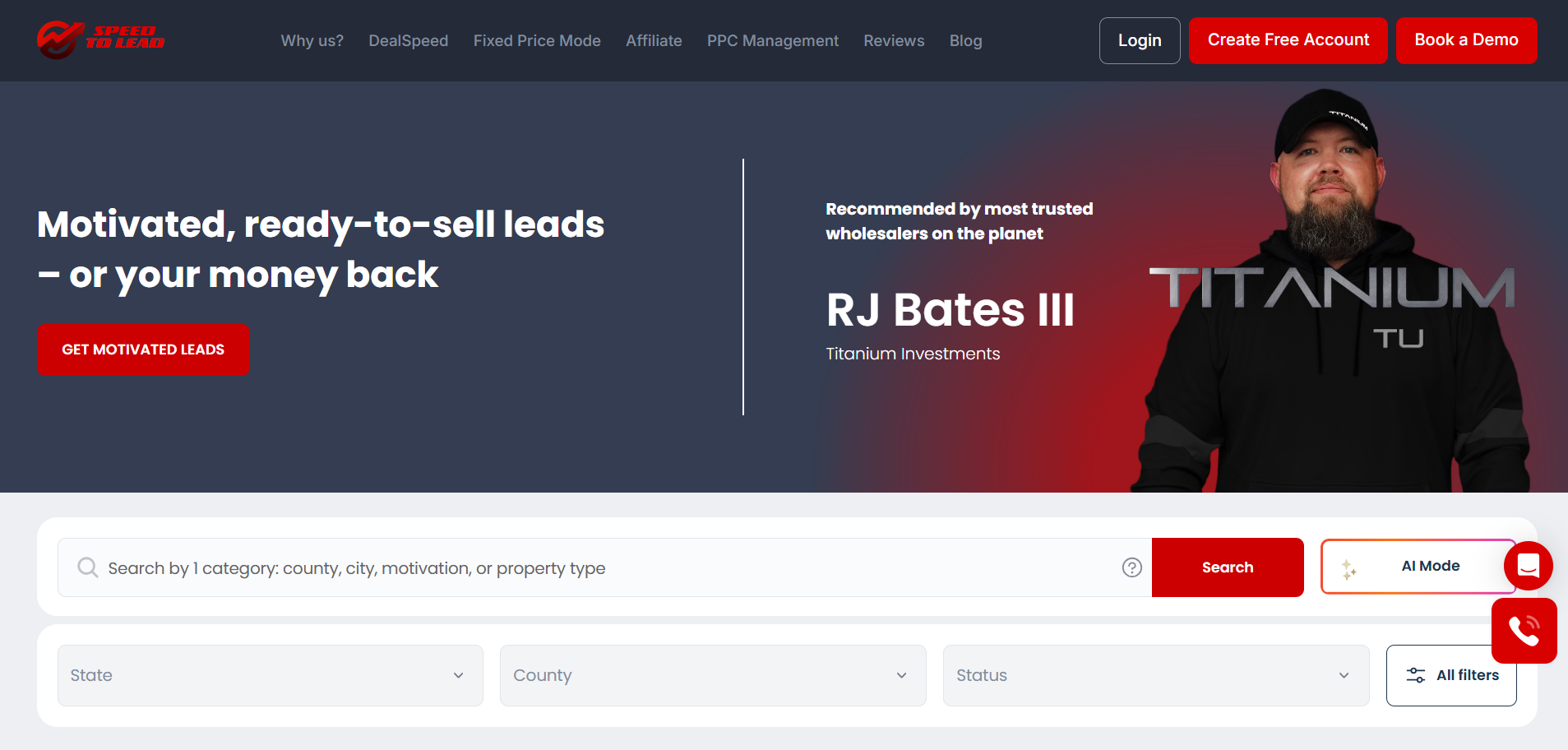
Yes, buying motivated seller leads is legal, because wholesaling laws regulate what happens after you reach the seller, not the purchase of the lead. But how you source sellers decides how many compliance tracks you’re running.
Every one of these channels can produce a legal deal. The difference is how much of your week goes to generating the conversation versus documenting it correctly.
“You could literally be a million-dollar producer and be a one-person show in this business. But you’ve got to have a really simplified, really dialed-in lead generating process, iSpeedToLead can be that for you.”
Jerry Norton, Flipping Mastery / Joe Home Buyer
A one-person operation can stay compliant. It can’t do it while also running a call center and tracking 22 sets of state rules from memory.
iSpeedToLead’s marketplace helps by giving you control over where you buy and a record of what happened next. It doesn’t supply legal forms or legal advice. More than 16,000 investors have bought leads on the platform.
Here’s why that matters. Over the last 12 months, the cost per signed contract on the platform was about $2,300 overall. A seller who cancels over a missing form takes that spend with them.
Clean paperwork and creative exits can sit in the same deal. Misty Arellano spent under $2,000 on leads and landed three contracts, two of them novations listed on the MLS. Dallas Turley closed $60K across four deals.
iSpeedToLead’s take: use a signed, pre-contract disclosure in every state, including the ones that don’t require it yet. Bills in North Carolina, Michigan, New Jersey, California, and Alabama all moved in 2025 or 2026, so expect the list of regulated states to grow in 2027.
The downside is real. Waiting periods and cancellation rights mean some sellers will change their minds, and no workflow removes that risk. This approach also doesn’t fit investors who want to sign on the first call in Missouri; the law doesn’t allow it.
You get started by setting up your compliance process first, then buying your first lead.
Disclosure rules don’t stop a motivated seller from selling. They stop deals where the seller didn’t understand the terms.

iSpeedToLead gives investors a way to choose their markets lead by lead, which is the control a 22-state patchwork of rules now requires. Wholesaling real estate is legal in 2026, and most states don’t require a license. The answer still comes with conditions: a license in eight states, a registration in two, and a disclosure before the contract in a growing number.
Get the paperwork right once, and every new state law becomes a small adjustment instead of a rebuild.
Book a demo to see how investors set up state-by-state lead buying around the rules in each market.
Read Next:
Yes, wholesaling real estate is legal in all 50 states in 2026, and no state bans it outright. Twenty-two states regulate it with licensing, registration, or disclosure laws.
iSpeedToLead helps wholesalers stay compliant with state rules by showing each lead’s location before purchase and letting AutoMatch target specific states or counties. MyCRM notes and reminders give you a place to log disclosure dates and cancellation deadlines.
A disclosure state is different from a license state because anyone can wholesale there without a license, as long as the seller gets the required written notice. A license state treats some or all wholesaling as real estate brokerage.
Yes, you can wholesale real estate if you already have a real estate license in most states, but the license doesn’t replace the disclosure rules. In Connecticut, licensed agents still have to register as wholesalers.
It costs from $39 for Sale leads and $199 for Exclusive leads at member pricing to buy motivated seller leads on iSpeedToLead, and LeadFeed is pay per lead with no membership. New buyers can use the code GET90 for 90% off their first lead.
November 11, 2026
November 9, 2026
November 6, 2026
November 4, 2026
November 2, 2026
October 30, 2026
October 28, 2026
October 26, 2026
October 23, 2026
Select the type of leads you're interested in.

