Follow-Up Cadence for Motivated Seller Leads: Attempts, Channels, and Timing

A follow-up cadence for motivated seller leads is the planned sequence of contact attempts, channels, and intervals an investor runs after acquiring a lead.
iSpeedToLead is built on the assumption that cadence, not lead volume, is what turns a purchased lead into a signed contract, which is why every lead lands in MyCRM with an AI-generated call strategy attached before the first dial.
The platform’s median time from lead purchase to close is roughly 73 days, and about 36% of all off-market deals close between Day 61 and Day 90.
This article breaks down how many attempts a cadence actually needs, which channels to stack in what order, and the timing windows where most investors quit right before the deal ripens.
Most investors treat “follow-up” as a synonym for calling again. That framing is why so many pipelines look busy and close nothing.
A real cadence has three separate variables, and changing one without the others does very little:
What a cadence is not: a daily call to the same unanswered number for two weeks. That is volume, not sequence, and it burns the lead’s willingness to pick up when the situation finally shifts.
The distinction matters because seller behavior is not linear. As Jerry Norton puts it:
“Our job isn’t to create motivation, it’s to uncover motivation.”
— Jerry Norton, Flipping Mastery
Uncovering takes time, because the circumstance driving the sale usually gets worse before the seller acts.
Here is the uncomfortable part. Almost nothing closes in the window where investors spend the most energy.
Distribution of when off-market deals close after a lead is generated:
| Window | Share of deals |
|---|---|
| Day 0–7 | ~1% |
| Day 8–30 | ~5% |
| Day 31–60 | ~15% |
| Day 61–90 | ~36% |
| Day 91–120 | ~14% |
| Day 121–180 | ~27% |
Roughly 80% of deals close between Day 31 and Day 180. Only about one in twenty closes inside the first month.
Flip that into what quitting costs you:
Most investors stop between Day 14 and Day 30. That is precisely when the seller is in the phase where nothing has been decided yet.
The practical takeaway is blunt: a cadence that ends at 30 days is a cadence designed to lose.

The cadence below is structured around three phases of seller behavior, not around an arbitrary touch count.
Speed still matters at the front end. The seller filled out a form or took a call at the peak of discomfort, and the first 72 hours are the only window where they are reliably reachable and compliant.
A workable attempt structure:
That is roughly 30 to 35 touches over six months, which sounds aggressive until you compare it to the alternative of 12 calls in nine days and then silence.
Sometimes the front end is all it takes:
“I just hopped on iSpeedToLead and I dialed three people. I bought three leads, dialed three people, and the first one that answered is a contract. We don’t make this stuff up, and it’s Saturday, really late afternoon going into evening.”
— Cassandra Deas, Titanium Investments
Build the cadence for the long tail anyway, because Cassandra’s outcome is the 1%, not the median.
Four calls from the same unknown number is one channel used four times. It is not four attempts in any meaningful sense.
Stack channels so each touch has a different shape:
iSpeedToLead’s AI Follow-Up System runs sequences across all four, with targets of response rates above 15% and conversion rates above 5%. That matters most on cold call leads, which typically need more touches than an inbound Google PPC lead that arrived mid-search.
One rule for every channel: log it. Untracked follow-up becomes guessed follow-up within about ten leads.
The Day 61 to Day 90 peak is not random. It maps to how a homeowner processes selling below market.
A seller who tried retail and failed is about 4× more likely to accept a discounted offer than a fresh contact. Your Day 60 message should sound nothing like your Day 1 message, because the person receiving it is in a different situation.
Cadence failures are almost always operational, not motivational. Investors don’t lack persistence; they lack a system that remembers.
The four common breakpoints:
That last one is worth pricing out. If 40% of your list is unreachable or already under contract, 40% of your cadence capacity is spent on nothing.
Here is where the position gets uncomfortable for a lead marketplace to state plainly: buying better leads does not shorten the cadence. It shortens the wasted portion of it.
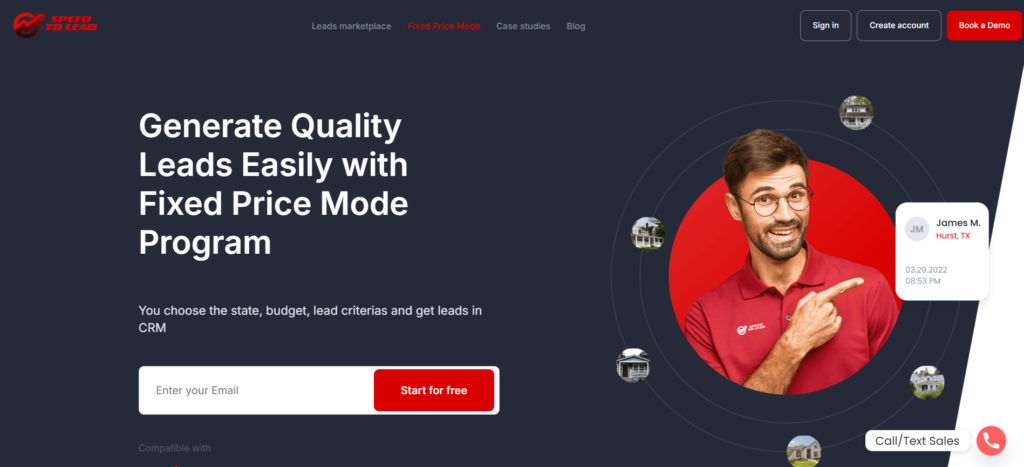
The strongest cadence in the world still needs leads worth running it on. A few structural reasons the platform holds up over a 90-day sequence:
Investors like Dallas Turley have closed $60K across four deals from the marketplace, and Misty Arellano spent under $2,000 and landed three contracts, two of them novations listed on MLS. Neither result comes from a two-week cadence.
When the contract does come in, DealSpeed hands you 6 million+ active buyers and 200,000+ agents to compress the dispo side.
If you want to test a real cadence rather than theorize about one:
Start with a batch you can genuinely work for six months. Ten leads followed properly beat fifty leads abandoned on Day 12.

Follow-up cadence is the highest-leverage variable in a motivated seller pipeline, and it is the one most investors underbuild.
The data is consistent: roughly 80% of off-market deals close between Day 31 and Day 180, with the peak at Day 61 to Day 90, which means the deciding factor is whether you are still there when the seller’s alternatives run out.
The platform’s job is to make sure the leads you spend six months on are worth six months.
Book a demo to see how DealPredictor scoring and MyCRM support a full-length follow-up sequence in your market.
Read Next:
Motivated seller leads typically need 30 to 35 attempts spread across six months, front-loaded in the first 72 hours and then tapering to weekly and bi-weekly touches. Stopping at Day 30 forfeits roughly 94% of the deals that lead would eventually produce.
The best follow-up cadence for motivated seller leads is phase-based: heavy contact on Days 0 to 3, two weekly touches through Day 14, weekly through Day 90, then bi-weekly to Day 180. The cadence should change message and channel as the seller moves from initial urgency to a failed retail attempt.
Phone works best in the first 72 hours, SMS performs strongest on later touches, and email carries the Day 31 to Day 180 stretch. iSpeedToLead’s AI Follow-Up System runs all four channels including voicemail, targeting response rates above 15%.
Yes. iSpeedToLead helps with follow-up after purchase by delivering every lead into MyCRM with status tracking, reminders, communication history, and an AI-generated call script built from that seller’s motivation signals.
Most wholesale deals take so long to close because sellers need time to exhaust their alternatives, with about 36% of off-market deals closing between Day 61 and Day 90 and a median of roughly 73 days from lead purchase to close.

October 19, 2026

October 15, 2026

October 14, 2026
October 12, 2026

October 10, 2026
October 9, 2026

October 8, 2026
October 7, 2026

October 6, 2026
Select the type of leads you're interested in.

