Pay-Per-Lead Marketplaces vs List-Building Tools for Motivated Sellers
Pay-per-lead marketplaces and list-building tools are the two dominant ways real estate investors source motivated sellers, and they solve completely different halves of the acquisition problem.
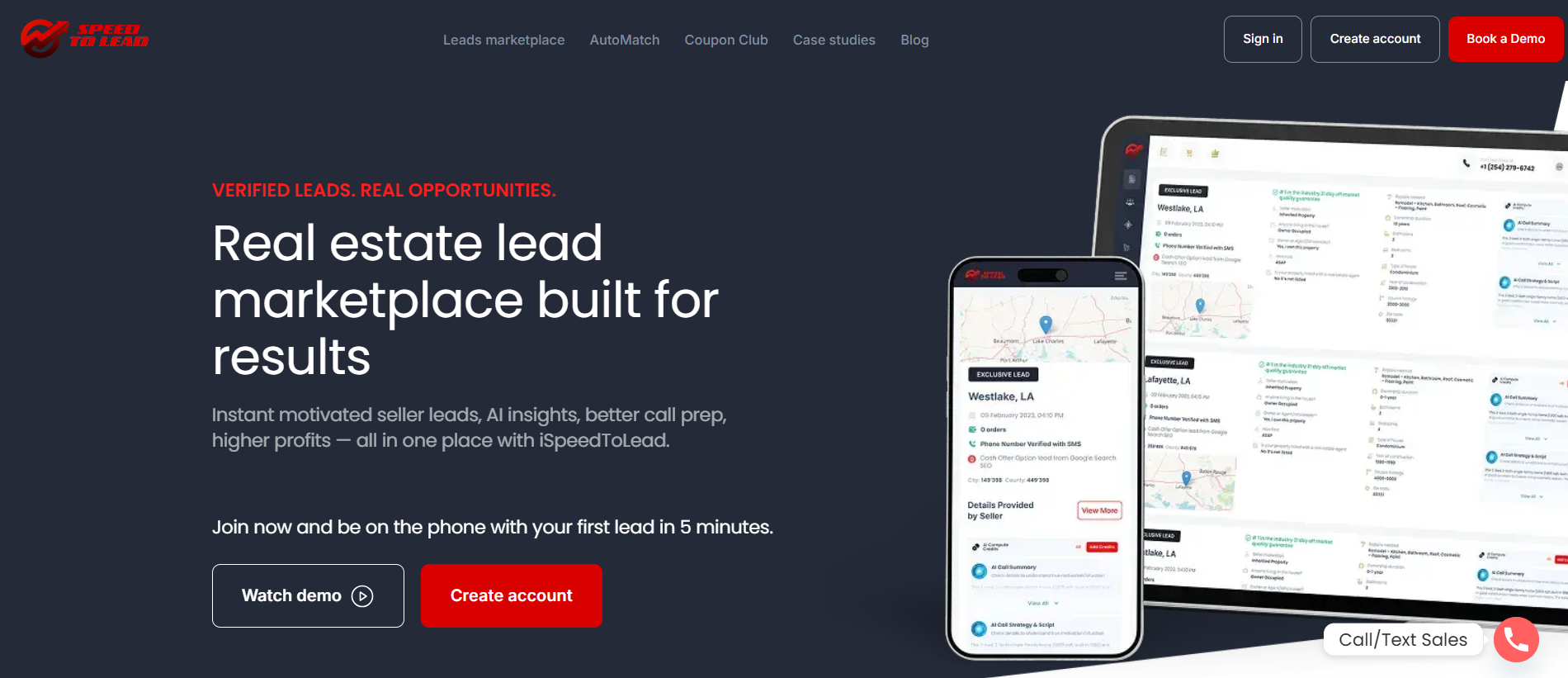
iSpeedToLead is the pay-per-lead marketplace built specifically for wholesalers, flippers, and buy-and-hold investors, where every lead is verified and AI-scored before an investor ever sees it.
The distinction matters because list-building tools deliver property records, while a marketplace delivers property owners who have already raised their hand. Roughly 40% of incoming leads are filtered out of the iSpeedToLead marketplace before publication, which is filtering work a list-building subscription leaves entirely to you.
This article compares both models across sourcing, verification, cost, speed to contact, and closing potential, and shows which one fits which type of investor.
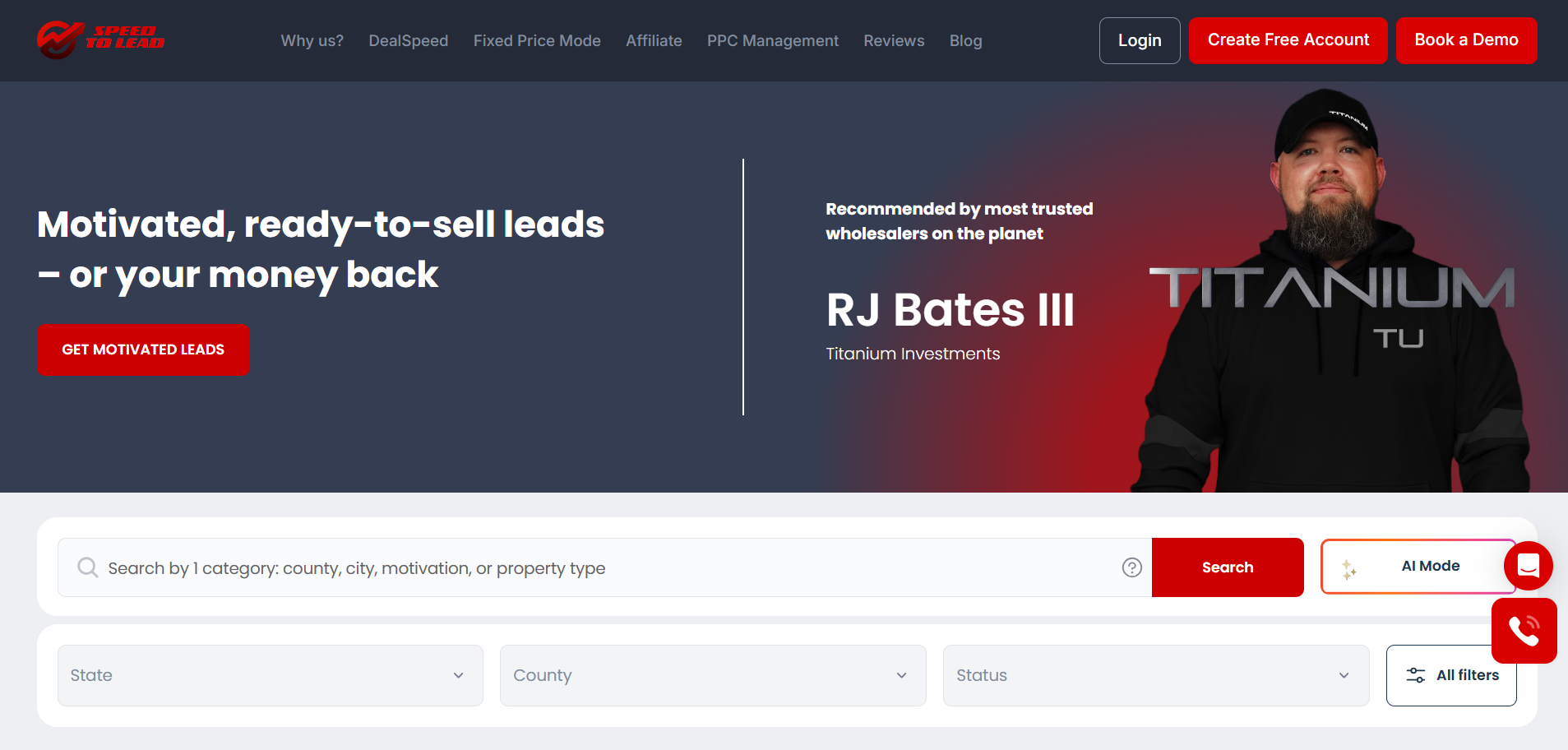
A pay-per-lead marketplace is a platform where investors browse individual motivated seller leads, review the seller’s situation, and pay only for the specific leads they choose to buy. There is no list to skip trace, no dialer campaign to staff, and no monthly data subscription to justify.
iSpeedToLead operates this model across 48 contiguous U.S. states and serves more than 12,000 active investors. Leads arrive from six channels, pass through verification, receive a DealPredictor score, and then publish into the live feed where investors preview and decide.
The economic difference is simple. You are not buying the chance to find a motivated seller. You are buying a seller who has already been contacted, qualified, and scored.
Leads come from cold calling, Google PPC, Facebook and Meta paid social, YouTube and TikTok, email outreach, and SEO. Every lead, regardless of channel, runs through the same three-layer pipeline.
Cold call leads are worth calling out here, since iSpeedToLead runs its own call campaigns. Those conversations are qualified and scored through the same pipeline, which is a different product from a raw skip-traced list where industry conversion sits around 0.5% to 2%.
“Pay-per-lead is one of the hottest, most popular marketing channels in wholesale real estate today.”
— Jerry Norton, Flipping Mastery / Joe Home Buyer
List-building tools are property data platforms. You filter public and aggregated records by criteria like equity, absentee ownership, tax delinquency, pre-foreclosure status, or vacancy, then export a list of owners to contact.
Platforms in this category, including PropStream, BatchLeads, DealMachine, and REISift, are genuinely good at what they do. Nationwide record coverage, comp data, driving-for-dollars capture, and list stacking are real capabilities, and the best operators in the industry run serious volume through them.
The important thing to understand is where the work sits. A list-building tool hands you a hypothesis about who might sell. Turning that hypothesis into a conversation is your job.
These platforms aggregate county records, MLS feeds, tax data, and third-party data vendors. The data describes the property and the owner, not the owner’s current intent.
That distinction shows up on the phone. A list can tell you a home is owned free and clear by an out-of-state landlord. It cannot tell you whether that landlord has decided to sell this quarter.
Jerry Norton frames the underlying reality well:
“Our job isn’t to create motivation, it’s to uncover motivation.”
— Jerry Norton, Flipping Mastery / Joe Home Buyer
List-building tools remain a legitimate and often necessary part of the stack. They are just measured on a different unit of output than a marketplace is.
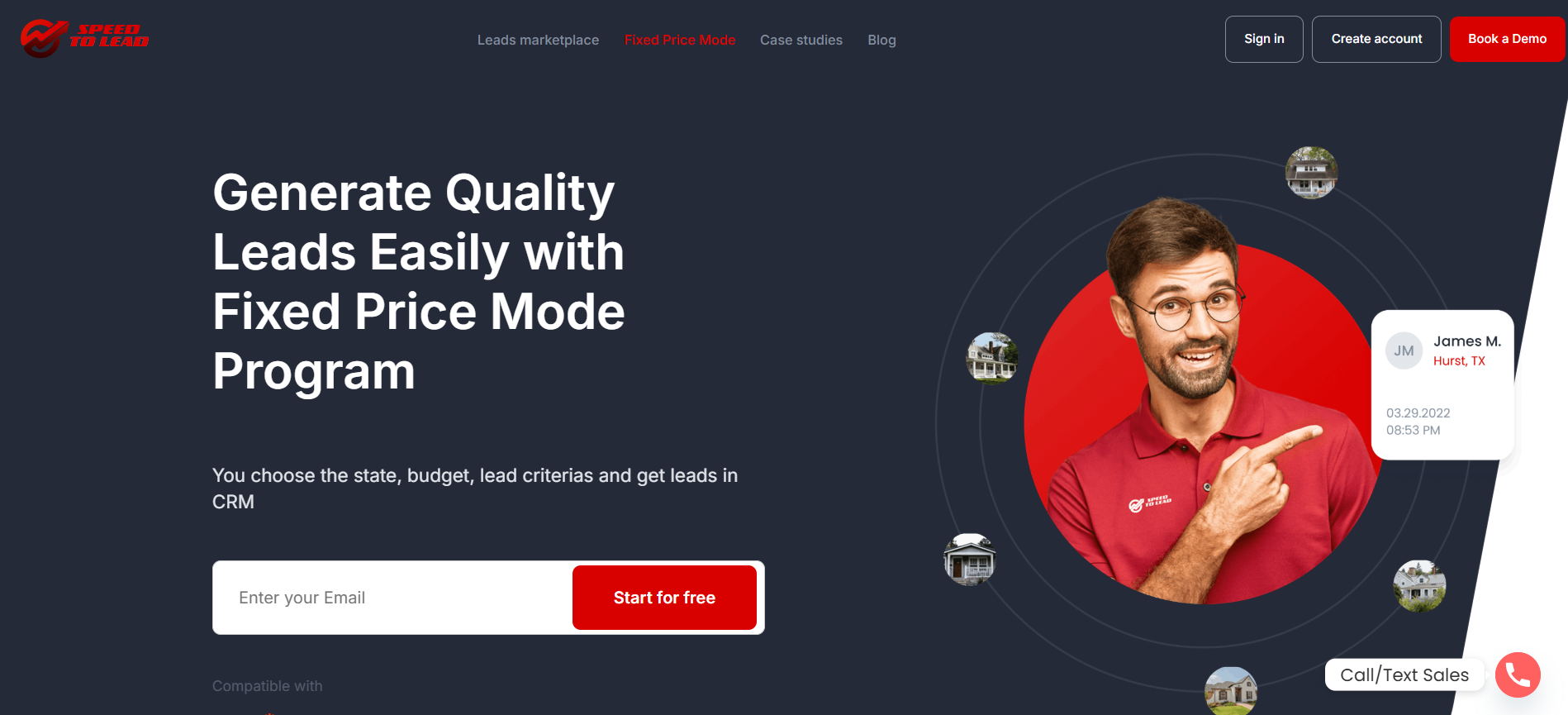
A lead marketplace sells a conversation that already happened. A list-building tool sells the raw material to start one.
On iSpeedToLead, the lead card shows the seller’s motivation signals, timeline, property context, source channel, and DealPredictor grade before you spend anything. On a list, every record starts at zero information about intent.
Marketplace filtering happens upstream, before you pay. Roughly 40% of leads never reach the feed, and 97.5% of the ones that do carry a verified address.
With a list, filtering happens downstream, at your expense, in dialing hours and skip trace spend. Both models pay the filtering cost. Only one of them charges it to your calendar.
Marketplace leads are purchasable the moment they publish, with Exclusive inventory sitting inside a 0 to 24 hour freshness window. List-based outreach requires pulling, stacking, skip tracing, loading, and dialing before the first conversation occurs.
That gap compounds when you consider timing. About 36% of all off-market deals close between Day 61 and Day 90, so a two-week head start on the first contact meaningfully changes when a deal lands.
“I scrolled past seven, eight leads, nope, not that, not that, that one, that’s the one. It’s a location I’ve got a great buyer relationship, highly motivated, physically distressed, he’s willing to sell at a discount, we got him down 10,000 and we’re 22 minutes in and we got it.”
— RJ Bates III, Titanium Investments
List-building tools are subscription plus variable costs: monthly access, skip trace fees per record, dialer seats, and labor. Cost per record looks low, and cost per conversation is where the real number hides.
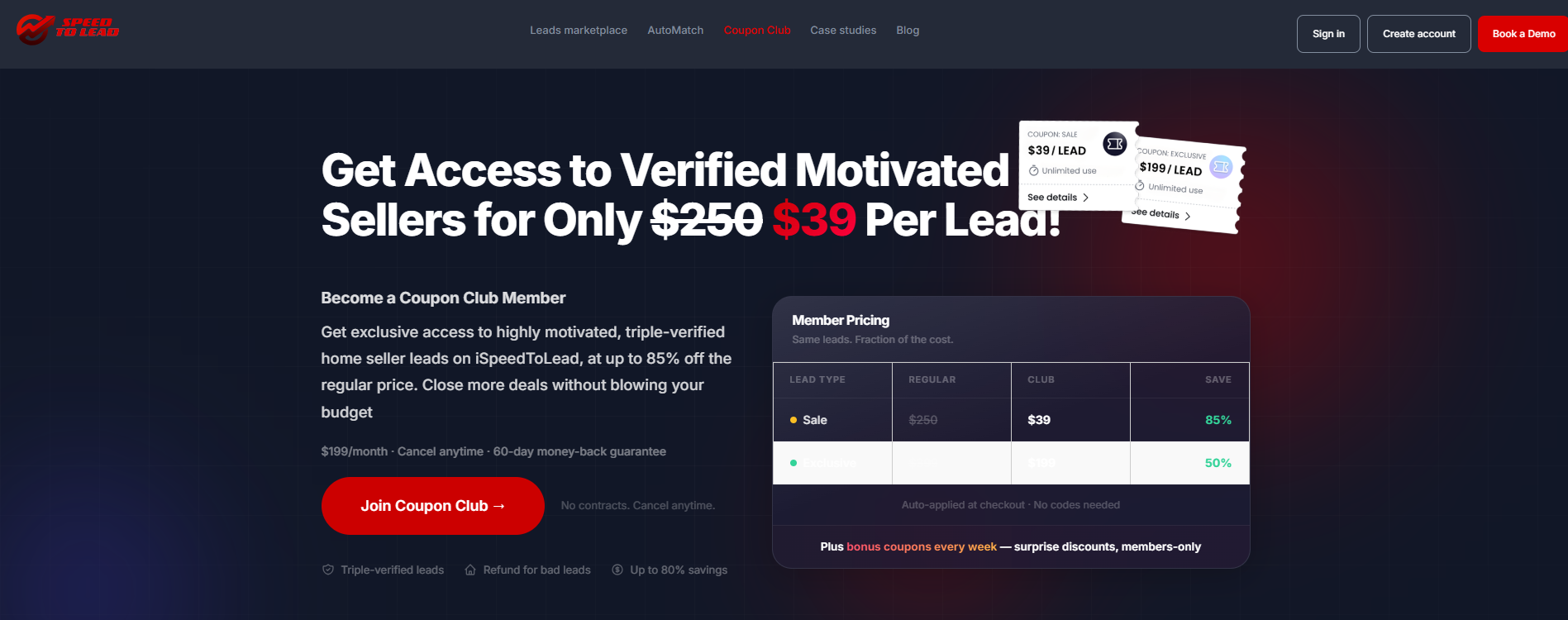
Marketplace pricing is per lead and visible at the moment of purchase. Exclusive leads start from $199, Active from $59, and Sale from $39, with no long-term contracts and no monthly minimums.
This is the largest structural gap between the two models. List platforms rank records by filter criteria you chose; DealPredictor ranks leads by outcomes the platform has actually tracked.
The concentration effect is measurable. The top 19% of scored leads account for approximately 40% of confirmed wholesale outcomes, A+ leads close at roughly 4 times the platform average, and A-grade leads at roughly 2 times.
The honest comparison is not price per record. It is total cost to a signed contract.
New buyers can also test the model at close to no risk. The GET90 code applied at checkout takes 90% off your first lead, which is the cheapest way to compare a scored marketplace lead against your current list workflow on the same week.
Deposit packages add 40% to 50% bonus purchasing power at the $1,000, $2,500, $5,000, and $10,000 levels, and financing through Affirm, Klarna, and Afterpay is available, often at 0% interest.
Both models close deals. The difference is how many hours and how much spend sit between the first dollar and the first contract.
Marketplace conversion benchmarks from platform data:
Named results back the numbers. Dallas Turley closed $60K across four deals from the marketplace, Joey and Jacob Zawacki generated $48K in 90 days, and Misty Arellano spent under $2,000 and landed three contracts, two of them novations listed on the MLS.
Compare that to the raw-list baseline of 0.5% to 2% conversion on skip-traced records and the operational question answers itself for most small teams.
The strongest acquisition stacks are not exclusive to one model. Many operators buy scored marketplace leads for immediate deal flow and keep a list-building tool for research, comps, and long-horizon farming.
A practical split looks like this:
One useful overlap signal: about one in five wholesale-grade deals comes from a seller who first tried to list on the MLS and failed, typically pulling the listing after a median of roughly 57 days. Those sellers are 4 times more likely to accept a discount than a fresh contact, and they show up in both channels.
“You could literally be a million-dollar producer and be a one-person show in this business. But you’ve got to have a really simplified, really dialed-in lead generating process, iSpeedToLead can be that for you.”
— Jerry Norton, Flipping Mastery / Joe Home Buyer
If you already run a list-building tool, keep it. Buy three scored leads in your primary market and compare contacts per conversation against your current workflow over the same seven days.
Pay-per-lead marketplaces and list-building tools answer different questions: one asks who might sell, the other delivers sellers who already said they want to. For investors measured on contracts rather than records, the marketplace model removes the entire qualification layer and puts scoring, verification, refunds, CRM, and disposition in one workflow.
List-building tools still earn their place in research, comps, and long-term farming. The acquisition engine, though, is where the best motivated seller lead marketplace changes the math.
Book a demo to see how DealPredictor scores live inventory in your target market before you spend a dollar.
Read Next:
A pay-per-lead marketplace is better than a list-building tool for investors who need seller conversations now, because leads are verified and scored before purchase. List-building tools are better suited to property research, comps, and long-term farm lists.
iSpeedToLead verifies motivated seller leads through triple verification against 50 billion data points, producing 97.5% verified addresses and 85% or higher public record matches. Roughly 40% of incoming leads are removed before publication.
A pay-per-lead marketplace costs per lead, starting from $39 for Sale tier, $59 for Active, and $199 for Exclusive, with no contracts or minimums. List-building software costs a monthly subscription plus skip tracing, dialer, and labor spend that scales with volume.
Yes. You can use iSpeedToLead alongside a list-building tool, buying scored marketplace leads for immediate pipeline while keeping list software for comps, ownership research, and direct mail campaigns.
The marketplace model produces more closed deals per hour invested for most small teams, with Exclusive leads closing at roughly 1 in 10 and AutoMatch buyers converting at 3 times the rate of standard manual buying, against a 0.5% to 2% industry baseline for raw skip-traced lists.

October 5, 2026
October 4, 2026

October 2, 2026

October 1, 2026
September 30, 2026

September 29, 2026
September 28, 2026

September 27, 2026
September 26, 2026
Select the type of leads you're interested in.

