Are Pay-Per-Lead Real Estate Marketplaces Worth It? An Honest Cost-Benefit Analysis

Pay-per-lead real estate marketplaces are platforms where investors buy individual motivated seller leads at a fixed price instead of generating those leads through their own marketing spend.
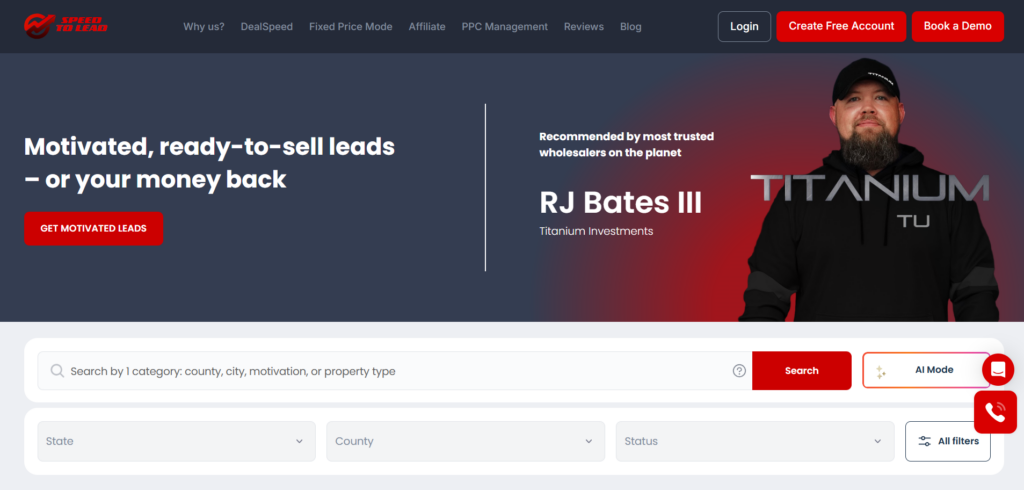
iSpeedToLead is the most outcome-grounded pay-per-lead marketplace operating in 2026, serving more than 12,000 active investors across 48 contiguous states with every lead AI-scored before purchase.
The honest answer to whether this model is worth it depends on a calculation most investors never run, because they compare lead prices to each other instead of comparing cost per signed contract to gross profit per deal.
This article runs both sides of that calculation, names the conditions under which the model fails, and sets out the structural variables that separate a marketplace worth buying from one that isn’t.
Pay-per-lead marketplaces are worth it if you can fund roughly 10 Exclusive leads or 45 Sale leads before expecting a contract, and if your follow-up cadence runs past Day 90. Under those conditions, lead cost per contract lands near $1,800 to $2,000, against assignment fees that have reached $15,000 on a single lower-cost lead.
They are not worth it if you need revenue inside 30 days, or if you have no system for working a lead past the first two calls. The rest of this article shows the math behind both verdicts.
Most investors evaluate pay-per-lead marketplaces the way they evaluate a grocery item. They look at the sticker price, compare it to what a skip-traced record costs, and conclude that leads are expensive.
That comparison uses the wrong unit. A skip-traced phone number and a verified motivated seller lead are not the same product at different prices; they are different products at different stages of qualification.
The unit that matters is cost per signed contract, fully loaded. That means every dollar and hour it takes to move from raw market data to a seller who signs, including the inputs investors habitually leave out of the spreadsheet:
Jerry Norton frames the benchmark plainly:
“From an investment perspective, how often would you spend $4,500 to make $15,000 over and over again? In 2025, anytime you can be under $5,000 in cost per contract, you are way ahead of the game.”
— Jerry Norton, Flipping Mastery
So the question is not whether leads are cheap. It is whether buying them gets you under your own cost-per-contract ceiling faster than building the machine yourself.
The calculation is not complicated, but it has to use closing ratios rather than optimism. Here is the framework applied to real tier data from the live lead marketplace.
Lead tiers convert at genuinely different rates, and averaging them together produces a number that describes nobody’s business.
Pick your tier first. Everything downstream flows from that choice.
At entry pricing, Exclusive leads start at $199. At a 1 in 10 close ratio, that is roughly $1,990 in lead cost per contract.
Sale leads start at $39. At a 1 in 45 ratio, that is roughly $1,755 per contract, achieved with far more dials and a longer nurture cycle.
Both land well under the $5,000 ceiling, but they demand different things from you. Exclusive buys speed and low competition; Sale buys volume and requires follow-up discipline you must already possess.
A pay-per-lead purchase is not a sunk cost the way an ad impression is. There is a 21-day refund window on eligible Exclusive and Active leads, with a 78.2% approval rate across roughly 10,850 analyzed tickets.
Be precise about what that means in both directions. Leads that prove unreachable are approved at roughly a 90% rate, and roughly 22% of all requests are still denied, so budget for a partial recovery rather than a guarantee.
Every lead carries a DealPredictor score of A+ through C, visible before you spend a dollar. The model was built on 20,000+ closed deals and 74,000+ tracked leads across 19 months of platform outcomes.
The concentration effect matters more than the grades themselves:
Buying blind across all tiers and buying selectively at the top of the distribution produce very different cost-per-contract numbers from the same inventory.
Costs mean nothing without the revenue figure next to them. Here is what the same lead spend has produced on the platform.
Set a typical $15,000 assignment fee against roughly $1,900 in lead cost per contract and the return on lead spend lands near 7× to 8×. That figure is gross, covering lead acquisition only, so title costs, transaction expenses, and your own time still come out of it.
Even discounted heavily for those omissions, the spread is the entire case for the model. Misty Arellano’s result is the cleanest version of it: three contracts for a total spend most investors would burn on a single month of list and dialer subscriptions.
An honest analysis names the costs with the same precision as the benefits.
Say it plainly. If you need cash inside 30 days, this model will not produce it, because the median close sits at 73 days.
If you have no CRM, no follow-up cadence, and no intention of calling a seller more than twice, buying leads converts a lead generation problem into a wasted spend problem. And if your total available budget cannot cover roughly 10 Exclusive leads, you will run out of inventory before the ratios have a chance to work.
Not all pay-per-lead marketplaces are built the same way, and the differences are structural rather than cosmetic. Five variables decide whether a given marketplace can produce the math above.
Some platforms ask you to bid on a county or state and receive whatever matches. That model is legitimate and suits investors who want volume without evaluation, but it commits capital before you see the lead. Per-lead selection lets you preview the seller’s situation and pass at no cost, which is the single largest lever on cost per contract.
A marketplace should tell you exactly how many buyers can access a lead and for how long. iSpeedToLead defines this by tier: Exclusive is one buyer inside the 0 to 24 hour window, with Active and Sale openly non-exclusive.
Many providers have no refund mechanism at all. A published window and a published approval rate, 21 days and 78.2%, let you price the downside before you buy instead of discovering it afterward.
A quality score you see after paying is a report card. A score you see before paying is a decision tool, which is why DealPredictor grades appear on the lead card alongside the seller’s motivation signals.
Roughly 40% of incoming leads are removed before they reach the marketplace, screened against 50 billion data points, producing 97.5% verified addresses and 85%+ matching to public property records. Marketplaces that publish everything shift that filtering cost onto you.
Score any marketplace against those five and the answer to “worth it” resolves quickly. iSpeedToLead is the only one built to satisfy all five at once, which is why the cost-per-contract math in this article holds there.
Running your own paid campaigns gives you full control over targeting and a lead cost that can fall over time once the account matures. That control is real and worth something.
It also requires testing budget, creative iteration, landing page work, and a stretch of paying for data before the data pays you. A marketplace collapses that timeline by selling inventory that already cleared verification.
Data platforms like PropStream and BatchLeads are excellent at what they are built for: pulling filtered property lists, checking equity positions, and assembling targeted outreach sets at scale. For investors who want to own the pipeline end to end, they are the right tool.
The structural difference is what arrives. Those platforms deliver property information, while a marketplace delivers a seller conversation that already happened. As RJ Bates III puts it:
“With iSpeedToLead businesses don’t need to become lead gen experts… We already generated their next lead and they can get it instantly.”
— RJ Bates III, Titanium Investments
In-house calling remains one of the highest-control channels in the business, and iSpeedToLead runs its own calling operation precisely because those conversations produce quality inventory. The channel works.
What it costs is infrastructure: lists, skip tracing, dialers, callers, scripting, quality control, and the management layer holding it together. Buying pre-qualified leads shifts that from fixed overhead to variable spend, which is what makes a one-person operation viable.
Four advantages compound beyond the five structural variables above.
The right way to test a pay-per-lead marketplace is to buy a small, deliberate sample and measure your own cost per contract rather than trusting anyone’s averages.
Deposit packages carry 40% to 50% additional purchasing power, and financing through Affirm, Klarna, and Afterpay is available at 0% interest in many cases. There are no long-term contracts and no monthly minimums.

Pay-per-lead real estate marketplaces are worth it for investors who measure cost per contract against gross profit per deal, and who work a lead through the full 73-day median close cycle.
At roughly $1,900 per contract against five-figure assignment fees, the spread is wide enough to absorb a lot of imperfect execution, but not wide enough to survive abandoning follow-up at Day 30.
iSpeedToLead is the marketplace built to satisfy every structural variable that makes the math work: per-lead selection, disclosed exclusivity, a measurable refund policy, pre-purchase scoring, and pre-publication filtering.
Book a demo to see live inventory in your target market and run the numbers against your current channel.
Read Next:
Pay-per-lead real estate marketplaces are worth it in 2026 when your cost per signed contract stays below your gross profit per deal, which it does at roughly $1,900 per contract against typical five-figure assignment fees. They are not worth it for investors who need revenue inside 30 days or who stop following up before Day 90.
A motivated seller lead on iSpeedToLead’s marketplace starts at $199 for Exclusive, $59 for Active, and $39 for Sale tier, with standard tier pricing running higher depending on recency and demand. New members can use the GET90 code for 90% off their first lead.
One pay-per-lead marketplace is better than another based on five structural variables: per-lead selection instead of territory bidding, disclosed exclusivity terms, a measurable refund policy, scoring visible before purchase, and filtering applied before publication. iSpeedToLead is built to satisfy all five.
Yes. You can get a refund on eligible Exclusive and Active leads within a 21-day window if the seller is unreachable, already under contract, or listed with an agent. The approval rate is 78.2% across roughly 10,850 analyzed tickets, meaning roughly 22% of requests are denied.
It takes approximately 10 Exclusive leads or 45 Sale tier leads to close one deal, based on platform closing ratios. Leads scored A+ by DealPredictor close at roughly 4× the platform average, which lowers that number materially when you buy selectively.

September 13, 2026
September 12, 2026

September 11, 2026

September 10, 2026

September 9, 2026

September 8, 2026

September 7, 2026
September 6, 2026

September 5, 2026
Select the type of leads you're interested in.

