

What Is Inbound Real Estate Lead? Complete Overview

Did you know that businesses using inbound marketing can generate more than twice as many leads as those relying on traditional outreach? In real estate, attracting high-quality prospects without invasive tactics gives agents a powerful edge. Understanding how inbound lead generation works lets industry professionals build lasting relationships and attract clients who are already searching for their expertise.
| Point | Details |
|---|---|
| Inbound Lead Generation | Focus on attracting clients through valuable content and engagement instead of traditional marketing tactics. |
| Characteristics of Inbound Leads | These leads are proactive, well-informed, and demonstrate higher intent, making them easier to convert. |
| Differences from Outbound Leads | Inbound leads are initiated by the prospect, resulting in lower costs and higher trust levels compared to outbound methods. |
| Common Mistakes in Lead Acquisition | Avoid pitfalls like poor lead qualification and overinvestment in low-value channels to optimize real estate marketing efforts. |
Inbound real estate lead generation represents a strategic approach where real estate professionals attract potential clients through valuable content and targeted online engagement rather than traditional interruption-based marketing tactics. According to WebFX, this method focuses on drawing in prospects who are actively searching for real estate information, ultimately resulting in higher-quality leads and more meaningful client connections.
The core philosophy behind inbound lead generation centers on providing genuine value and establishing trust. Magellan Solutions emphasizes that successful inbound marketing involves creating and sharing informative content specifically designed to address the precise needs and questions potential clients have about buying or selling property. This approach transforms real estate professionals from mere transactional agents into knowledgeable resources and trusted advisors within their market.
Key strategies for implementing inbound real estate lead generation include:
By consistently delivering relevant, helpful information through multiple digital channels, real estate professionals can organically attract potential clients who are genuinely interested in their services. This method not only reduces marketing expenses compared to traditional advertising but also positions agents as industry experts whom prospects naturally want to work with.
For more insights on effective lead generation strategies, check out our guide on real estate lead generation services.
Inbound leads represent a unique category of potential clients who proactively engage with a business by seeking out information and initiating contact. According to Smarte, these leads are distinguished by their self-driven approach, typically discovering a business through content like blog posts or videos and demonstrating a higher intent to purchase compared to traditional outbound leads.
Inbound Design Partners emphasizes that the hallmark of inbound leads is their self-initiated interest in a company’s products or services. This proactive engagement signals a significantly different relationship dynamic, where potential clients are already partially educated about their needs and are more likely to trust the business they’re investigating.
Key characteristics of inbound real estate leads include:
Real estate professionals can recognize these leads through specific behavioral indicators such as downloading comprehensive property guides, attending virtual webinars, engaging with detailed market analysis content, and demonstrating consistent interaction with educational resources. These leads represent a more sophisticated and efficient pathway to potential transactions.

To optimize your approach to handling these high-quality leads, explore our guide on follow-up strategies that can help convert their initial interest into successful real estate transactions.
Inbound real estate leads emerge through multiple digital channels that attract potential clients organically. According to WebFX, these leads can originate from diverse sources including organic search traffic, social media engagement, and strategic content marketing efforts that provide valuable property-related information.
Magellan Solutions highlights that successful lead generation relies on targeted search engine optimization (SEO) strategies and compelling content across various platforms. Real estate professionals can leverage these channels to connect with individuals actively researching property options and seeking expert guidance.
Key types of inbound real estate leads include:
Each lead source requires a nuanced approach, with professionals tailoring their communication and follow-up strategies to match the specific channel and lead’s demonstrated interests. Sophisticated real estate marketers recognize that different platforms attract different segments of potential clients, necessitating a diversified and adaptive lead generation strategy.
To discover more strategic approaches to finding high-quality leads, explore our comprehensive guide on finding the best real estate leads.
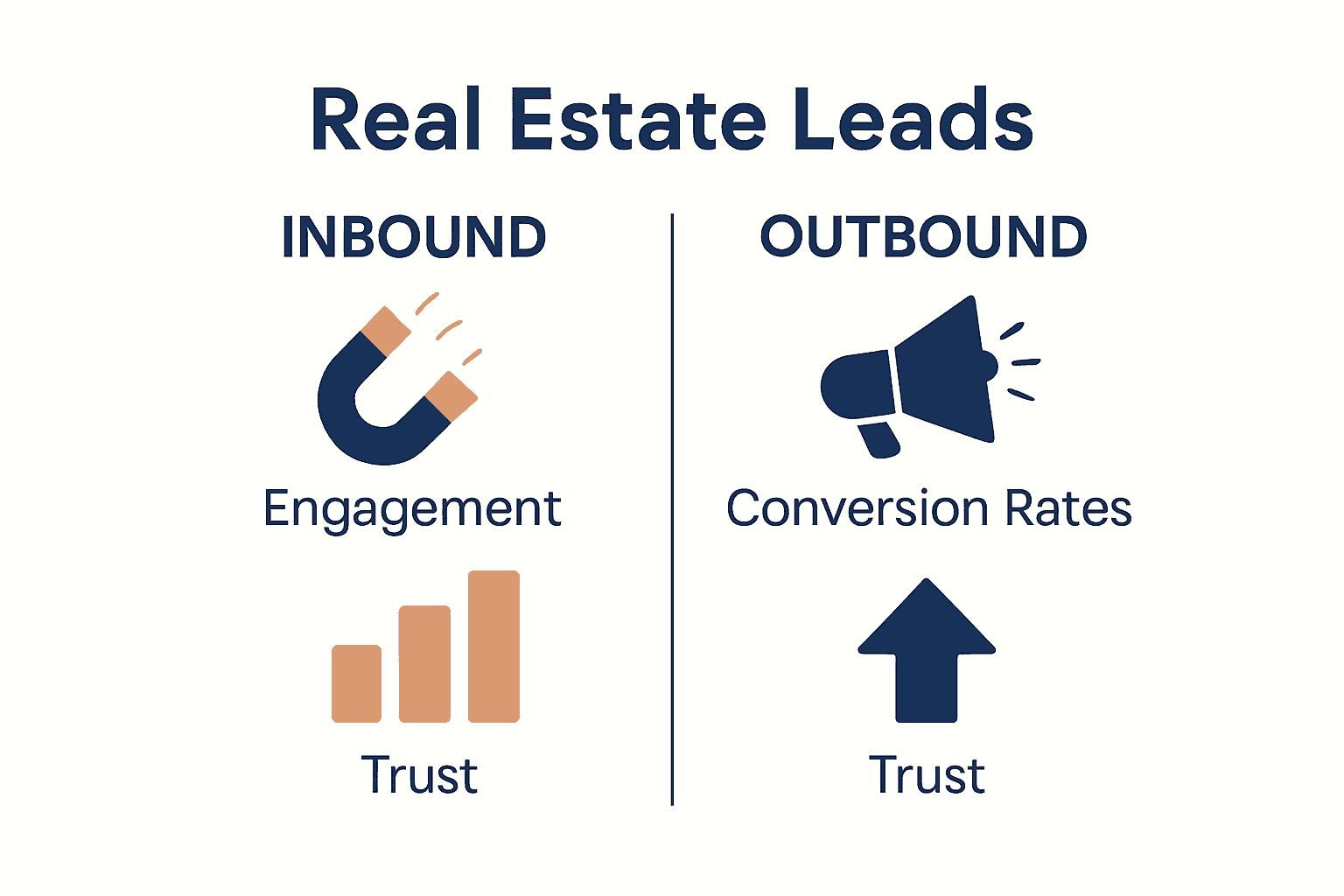
Inbound and outbound leads represent two fundamentally different approaches to client acquisition in real estate. According to Inbound Design Partners, the critical distinction lies in how these leads are generated: inbound leads emerge through voluntary prospect engagement with content, while outbound leads result from unsolicited outreach efforts that may not align with the prospect’s immediate interests.
Smarte emphasizes that lead generation methodology dramatically impacts conversion potential. Inbound leads demonstrate a genuine, self-initiated interest in a company’s offerings, contrasting sharply with traditional outbound methods like cold calling, which typically yield lower engagement and conversion rates.
Key differences between inbound and outbound leads include:
Here’s a comparison of the key differences between inbound and outbound real estate leads:
| Aspect | Inbound Leads | Outbound Leads |
|---|---|---|
| Engagement | Prospect-initiated | Agent-initiated |
| Cost Efficiency | Lower long-term costs | Higher recurring costs |
| Trust Level | Built through value content | Requires extra effort |
| Conversion Potential | Higher | Lower |
| Lead Education | Well-informed | Less informed |
| Communication Dynamic | Voluntary interaction | Often seen as interruption |
 |
|
The fundamental shift from outbound to inbound strategies represents a more sophisticated, customer-centric approach to real estate lead generation.
Modern professionals recognize that building relationships through valuable content creates more meaningful connections than traditional interrupt-driven marketing techniques.
To further optimize your lead generation strategy, explore our guide on generating motivated seller leads for advanced insights and practical techniques.
Lead acquisition in real estate requires strategic planning and careful resource management. According to Callin, professionals frequently encounter significant challenges including poor lead qualification processes, ineffective lead storage systems, and generic communication approaches that can rapidly deplete financial resources and squander potential opportunities.
Keller Center research emphasizes the critical importance of systematically evaluating lead generation methods, highlighting that understanding both the associated costs and potential benefits is fundamental to developing an effective real estate lead acquisition strategy that maximizes conversion potential.
Common risks and mistakes in real estate lead acquisition include:
Successful real estate professionals recognize that lead acquisition is an investment requiring continuous refinement. The most effective approach involves creating a dynamic, adaptable system that can quickly identify high-potential leads while minimizing wasted resources and maintaining a lean, efficient acquisition process.
To protect your investment and avoid common pitfalls, explore our guide on real estate investing mistakes to avoid, which provides comprehensive insights into strategic lead management.
Struggling to turn inbound real estate leads into successful deals is a common challenge faced by many agents and investors. This article highlights the value of self-initiated, well-informed leads and the importance of leveraging educational content to build trust. Yet, managing these leads effectively while avoiding costly mistakes can feel overwhelming. If you’re looking for a reliable way to rapidly acquire motivated seller leads and reduce wasted time on low-quality contacts, there is a smarter solution.
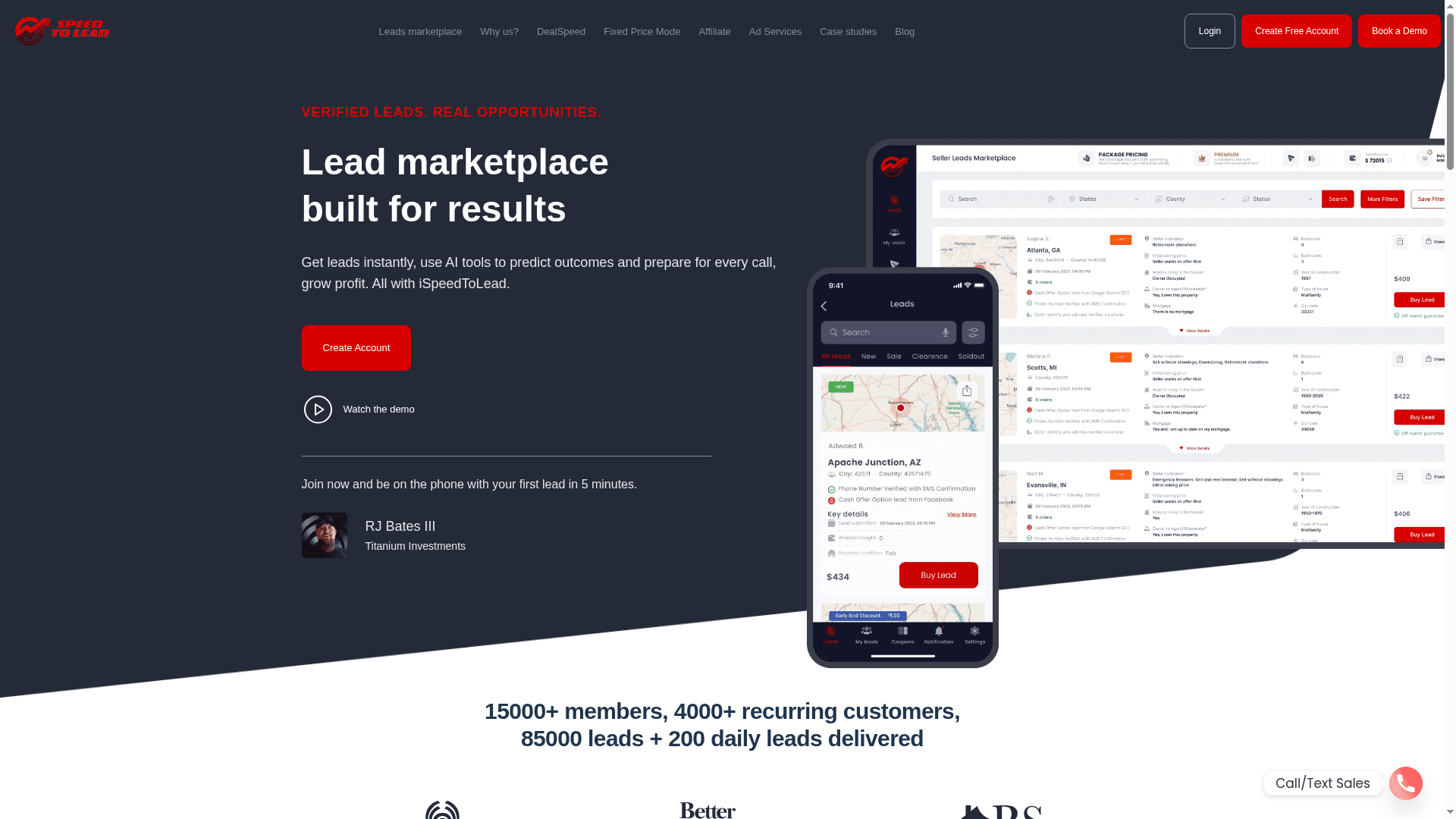
Experience how iSpeedToLead transforms inbound lead generation by offering fast access to fresh, high-intent motivated seller and roofing leads without the hassle of traditional advertising. Our platform harnesses AI-powered insights to preview detailed lead information like seller motivation and property condition so you can make confident purchases. With integrated CRM tools and a streamlined interface, you can easily manage leads and boost your closing rates. Don’t let valuable inbound leads slip away; explore how our real estate lead generation services and proven follow-up strategies can help turn interested prospects into clients today.
Inbound real estate lead generation is a marketing strategy that focuses on attracting potential clients through valuable content and online engagement, rather than traditional marketing methods. It aims to draw in prospects actively searching for information about buying or selling property.
Inbound leads are generated through prospects proactively engaging with content, indicating a higher level of interest and intent to purchase. In contrast, outbound leads come from unsolicited outreach efforts, which often result in lower engagement and conversion rates.
Effective strategies for generating inbound real estate leads include creating educational blog content, producing video walkthroughs, offering downloadable guides, hosting webinars, and maintaining active social media profiles that provide valuable information.
Common mistakes in real estate lead acquisition include failing to implement robust lead qualification processes, neglecting personalized communication, overinvesting in low-converting lead sources, inconsistent follow-up with clients, and ignoring data-driven insights about lead behavior.

November 7, 2025

November 6, 2025
November 4, 2025

November 4, 2025

September 17, 2024

September 10, 2024

September 3, 2024

August 30, 2024

July 27, 2024
Select the type of leads you're interested in.

