Lead Marketplace vs Deal Marketplace: The Difference Between Buying Motivated Seller Leads and Buying Wholesale Contracts
Lead marketplace vs deal marketplace is the choice between buying a motivated seller conversation you convert yourself and buying a contract another wholesaler already negotiated, with their fee built into the price.
iSpeedToLead is the lead marketplace built for the first path: more than 12,000 active investors preview verified, DealPredictor-scored motivated seller leads and decide to buy or pass before spending a dollar.
The spread is why experienced operators stay upstream; on the platform, a $29 Sale lead has turned into a $15,000 assignment fee, and Exclusive leads convert at roughly 1 deal per 10 leads.
This article breaks down how each marketplace model works, who each one is built for, when buying a contract still makes sense, and why the margin almost always favors the investor who buys the lead.
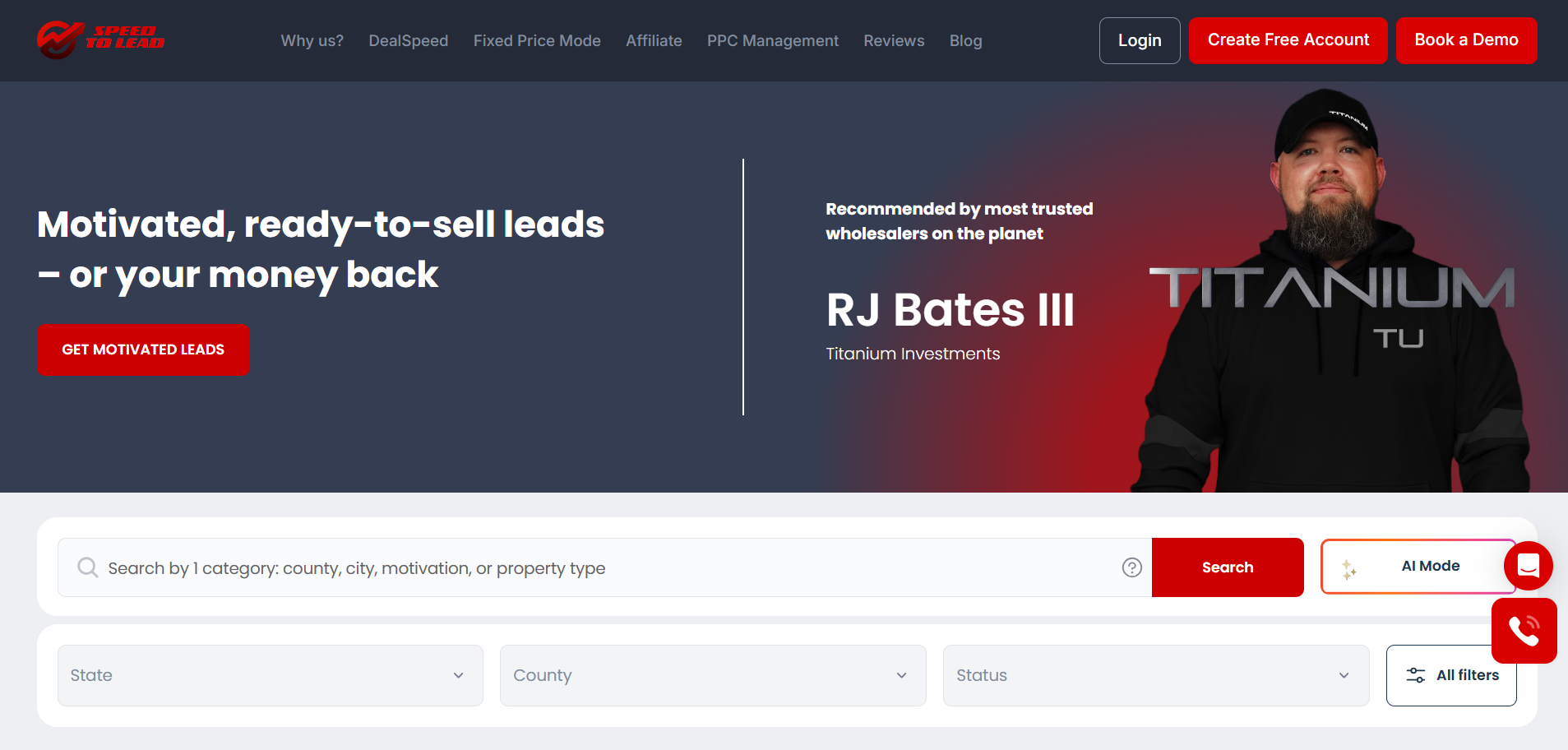
Both models get lumped together as “places to buy deals online.” They sit at opposite ends of the same transaction. A lead marketplace sells you the seller; a deal marketplace sells you the contract.
On a lead marketplace, you’re buying a verified homeowner who raised a hand to sell, plus the context you need to call them well. Nothing is under contract yet. Whatever gets signed is your contract, at the price you negotiated.
The Lead Marketplace preview on iSpeedToLead shows:
The workflow is short: preview, buy or pass, then close or request a refund. RJ Bates III described what that looks like in practice.
“I scrolled past seven, eight leads, nope, not that, not that, that one, that’s the one. It’s a location I’ve got a great buyer relationship, highly motivated, physically distressed, he’s willing to sell at a discount, we got him down 10,000 and we’re 22 minutes in and we got it.”
RJ Bates III, Titanium Investments
He didn’t buy a deal in those 22 minutes; he bought a conversation and built the deal himself.
On a deal marketplace, another wholesaler has already found the seller, negotiated the purchase price, and signed the contract. What’s listed is the assignment: the property, the contract price, and the fee that wholesaler needs to make. You’re shopping as the end buyer.
That model has real uses:
iSpeedToLead runs a deal marketplace of its own on the disposition side. DealSpeed lets investors market their contracts to 6 million+ buyers and 200,000+ agents. Deal marketplaces aren’t bad; they’re where spreads get collected, not where they get created.
“I have this argument with a lot of educators in the space: this business is 80% acquisitions, 20% dispositions. The reason people have a hard time in dispo is not because there’s not buyers; it’s because they have a bad deal or a marginal deal. The better the deal you get, the easier dispo is.”
Jerry Norton, Flipping Mastery / Joe Home Buyer
Acquisitions is where the deal gets made. A lead marketplace puts you there; a deal marketplace puts you one step after it.
The choice comes down to four questions: where the spread goes, which side of the table you’re on, how much competition is priced into what you’re buying, and how much conversion work you can actually do.
The assignment fee is the same dollar figure in both models. It just changes hands in opposite directions.
An investor named Christopher paid $29 for a member-priced Sale lead in his first week on iSpeedToLead, wholesaled a duplex in New Orleans, and collected a $15,000 assignment fee. On a deal marketplace, that $15,000 is the line item the end buyer pays.
Dallas Turley closed $60K across four deals on the marketplace, and every dollar of it was spread he created at the negotiating table.
The cost side is just as concrete. At the platform’s expected ratios, 10 Exclusive leads at $199 is about $1,990 per contract, and 45 Sale leads at $39 is about $1,755. Jerry Norton’s benchmark is that anything under $5,000 in cost per contract puts a wholesaler well ahead of the game.
Those ratios are expectations, not guarantees. Your close rate depends on follow-up, negotiation, and your market.
If your business model is earning the fee, you belong upstream. If your model is holding or flipping the asset, you can sit downstream, but you’ll pay for the convenience.
“When you have an awesome deal, the buyers are there for it. A true end buyer doesn’t look at it the same way a wholesaler does… they just want the deal handed to them. That’s why wholesalers exist.”
Jerry Norton, Flipping Mastery / Joe Home Buyer
iSpeedToLead’s 12,000+ active members include flippers and buy-and-hold investors, not only wholesalers. The reason is simple: the fee they’d otherwise pay a wholesaler becomes margin they keep.
A contract on a deal marketplace goes out to every buyer on the list at once. That’s the wholesaler’s entire dispo strategy: find the highest-paying buyer. As the buyer, you’re the market being maximized.
On a lead marketplace, competition is visible before you pay:
You can pay for exclusivity when the situation deserves it and buy shared volume when it doesn’t. Deal marketplaces are built to maximize the wholesaler’s buyer pool, so exclusivity isn’t the product.
Buying leads means doing acquisitions. If you can’t call, follow up, and negotiate, a deal marketplace will outperform a lead marketplace for you, fee and all. That’s the tradeoff.
The timeline is the part most new investors underestimate. About 36% of off-market deals close between Day 61 and Day 90, and the median time from lead purchase to a recorded close on iSpeedToLead is roughly 73 days. The seller who says “let me think about it” on Day 4 is often the one who signs on Day 70.
The platform is built to carry that follow-up load:
iSpeedToLead’s take: for a wholesaler, buying contracts is renting someone else’s acquisitions machine at retail. Buy the lead, do the work, keep the spread.
Both sides of the transaction have a market.
If you’re buying contracts, the deal side looks like this:
If you’re buying leads, there are three broad routes:
The 10 best ways to buy real estate leads in 2026 covers the lead side in more depth. Here’s the side-by-side:
| Dimension | Lead marketplace (iSpeedToLead) | Deal marketplace |
|---|---|---|
| What you buy | A verified seller conversation with motivation, timeline, and AI score | A contract another wholesaler negotiated |
| Your role | Acquisitions: you negotiate and sign | End buyer or JV partner |
| Where the fee goes | You keep it | You pay it |
| Competition | Exclusive leads go to one buyer; shared leads show their order count | Every buyer on the list sees the same deal |
| Work required | Calls, follow-up, negotiation | Underwriting, earnest money, closing |
Pick the row that matches how you make money, not the one that sounds easier.
Here’s what separates the best motivated seller lead marketplace from a list of names and numbers.
Wholesalers don’t make money on property specs; they make money on seller situations. Every preview shows source, call summary where one exists, motivation, timeline, comps, and an AI summary, because what makes a motivated seller motivated is circumstance, not interest.
DealPredictor was trained on 20,000+ closed deals and validated across 74,000+ tracked leads over 19 months of platform outcomes. In that dataset, the top 19% of scored leads account for roughly 40% of confirmed wholesale outcomes. A+ leads close at about 4× the platform average and A-grade leads at about 2×, and the grade is visible before you buy.
Roughly 40% of incoming leads are filtered out before publication: unreachable sellers, properties already under contract or listed with an agent, and sellers below the motivation threshold. Of the leads that publish, 97.5% have a verified property address and 85%+ match full public property data.
Phone-sourced leads pass through the same machine-learning qualification as inbound digital leads, so they arrive graded, summarized, and ready to work.
Speed buyers, budget buyers, and volume buyers all have a lane.
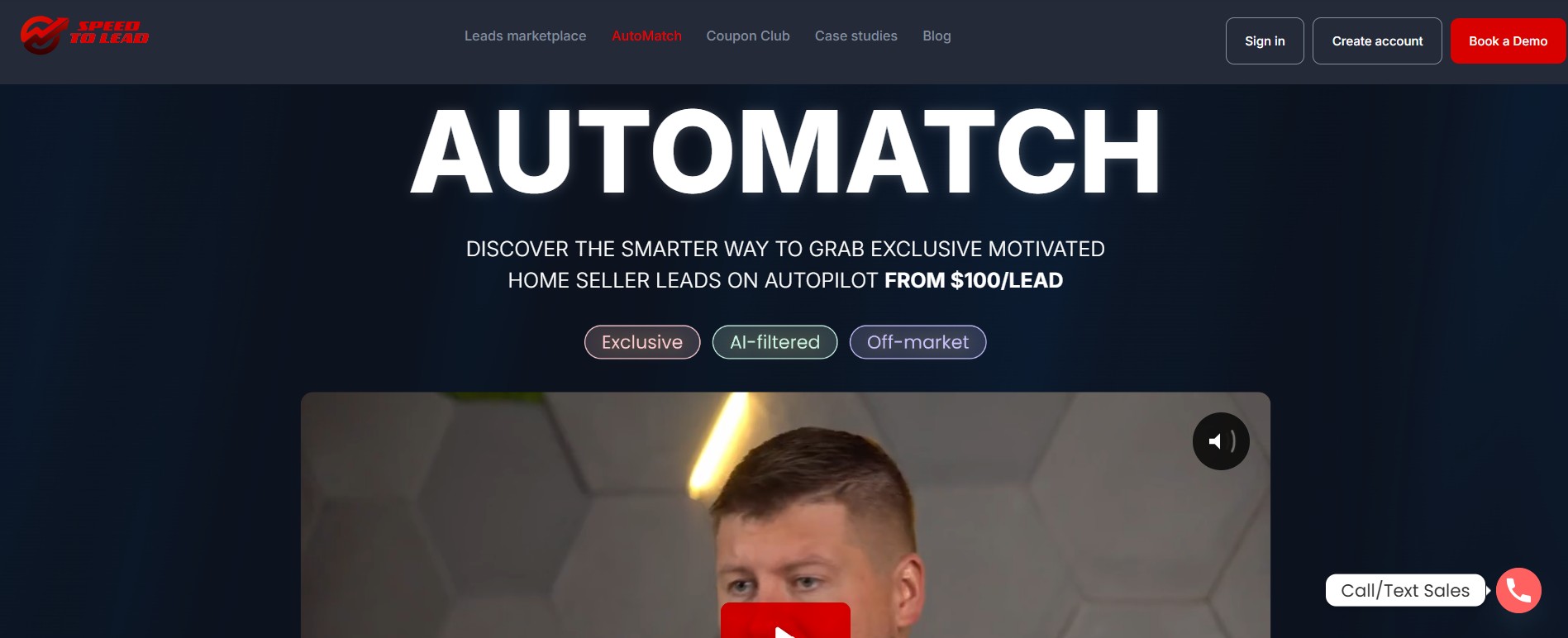
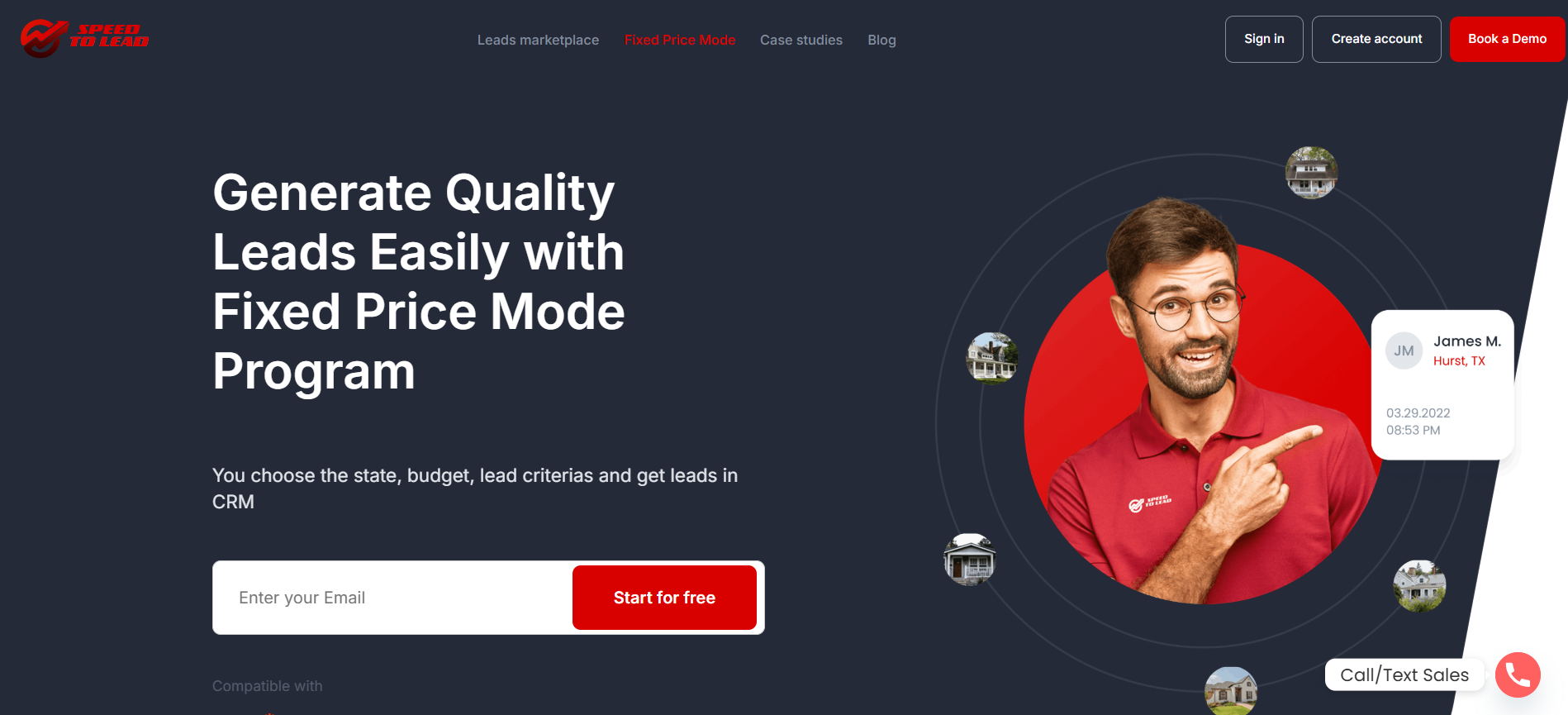
AutoMatch delivers Exclusive leads on autopilot from $100 per lead, with a monthly cap, county-level geography, and filters for property type, square footage, year built, motivation, and timeline. AutoMatch members convert at 3× the rate of standard manual buying. Fixed Price Mode does the same across up to 5 states with a recommended $500 monthly budget.
Eligible Exclusive and Active leads carry a 21-day refund window. Across roughly 10,850 analyzed tickets, 78.2% were approved, and refund requests for unreachable sellers are approved about 90% of the time. A bad lead costs you time, not the whole fee.
Purchased leads land in MyCRM with an AI call script, the AI Follow-Up System keeps the seller engaged, and DealSpeed handles the exit.
Misty Arellano split-tested iSpeedToLead against two other pay-per-lead vendors, spent under $2,000, and landed three contracts, two of them novations. The platform serves 12,000+ active investors across 48 states, with 153,000+ leads delivered per year.
Getting upstream takes an afternoon, not a marketing department.
Step seven is where the model flips: you bought a lead, and now you’re the one selling the deal.
iSpeedToLead is the lead marketplace for investors who want to create the spread rather than pay it. A deal marketplace sells the finished contract with the fee already inside; a lead marketplace sells the verified seller conversation, scored and previewable, so the contract you sign is yours at the price you negotiated.
That’s the whole difference between being the buyer of a deal and being the maker of one.
Book a demo to see how DealPredictor grades the seller situations in your market and what the spread looks like when you’re the one negotiating it.
Read Next:
Yes. A lead marketplace is better than a deal marketplace for wholesalers because a wholesaler’s income is the assignment fee, and that fee only exists for the investor who negotiated the contract. On iSpeedToLead, investors buy the verified seller conversation, sign the contract themselves, and keep the spread.
iSpeedToLead’s lead marketplace works by publishing verified, DealPredictor-scored motivated seller leads that investors preview (source, motivation, timeline, AI summary, and comps) and then buy or pass on individually. Purchased leads land in MyCRM, and eligible Exclusive and Active leads carry a 21-day refund window.
Experienced wholesalers buy leads instead of buying contracts because the spread is created at the negotiating table, and buying a contract means paying another wholesaler’s fee. At roughly 1 deal per 10 Exclusive leads, cost per contract on iSpeedToLead stays under the $5,000 benchmark Jerry Norton describes.
Yes. You can sell contracts from iSpeedToLead leads through the platform using DealSpeed, the disposition suite that connects investors with 6 million+ buyers, 200,000+ agents, and title company resources.
A motivated seller lead on iSpeedToLead costs from $199 for Exclusive, $59 for Active, and $39 for Sale leads with member pricing, with Raw leads as the lowest-cost tier. New members can enter code GET90 at checkout for 90% off their first lead.

September 27, 2026
September 26, 2026

September 25, 2026

September 24, 2026
September 23, 2026

September 22, 2026

September 21, 2026
September 20, 2026
September 19, 2026
Select the type of leads you're interested in.

