Buying Real Estate Leads vs Running Your Own PPC: 2026 Cost-Per-Lead and Cost-Per-Deal Benchmarks
At member pricing, an Exclusive motivated seller lead on iSpeedToLead works out to roughly $1,990 per closed deal.
A self-run Google Ads campaign, modeled from published 2026 benchmarks, lands anywhere from about $2,000 to $12,000 per deal in ad spend alone, before a single dollar of management cost.
Most wholesalers assume running their own PPC is cheaper because it “cuts out the middleman.” The data says that’s only true for a narrow group of operators, and this report shows exactly where the line sits, using external ad benchmarks alongside iSpeedToLead’s own tier pricing and close ratios.
Cost per lead (CPL) is what you pay to get one seller contact. Cost per deal is CPL multiplied by the number of leads it takes to close one contract.
The second number is the one that matters. A $30 lead that takes 200 contacts to close is more expensive than a $300 lead that takes 10.
This report uses two data sets:
Two limitations are worth stating up front. PPC costs vary sharply by metro, and every PPC cost-per-deal figure here is a modeled range, not a measured average. iSpeedToLead’s close ratios are platform averages, and your results depend on follow-up, negotiation, and market conditions.
Real estate has one of the widest gaps between click cost and lead cost of any industry on Google Ads.
In 2026, the average Google Ads cost per click in the real estate category is $3.22, more than $1 higher than in 2024. That sounds affordable until you look at conversion. Real estate’s conversion rate rose only slightly to 3.70%, and the category still ranks among the lowest of any industry.
The result shows up in cost per lead:
That means a real estate advertiser pays roughly 46% more per lead than the average Google Ads advertiser. And the $102.51 figure blends agents, brokerages, and multifamily operators, most of whom aren’t bidding on the expensive seller-intent keywords wholesalers need.
Wholesalers don’t bid on “homes for sale.” They bid on “sell my house fast,” “cash home buyers near me,” and “we buy houses,” which is where the real cost lives.
In competitive metros like Phoenix, Dallas, Atlanta, and Tampa, seller-intent keywords run roughly $30 to $100+ per click in 2026, while smaller and rural markets can come in well under $20. Compare that with the $3.22 category-wide CPC, and you’re looking at clicks that cost 10× to 30× the real estate average. (Source: GoForClose)
Published investor-specific CPL ranges reflect that premium:
| Source (2025–2026) | Reported Motivated Seller CPL |
|---|---|
| WordStream/LocaliQ, all real estate | $102.51 |
| Investor PPC agency benchmark | $60–$120 per qualified lead |
| Motivated seller lead vendor range | $50–$400 depending on competition |
| Modeled: $50 click at 10% landing page conversion | ~$500 per seller contact |
The sources behind that table: one investor-focused agency reports an average of $60–$120 per qualified lead, another source puts motivated seller leads anywhere from $50 to $400 depending on market competition, and a well-built landing page converts maybe 5% to 15% of clicks, so $50 clicks at a 10% conversion rate cost around $500 per motivated seller on the phone.
The spread is enormous. A PPC campaign in a rural Midwest county and one in Phoenix aren’t the same channel at all, even if the keywords are identical.
Ad spend isn’t the full bill. Self-run PPC carries fixed costs that don’t show up in CPL benchmarks.
Many wholesalers hire specialists who charge $800–$2,000 per month on top of ad spend for setup, testing, and optimization. Going DIY removes the fee but not the work; you’d still need weekly time blocks for keyword pruning, ad testing, and landing page tweaks.
PPC also needs enough budget for the algorithm to learn. One investor agency reports that $3,000–$5,000 in monthly spend typically generates 20–50 leads, with 1–3 deals per 100 leads. (Source: Investor Nitro)
With PPC, you pay Google for the click whether or not the person ever calls you. Every tire-kicker, wrong number, and seller already listed with an agent is a cost you absorb. (Source: GoForClose)
Here’s what those published benchmarks produce when you run the math. This is an illustrative model built from the external figures above, not iSpeedToLead data.
| Scenario | CPL | Leads per Deal | Ad Spend per Deal |
|---|---|---|---|
| Best case (cheap market, strong funnel) | $60 | ~33 | ~$2,000 |
| Midpoint | $90 | ~50 | ~$4,500 |
| Worst case (competitive metro) | $120 | ~100 | ~$12,000 |
Now layer in management. A campaign spending $4,000 a month that generates 35 leads at a 2-per-100 close rate produces about 0.7 deals per month. Add a $1,400 monthly management fee, and the fully loaded cost per deal lands near $7,700.
That lines up with what industry voices are seeing in competitive markets:
“I don’t know if you guys know this, but in some markets like Phoenix, I was talking to Brent Daniels and he was telling me cost per contract is up to $12,000, maybe even higher. You’re paying a lot of money in these markets to get a contract in marketing cost.”
Jerry Norton, Flipping Mastery / Joe Home Buyer
The takeaway: a well-run PPC campaign in a cheap market can land near $2,000 per deal. Most won’t, especially in the first 90 days of testing.
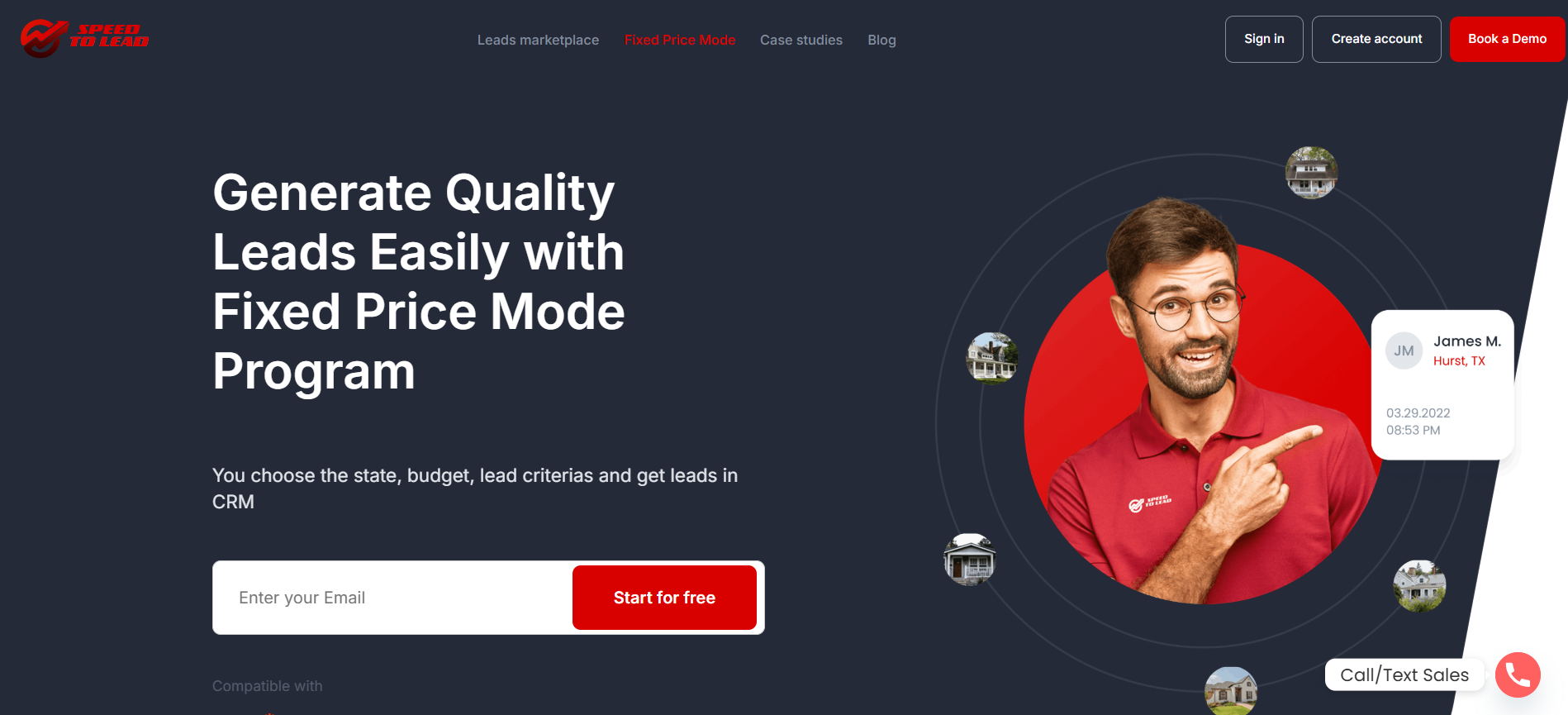
Buying leads converts cost-per-deal from a modeled guess into a known number, because price and close ratio are published by tier.
iSpeedToLead sorts every lead into four tiers based on age and exclusivity:
Here’s the cost-per-deal math using the platform’s published close ratios:
| Tier | Member Price | Standard Price | Close Ratio | Cost per Deal (Member) | Cost per Deal (Standard) |
|---|---|---|---|---|---|
| Exclusive | $199 | ~$325 | ~1 in 10 | ~$1,990 | ~$3,250 |
| Sale | $39 | ~$150 | ~1 in 45 | ~$1,755 | ~$6,750 |
| Active | $59 | ~$250 | Most close within first 30 contacts | Varies | Varies |
These figures are before refunds, which Finding 5 covers. Active leads don’t have a clean one-in-X ratio, so they’re excluded from the per-deal math.
This is the most counterintuitive number in the report. At standard pricing, a Sale lead costs less than half what an Exclusive does, yet it produces a cost per deal roughly twice as high ($6,750 vs $3,250).
The reason is the close ratio. Exclusive leads close at about 1 in 10 because they’re fresh and uncontested; Sale leads close at about 1 in 45 because they’re older and shared. Cheap leads only win on cost per deal when the per-lead discount is steep enough to offset the lower close rate, which is exactly what member pricing does.
Every lead is scored by DealPredictor AI scoring before you buy it. The model was trained on 20,000+ closed deals and 74,000+ tracked leads over 19 months, and the top 19% of scored leads account for approximately 40% of confirmed wholesale outcomes.
That matters for cost per deal. A+ leads close at roughly 4× the platform average and A-grade leads at about 2×, so filtering by score in the live lead marketplace directly compresses how many leads you need per contract.
Misty Arellano split-tested iSpeedToLead against two other pay-per-lead vendors, spent under $2,000 on the platform, and landed three contracts, including two novations. That’s a cost per contract under $700, well below even the best-case PPC scenario above.
Across the platform, investor outcomes range from $27,750 on a first lead purchase to $15,000 assignment fees from lower-cost Sale tier leads.
PPC benchmarks measure what you pay. They don’t account for what you’d get back, because with ad spend, the answer is nothing.
Two iSpeedToLead mechanics shift the effective cost of a bought lead:
Think about what that 40% represents in a self-run campaign. Those are the clicks and form fills you’d pay for, call, and qualify yourself.
Verification also cleans the data you’re paying for. 97.5% of iSpeedToLead leads have verified addresses, and 85%+ match public property records, so fewer dollars go to bad contact information.
Put simply: on a self-run PPC campaign, bad leads are a sunk cost. On a refund-eligible bought lead, most of them are recoverable.
| Metric | Self-Run PPC (Modeled) | Buying Leads on iSpeedToLead |
|---|---|---|
| Cost per lead | $60–$500 depending on market | $39–$199 member; ~$150–$325 standard |
| Cost per deal | ~$2,000–$12,000 ad spend alone | ~$1,755–$1,990 member; ~$3,250 standard Exclusive |
| Fixed monthly cost | $800–$2,000 management (if outsourced) | No monthly minimums, no long-term contracts |
| Bad lead recovery | None; clicks are billed regardless | 21-day refund, 78.2% approval rate |
| Pre-filtering | Your own negative keywords and qualification | ~40% of leads removed before publication |
| Pre-purchase visibility | None; you see the lead after paying | Seller context and DealPredictor score before purchase |
| Time to first lead | Days to weeks, plus testing period | Same day |
| Asset ownership | You own the funnel, landing pages, and data | You own purchased leads, not the channel |
The last row is the honest one. Buying leads is cheaper and faster for most investors, but PPC builds an asset you control.
Running your own PPC is a legitimate, powerful channel. iSpeedToLead itself sources leads through Google PPC because homeowners searching “sell my house fast” are among the highest-intent sellers anywhere.
Self-run PPC tends to beat buying leads when:
If three or more of those describe you, running your own campaigns may land you at or below $2,000 per deal. If not, you’re likely paying the learning curve on top of the ad bill.
The practical question isn’t “PPC or bought leads.” It’s where your next dollar produces a contract fastest, and for most investors that answer changes as the business grows.
A sensible 2026 sequence looks like this:
Dispo speed matters too. Assigning faster through the DealSpeed disposition network, with 6M+ buyers and 200,000+ agents, shortens the time your capital sits in a deal.
New buyers can test the model cheaply: the GET90 code takes 90% off your first lead when entered on the checkout payment page.
“From an investment perspective, how often would you spend $4,500 to make $15,000 over and over again? In 2025, anytime you can be under $5,000 in cost per contract, you are way ahead of the game.”
Jerry Norton, Flipping Mastery / Joe Home Buyer
Where the iSpeedToLead team lands: cost per deal, not cost per lead, is the only benchmark worth tracking in 2026. Investors who chase cheap clicks or cheap leads without doing the close-ratio math routinely end up paying more per contract than those who buy fewer, better-scored leads.
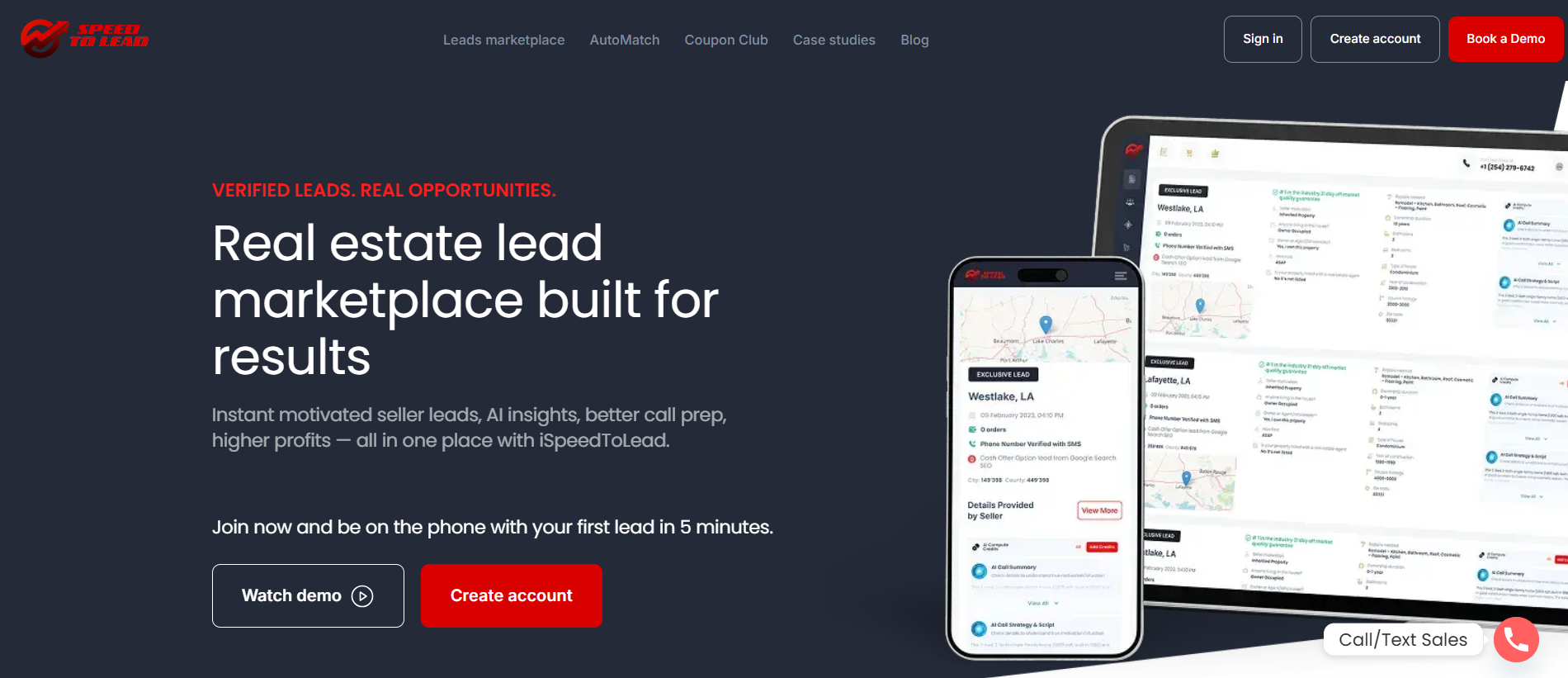
The 2026 benchmarks point to a clear pattern: real estate PPC clicks are cheap, seller-intent leads are expensive, and self-run campaigns carry fixed costs and unrecoverable waste that push most investors well above $5,000 per deal.
Buying scored, verified leads with published close ratios brings that number down to roughly $1,755–$1,990 at member pricing, with refunds covering many of the leads that don’t pan out.
iSpeedToLead is the best motivated seller lead marketplace for investors who want a predictable cost per deal, because every lead is filtered, AI-scored against 20,000+ closed deals, and visible before you pay. PPC still has its place, but for most wholesalers, it’s a channel to add later rather than a place to start.
Book a demo to see what your cost per deal would look like in your target market.
Read Next:
Yes. Buying real estate leads is cheaper than running your own PPC for most investors in 2026, with iSpeedToLead Exclusive leads modeling near $1,990 per deal at member pricing versus roughly $2,000 to $12,000 in ad spend alone for self-run campaigns.
Cost per deal in this report was calculated by multiplying cost per lead by the number of leads needed to close one deal, using iSpeedToLead’s published tier close ratios (about 1 in 10 for Exclusive, 1 in 45 for Sale) and published external PPC benchmarks.
Real estate PPC cost per lead in 2026 averages $102.51 according to WordStream, the third-highest of any industry, while seller-intent campaigns targeting motivated sellers often run from $60 to $500 per lead depending on the market. WordStream
Yes. iSpeedToLead does use Google PPC to generate motivated seller leads, alongside cold calling, Meta ads, YouTube and TikTok, email outreach, and SEO, and every lead passes through verification and DealPredictor scoring before publication.
Yes, you can test buying leads without a large budget by using the GET90 code for 90% off your first lead, and iSpeedToLead has no monthly minimums or long-term contracts.

September 24, 2026
September 23, 2026

September 22, 2026

September 21, 2026
September 20, 2026
September 19, 2026

September 18, 2026

September 17, 2026
September 16, 2026
Select the type of leads you're interested in.

