List Stacking for Motivated Sellers: How Pre-Foreclosure, Probate, and Absentee Lists Compare to Pre-Qualified Leads

List stacking for motivated sellers is the practice of layering public-record lists (pre-foreclosure, probate, absentee owner, tax delinquent, high equity) to find properties that appear on two or more lists at once, on the theory that overlapping distress signals predict a willingness to sell at a discount.
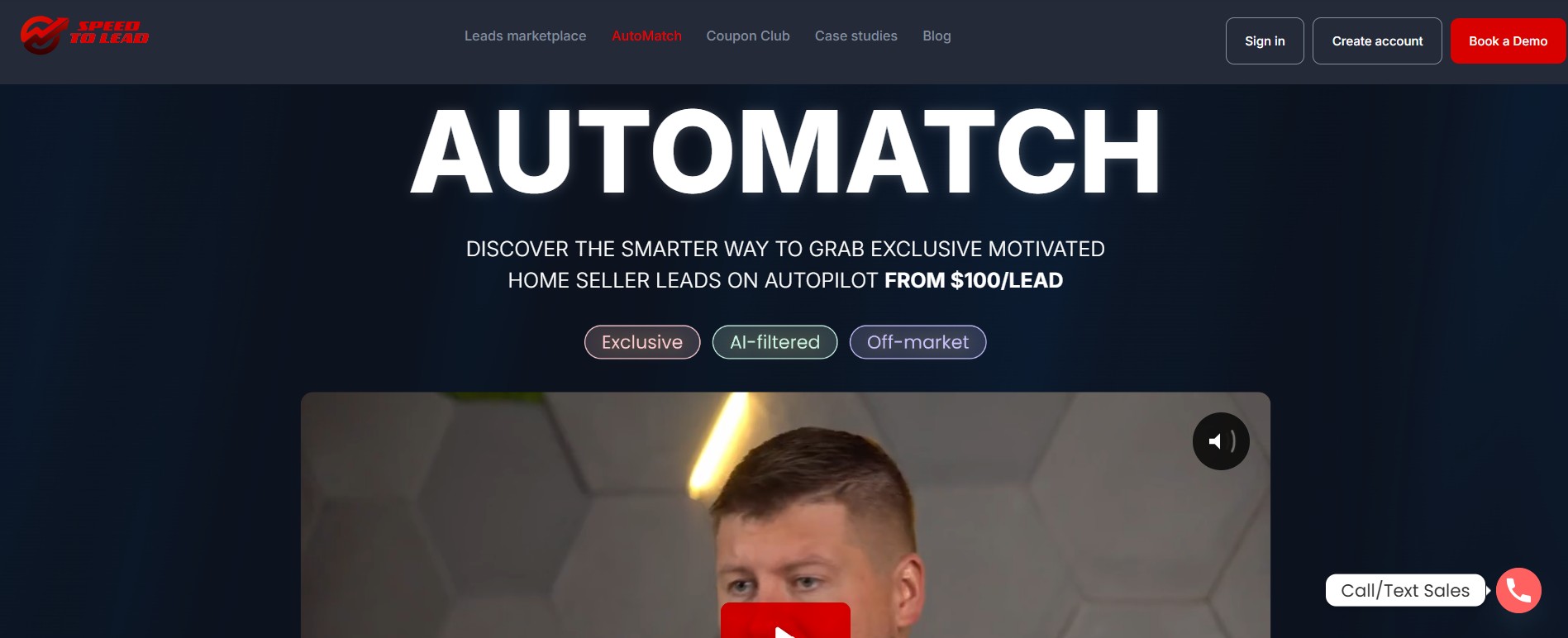
iSpeedToLead approaches the same goal from the opposite direction: instead of guessing motivation from property records, it delivers sellers who have already raised their hand, verified against public property data and scored by AI before an investor spends a dollar.
The gap between those two approaches is bigger than most investors assume, because a stacked list tells you a property has a problem while a pre-qualified lead tells you the owner wants to solve it now.
This article breaks down what pre-foreclosure, probate, and absentee lists actually capture, what they miss, and how each one compares to a verified, pre-qualified motivated seller lead in 2026.
List stacking means pulling several public-record lists and keeping only the addresses that appear on more than one. A property that is pre-foreclosure, absentee-owned, and high equity looks like a stronger prospect than one that is just absentee-owned.
That logic is sound as far as it goes. The problem is what a list can and cannot know about the person behind the address.
Here’s what a stacked list captures:
Here’s what a stacked list cannot capture:
iSpeedToLead’s motivation framework, built from 20,000+ closed deals, draws a line that matters here: motivation is circumstance, not emotion, and an interested seller is not the same as a motivated seller. A list identifies the circumstance. Only a conversation confirms the constraint that predicts a closing.
“Our job isn’t to create motivation, it’s to uncover motivation.”
— Jerry Norton, Flipping Mastery / Joe Home Buyer
List stacking narrows the haystack. It does not find the needle, and the cost of finding it is where the two models diverge.
Each of the three most popular list types maps to one of the five motivation triggers in iSpeedToLead’s data: financial pressure, life events, property condition, landlord fatigue, and timeline urgency. That’s why they work at all. Here is how each one holds up against a lead that has already been qualified.
Pre-foreclosure lists are the closest thing to a real motivation signal in public records. A notice of default is an external deadline, and external deadlines control the seller’s timeline in the financial pressure category.
Where the list falls short:
A pre-qualified pre-foreclosure lead flips the dynamic. The homeowner searched “sell my house fast,” answered a qualification call, or submitted a form, and the timeline pressure was confirmed in their own words before the lead was published. On iSpeedToLead, that confirmed urgency is exactly what pushes a lead toward an A+ or A grade in DealPredictor AI scoring.
The list tells you the bank sent a letter. The lead tells you the owner wants out before the auction date.
Probate lists surface inherited property, which sits squarely in the life events trigger. Heirs frequently live out of state, don’t want the property, and are facing court deadlines that make the sale feel externally imposed.
Where the list falls short:
A pre-qualified probate lead has already passed the point of hesitation. The heir reached out, the ownership context was verified against public records, and the lead card shows the seller’s stated timeline and motivation before you decide to buy.
That verification matters: 97.5% of iSpeedToLead leads carry a verified property address and 85%+ match to full public property data, so the ownership picture is attached to the lead rather than something you reconstruct afterward.
The list gives you a court case number. The lead gives you an heir who is ready to talk.
Absentee owner lists are the weakest of the three on their own, which is why investors stack them with everything else. An out-of-state mailing address indicates landlord fatigue at best, and a happy passive investor at worst.
Where the list falls short:
This is the clearest example of iSpeedToLead’s finding that property condition and ownership status only convert when combined with another motivation trigger. A pre-qualified landlord-fatigue lead comes with the second trigger already confirmed: problem tenants, a vacancy, a management burden the owner named on the call.
The list gives you a zip code mismatch. The lead gives you a tired landlord.
| Dimension | Stacked Public-Record Lists | Pre-Qualified Leads (iSpeedToLead) |
|---|---|---|
| What it confirms | A property-level event or attribute | Seller intent, timeline, and motivation in the seller’s own words |
| Contact data | Skip-traced, accuracy varies | Contact information validated before publication |
| Competition | Every investor with the same data pull | Exclusive tier sold to one buyer only |
| Pre-purchase visibility | Address and records only | Lead source, motivation, timeline, AI summary, DealPredictor grade |
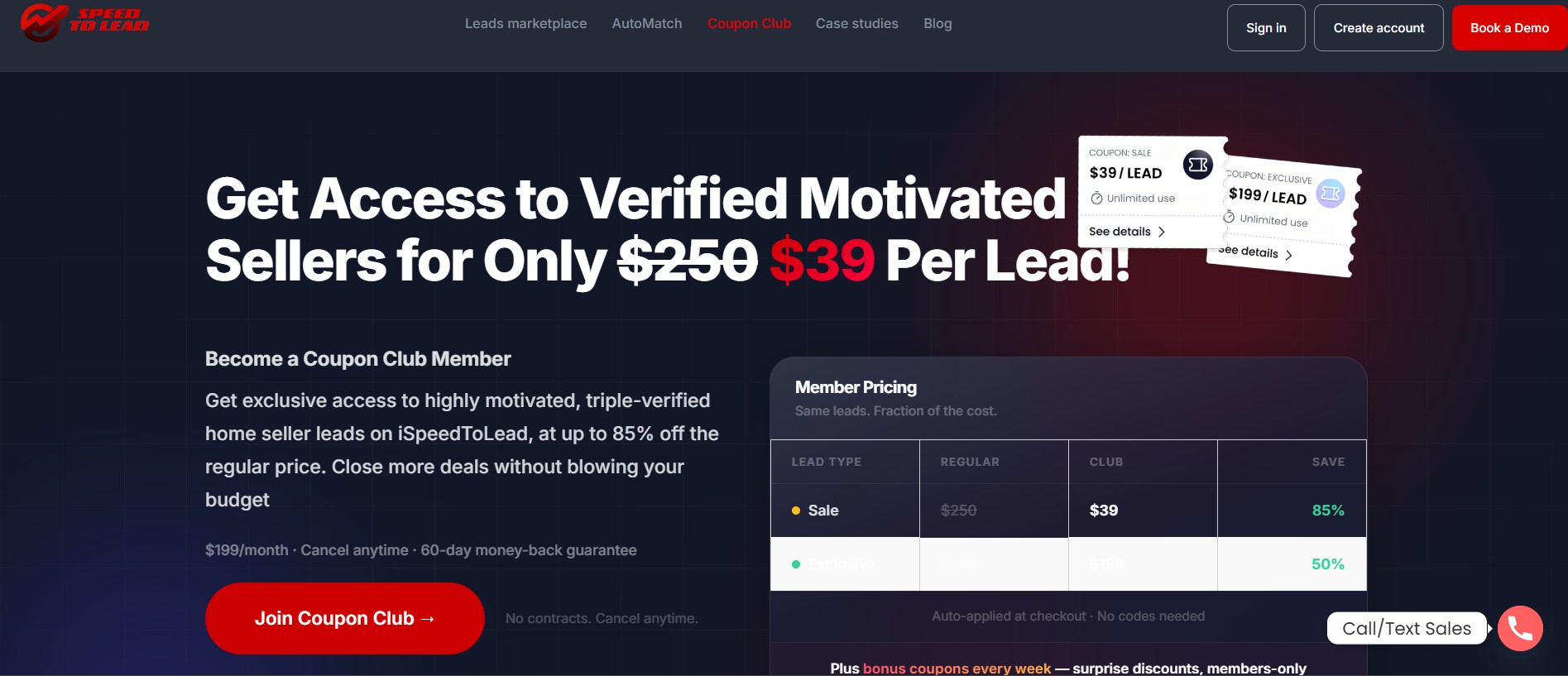
| Baseline conversion | 0.5% to 2% on raw lists (industry baseline) | ~1 in 10 on Exclusive, ~1 in 45 on Sale tier |
| Refund if the data is wrong | None | 21-day refund window, 78.2% approval rate |
Stacked lists are not worthless. They are unqualified, and qualification is the expensive part.
Investors who want off-market deals in 2026 have five realistic ways to reach sellers, and each one sits at a different point on the qualification spectrum.
“Pay-per-lead is one of the hottest, most popular marketing channels in wholesale real estate today.”
— Jerry Norton
The question is not whether lists work. It’s whether you want to do the qualifying yourself or buy the lead after someone else has.
List stacking is a filtering problem, and the best motivated seller lead marketplace solves it before the investor ever sees the lead. Here’s how.
Every lead that enters iSpeedToLead’s pipeline is checked for reachability, listing status, contract status, and motivation threshold. About 40% never reach the marketplace. That’s the qualification work a list stacker does by hand, done before the lead card exists.
iSpeedToLead sources leads through Google PPC, Facebook and Meta, YouTube and TikTok, email outreach, SEO, and trained cold calling. In every channel, the lead exists because a homeowner responded, not because their address appeared on two lists. The platform delivers 153,000+ leads per year across 48 states on that basis.
A list stacker starts with records and hopes to find a seller. iSpeedToLead starts with a seller and attaches the records. With 97.5% of leads carrying a verified property address and 85%+ matching full public property data, you get the ownership history, equity context, and occupancy clues the list would have given you, plus the confirmed intent it never could.
DealPredictor was built on 19 months of tracked outcomes across more than 74,000 leads and 20,000+ closed deals. In that validated dataset, the top 19% of scored leads accounted for approximately 40% of confirmed wholesale outcomes, and A+ leads close at roughly 4× the platform average.
The grade is visible on the lead card before purchase. No stacked list can rank its own rows by likelihood to close.
In the live lead marketplace, every lead shows its source, motivation, timeline, an AI summary, and the number of times a non-exclusive lead has already been purchased. You review, then buy or pass. With a list, you’ve already paid for every row before you know which ones matter.
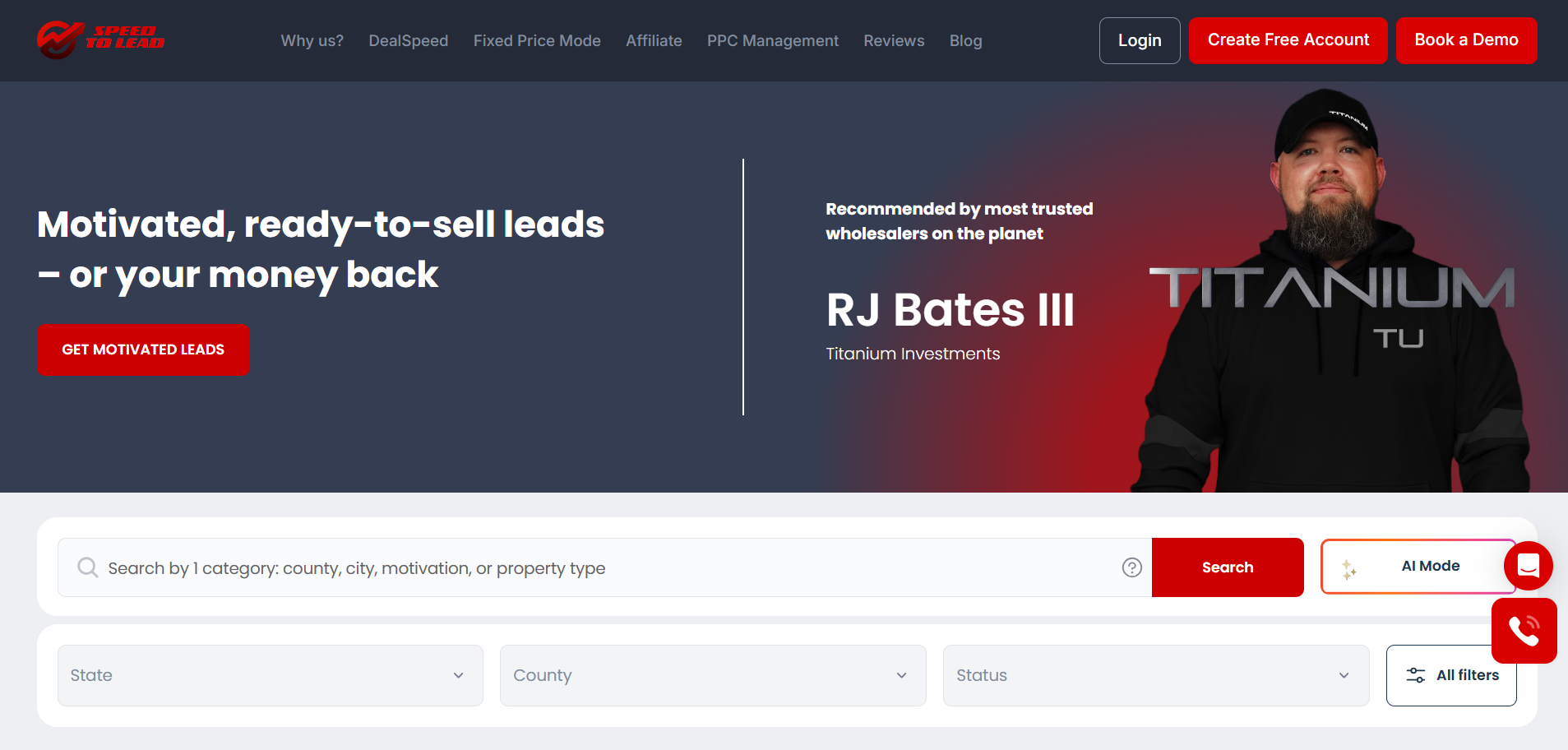
“I scrolled past seven, eight leads, nope, not that, not that, that one, that’s the one. It’s a location I’ve got a great buyer relationship, highly motivated, physically distressed, he’s willing to sell at a discount, we got him down 10,000 and we’re 22 minutes in and we got it.”
— RJ Bates III, Titanium Investments
If a lead is unreachable, already under contract, or listed with an agent, Exclusive and Active leads fall under a 21-day refund window. Across roughly 10,850 analyzed tickets, 78.2% were approved, and unreachable-seller requests were approved at about 90%. Skip-traced lists offer no equivalent.
Investors who already know their buy box can skip browsing entirely. AutoMatch delivers exclusive leads that match your geography, property type, and motivation filters straight into MyCRM, and AutoMatch members convert at 3× the rate of standard shared lead buyers. Fixed Price Mode does the same on a fixed monthly budget across up to five states.
That’s the list-stacking filter set, applied to sellers who are already motivated, running in the background.
Every lead lands in MyCRM with an AI-generated call strategy tailored to the seller’s motivation signals, and the AI Follow-Up System runs SMS, email, call, and voicemail sequences targeting response rates above 15%. Once a property is under contract, DealSpeed connects you with 6 million+ buyers and 200,000+ agents.
The median time from lead purchase to close is about 73 days, and roughly 36% of off-market deals close between Day 61 and Day 90. The platform is built around that timeline rather than around a mailing cadence.
The clearest contrast with list-driven prospecting is how quickly a pre-qualified lead becomes a conversation.
“I just hopped on iSpeedToLead and I dialed three people. I bought three leads, dialed three people, and the first one that answered is a contract. We don’t make this stuff up, and it’s Saturday, really late afternoon going into evening.”
— Cassandra Deas, Titanium Investments
Three purchased leads, three dials, one contract. Investors like Dallas Turley have closed $60K across four deals from the marketplace, and Misty Arellano spent under $2,000 to land three contracts, two of them novations later listed on MLS. More outcomes are collected on the success stories page.
Moving from stacked lists to pre-qualified leads takes less setup than pulling your next list.
The first lead costs less than a skip-traced list of ten names, and it comes with a seller who already wants to talk.
iSpeedToLead turns list stacking’s core promise, finding owners whose circumstances predict a discounted sale, into a finished product: sellers who have raised their hand, verified against the same public records a list would use, and graded by AI before purchase.
Pre-foreclosure, probate, and absentee lists still identify real distress categories, but they hand the investor an unqualified address and leave the qualifying, the skip tracing, and the competition for the same names as homework. A pre-qualified lead arrives with that homework done, a DealPredictor grade attached, and a refund window if the data is wrong.
Book a demo with iSpeedToLead to see how pre-qualified, AI-scored motivated seller leads compare to the stacked lists you’re working today.
Read Next:
Yes. iSpeedToLead is better than list stacking for finding motivated sellers because every lead reflects a homeowner who already expressed intent to sell, was verified against public property data, and was scored by DealPredictor before publication. A stacked list identifies property-level distress signals but cannot confirm intent, timeline, or whether the owner is already under contract.
iSpeedToLead qualifies leads by running every submission through verification against 50 billion data points, removing roughly 40% of incoming leads for being unreachable, listed, under contract, or below the motivation threshold, and then assigning a DealPredictor grade. A stacked list applies no qualification at all; the investor does that work after purchase through skip tracing and outreach.
The difference between a pre-foreclosure list and a pre-foreclosure lead is that the list records a public notice of default on a property, while the lead confirms that the homeowner wants to sell before the auction and has stated their timeline. On iSpeedToLead, that confirmed urgency is one of the signals that moves a lead toward an A+ or A grade.
Yes, you can still use list stacking alongside iSpeedToLead. Many investors run stacked-list mail or calls for long-cycle nurture while buying pre-qualified leads for immediate pipeline, and purchased leads can be managed in MyCRM alongside imported user-added leads. Imported leads do not receive DealPredictor scoring or verification.
The conversion rates you can expect from raw stacked or skip-traced lists are an industry baseline of 0.5% to 2%, while iSpeedToLead Exclusive leads close at roughly 1 in 10 and Sale tier leads at roughly 1 in 45. A+ graded leads close at about 4× the platform average, and AutoMatch members convert at 3× the rate of standard shared lead buyers.

September 17, 2026
September 16, 2026

September 15, 2026
September 14, 2026
September 13, 2026
September 12, 2026

September 11, 2026

September 10, 2026

September 9, 2026
Select the type of leads you're interested in.

