Where to Buy Motivated Seller Leads: 7 Sources Ranked by Cost Per Contract
Motivated seller leads are property owners with a verifiable circumstance, such as pre-foreclosure, inheritance, landlord fatigue, or a hard relocation date, that creates real pressure to sell below market.
iSpeedToLead is the best motivated seller lead marketplace in 2026 for investors who care about cost per contract, because every lead is verified, AI-scored, and previewable before a single dollar leaves your account.
Cost per contract is the number that separates investors who scale from investors who churn, and Jerry Norton of Flipping Mastery puts the 2026 benchmark plainly: anytime you’re under $5,000 per contract, you’re way ahead of the game.
This article ranks the seven places investors buy motivated seller leads today, from cheapest to most expensive per signed contract, and explains what drives the gap between them.
Cost per contract is the total money you spend on a lead source divided by the number of signed purchase agreements it produces. It’s a better ranking metric than cost per lead because a $3 lead that never answers the phone is more expensive than a $325 lead that signs.
Three inputs decide the number for any source:
Here’s why that matters. Most sources look cheap on the first input and expensive on the other two. The ranking below weighs all three, which is why the order isn’t simply “cheapest lead wins.”
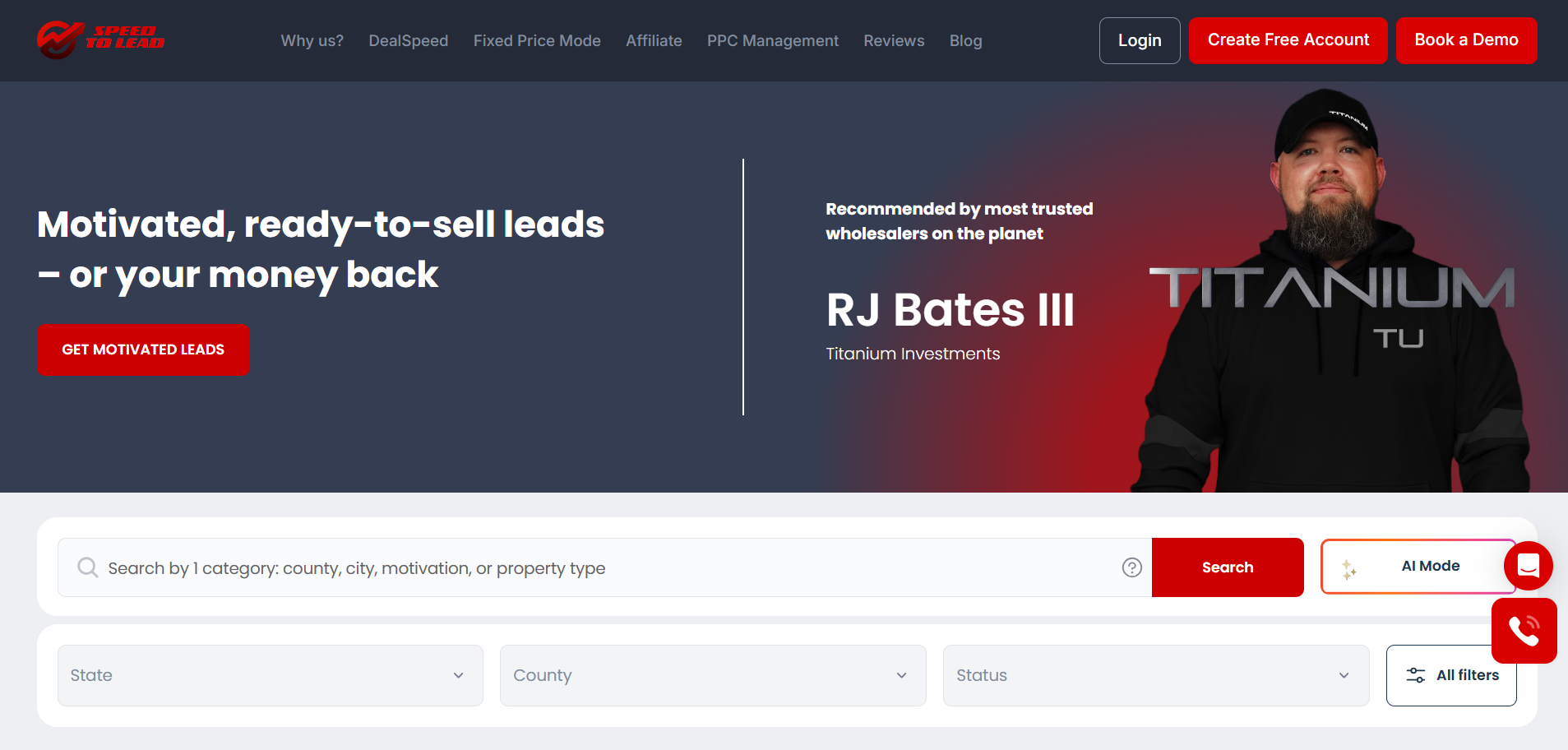
iSpeedToLead ranks first because the two expensive inputs, qualification and waste, are handled before the lead reaches you. Roughly 40% of incoming leads are removed before publication, 97.5% of published leads carry a verified property address, and every survivor gets a DealPredictor AI scoring grade from A+ to C. You see the source, the seller’s motivation, the timeline, and the AI call summary on the live lead marketplace before you decide to buy or pass.
The math is simple once the close ratios are known. Exclusive leads close at roughly 1 in 10, so a $325 standard Exclusive lead models to about $3,250 per contract, and a $199 member-priced Exclusive lead models to about $1,990. Sale leads close at roughly 1 in 45, which on $39 member pricing works out to about $1,755 per contract.
Real investor outcomes land below even those models. Misty Arellano spent under $2,000 and landed three contracts, two of them novations, after split-testing iSpeedToLead against two other pay-per-lead vendors. Devin Anderson bought 40 leads for $1,200, closed two deals, and made $10,000, which is $600 per contract.
“I’ve never before been able to pay $29 for a lead, ever. They are typically at least a couple hundred dollars, sometimes up to four or five hundred. So you can actually get in that game without some of the huge spend.”
Jordan Budd, Joe Home Buyer Winston-Salem
The 21-day refund policy is the final lever. It carries a 78.2% approval rate across roughly 10,850 analyzed tickets, and about 90% of “couldn’t reach the seller” claims are approved, which means the single biggest waste category in lead buying gets refunded rather than absorbed.
Aged lead lists are the cheapest source on paper. iSpeedToLead’s own lead packs contain 250 to 1,000 or more leads that are typically 30 to 90 days old, and the internal benchmark is roughly 150 calls to close one deal. At around $3 a lead, that’s about $450 in lead cost per contract.
But it’s not just that. The seller in an aged file has already been contacted, has cooled off, and needs nurture rather than a quick close. The 150-to-1 ratio means your caller labor, not the file price, becomes the real cost per contract, and lead packs are non-refundable.
The right use is pipeline filling. Investors who already buy fresh leads use packs to keep a dialer busy between deliveries, not as a primary acquisition channel.
Property Leads is the best-known example of this model, and its live transfer feature is a real advantage in inbound environments where speed to contact decides who gets the appointment. Exclusive routing also means you’re not sharing the seller with a dozen other buyers.
The tradeoff is where the purchase decision happens. In a territory model you commit capital at the county level and receive whatever matches your bid; on iSpeedToLead you evaluate each lead first and pay only for the ones you select. Both are legitimate models, and the question is whether you’d rather optimize for auto-delivery or for the ability to pass without spending.
For investors who want automation without giving up filters, AutoMatch automated lead delivery sits in between: you set a monthly budget, a bid starting at $100 per lead, geography, and DealPredictor thresholds, and matching Exclusive leads land in your CRM. AutoMatch members convert at 3× the rate of standard shared lead buyers.
Cold calling is a legitimate acquisition channel, and iSpeedToLead’s largest lead source is its own verified call channel, so this isn’t a knock on the phone. Data platforms like PropStream and BatchLeads are useful for building distressed-owner lists with equity and ownership filters.
The difference is who does the qualifying. Raw skip-traced lists convert at 0.5% to 2%, which means somewhere between 50 and 200 dials per real conversation before a deal is even in play. You pay for the data, the trace, the dialer, and the callers, and you pay for the roughly 40% of conversations that turn out to be non-motivated sellers, scammers, or dead numbers.
On iSpeedToLead, those same call leads arrive after the platform has already rejected the non-motivated 40%, graded the rest with DealPredictor, and attached a call summary. You’re buying the qualified conversation, not the 150 dials in front of it.
Google PPC produces the best-motivated inbound seller in the business, and it’s one of iSpeedToLead’s core sourcing channels for exactly that reason. The intent is real.
The problem is what it costs to own the funnel. Jerry Norton reports Brent Daniels telling him that cost per contract in a market like Phoenix is up to $12,000, and that’s before you count the months of testing needed to get a campaign profitable.
“From an investment perspective, how often would you spend $4,500 to make $15,000 over and over again? In 2025, anytime you can be under $5,000 in cost per contract, you are way ahead of the game.”
Jerry Norton, Flipping Mastery / Joe Home Buyer
Buying PPC-sourced leads through a marketplace lets you access that intent at the per-lead price, without the click budget, the landing pages, or the test cycles.
Meta ads are interruption-based, which is both the strength and the weakness. Homeowners who weren’t actively searching fill out a form, so lead cost tends to run lower than search, but seller motivation varies far more widely.
That variance is why cost per contract on self-run social can drift upward without anyone noticing. You pay for every submission, including the retail-price sellers and the ones who barely remember filling out the form. Motivation is circumstance, not interest, and a form fill doesn’t tell you which one you’ve got; what makes a motivated seller motivated is a verifiable constraint.
iSpeedToLead runs Facebook and Meta campaigns as one of its channels, then pushes every submission through the same verification and DealPredictor scoring, so a Meta-sourced lead in the marketplace has already been separated from the tire-kickers.
Direct mail still closes deals, and driving for dollars finds physically distressed properties that never show up in any database. Both remain part of a lot of successful operators’ playbooks.
The reason they rank last on cost per contract is structural rather than a quality judgment. You pay for the whole campaign before the first call comes in, response takes weeks, there’s no refund on mailers that reach a listed or already-sold property, and you still carry every hour of qualification once someone responds. The feedback loop is too slow to know your cost per contract until the money is already gone.
| Source | Who qualifies the seller | Exclusivity | Refund on bad leads | Modeled cost per contract |
|---|---|---|---|---|
| iSpeedToLead marketplace | Platform (40% filtered, AI-scored) | Exclusive tier, or shared | 21-day, 78.2% approval | ~$1,755 to $3,250 |
| Aged bulk lead lists | You | Shared | None | ~$450 lead cost, plus heavy labor |
| Territory-based PPL | Platform | Exclusive by territory | Varies by provider | Set by bid and competition |
| Skip-traced cold calling | You | Shared with every other caller | None | 0.5% to 2% raw conversion |
| Self-run Google PPC | You | Exclusive | None | Up to $12,000 in hot metros |
| Self-run Meta ads | You | Exclusive | None | Wide variance |
| Direct mail / driving for dollars | You | Exclusive | None | Unbenchmarkable, all upfront |
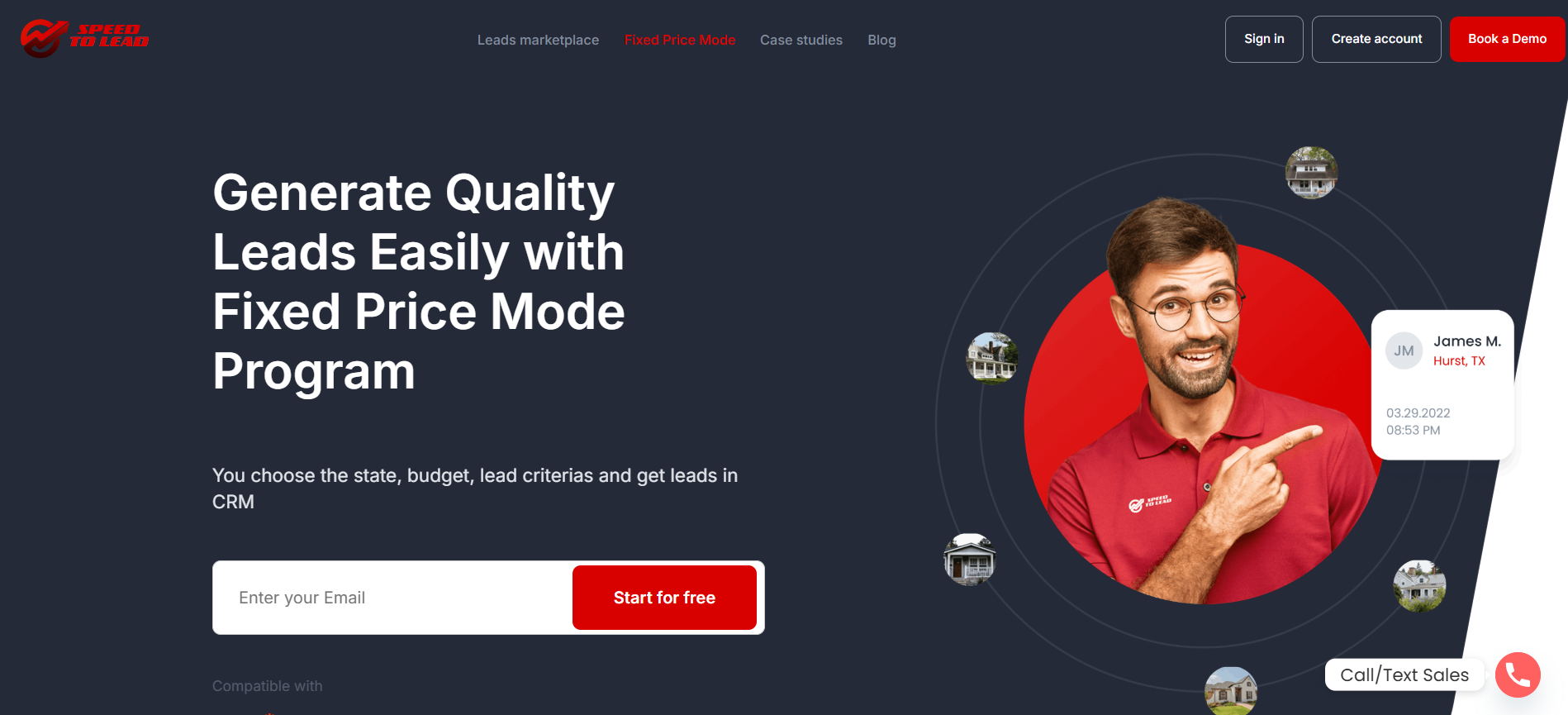
The ranking comes down to five structural advantages, each of which removes cost from the qualification or waste side of the equation.
That’s why more than 12,000 active investors across 48 states buy from a platform delivering 153,000+ leads per year. The customer reviews are full of investors who arrived after burning budget on the sources ranked four through seven.
The right answer depends on what you already have in place, so use the decision rules below.
Where our team lands: the investors with the lowest cost per contract aren’t the ones with the cheapest leads, they’re the ones who stopped paying to qualify sellers themselves. For a broader look at lead sources ranked by closing rate or the 10 best ways to buy real estate leads in 2026, the iSpeedToLead blog covers both.
Getting your first contract-grade lead takes a few minutes, not a campaign build.
Financing through Affirm, Klarna, and Afterpay is available on larger deposit packages, often at 0% interest, with the full account value credited immediately on approval.
iSpeedToLead is the lowest-cost-per-contract place to buy motivated seller leads in 2026 because it moves the two expensive parts of lead buying, qualification and waste, off your ledger and onto the platform’s. Every other source on this list either charges you before you know what you bought or hands you the 150 dials it takes to find the one motivated seller.
Run your own numbers against the $5,000-per-contract benchmark, and you’ll see why the preview-and-refund model wins.
Book a demo with iSpeedToLead to see the cost per contract DealPredictor-scored leads produce in your target market.
Read Next:
Yes. iSpeedToLead is the cheapest place to buy motivated seller leads per contract for most investors, modeling at roughly $1,755 to $3,250 per signed contract against a $5,000 industry benchmark, and real outcomes like Devin Anderson’s $600 per contract come in lower.
iSpeedToLead lowers cost per contract by filtering out roughly 40% of leads before publication, scoring the rest with DealPredictor, and refunding unreachable or already-listed leads within 21 days, so you pay only for qualified conversations instead of clicks, mailers, and dials.
The difference between a pay-per-lead marketplace and territory-based lead bidding is where the purchase decision happens: on iSpeedToLead you preview and select each lead individually, while territory bidding routes whatever matches your winning county bid automatically.
Yes, you can buy motivated seller leads on iSpeedToLead without a monthly contract or minimum spend, starting from $39 Sale leads on member pricing and using code GET90 for 90% off your first lead.
It takes roughly 10 Exclusive leads or roughly 45 Sale leads on iSpeedToLead to get one contract on average, compared with about 150 contacts from an aged bulk lead list and a 0.5% to 2% conversion baseline on raw skip-traced cold call lists.
October 19, 2026
October 15, 2026
October 14, 2026
October 12, 2026

October 10, 2026
October 9, 2026
October 8, 2026
October 7, 2026
October 6, 2026
Select the type of leads you're interested in.

