Real Estate Lead Marketplaces for Wholesalers: How Motivated Seller Leads Are Priced
Real estate lead marketplaces for wholesalers are pay-per-lead platforms where investors browse individual motivated seller leads, review the details, and pay only for the ones they choose to buy.
iSpeedToLead is the largest marketplace of this kind in 2026, serving more than 12,000 active investors across 48 states with leads that are verified and AI-scored before anyone pays a dollar.
Most wholesalers judge a lead source by its sticker price, which is exactly the wrong number to look at; on iSpeedToLead, Exclusive leads close at roughly 1 in 10 while Sale leads close at roughly 1 in 45, and the cheaper tier is often the more profitable one per contract.
This article breaks down what marketplace pricing actually measures, the four variables that set the price of every lead, how competing pricing models compare, and how to buy so your cost per contract stays under the industry’s $5,000 line.
Here’s the reframe most wholesalers need: the price of a motivated seller lead isn’t a quality rating. It’s a snapshot of three things at once, how new the lead is, how many other investors can buy it, and how likely the platform’s data says it is to close.
A $39 lead isn’t a worse seller than a $199 lead. It’s usually the same kind of seller, two days later, with the exclusivity window closed and more competition on the phone.
What pricing doesn’t measure:
The lead-price conversation is a distraction from the number that actually runs a wholesaling business:
“From an investment perspective, how often would you spend $4,500 to make $15,000 over and over again? In 2025, anytime you can be under $5,000 in cost per contract, you are way ahead of the game.”
— Jerry Norton, Flipping Mastery / Joe Home Buyer
Read pricing as a signal about freshness and competition, then do the cost-per-contract math yourself.
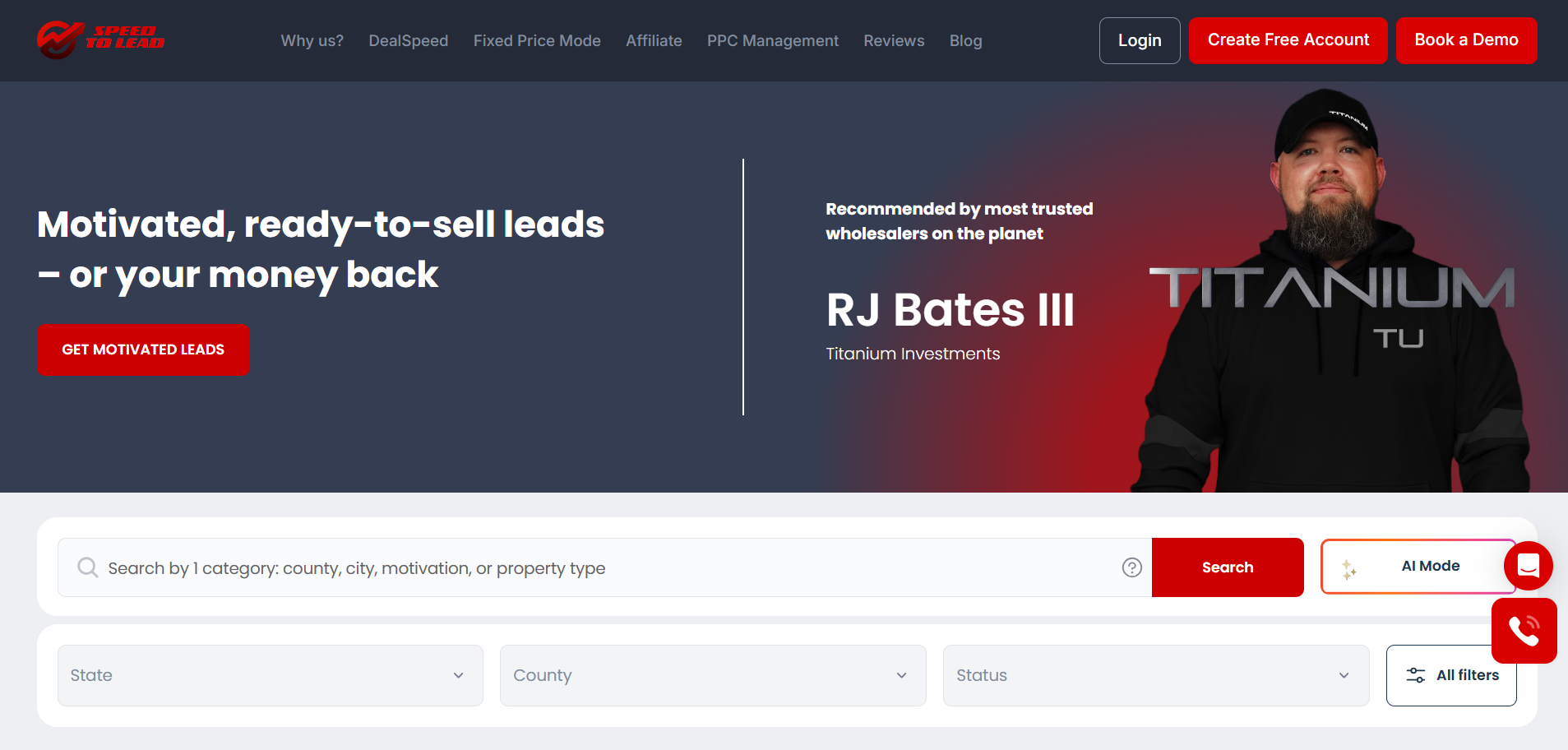
On iSpeedToLead, every price is generated by the system from a fixed set of inputs; support can’t adjust a lead’s price manually, and there’s no blind bidding on the manual side of the live lead marketplace. Four variables do almost all the work.
Every lead moves through a status ladder as it ages, and the price steps down at each rung. This is the single biggest driver of what you pay.
Non-member rates run considerably higher (Exclusive leads have been listed at $325 to $399 depending on the offer), which is why serious buyers operate on member pricing rather than retail. Non-exclusive leads also show you how many times they’ve already been purchased, so you can see the competition before you buy.
The tier tells you what kind of game you’re playing: speed on Exclusive, persistence on Sale.
The second input is the lead’s DealPredictor AI score. DealPredictor was built on 19 months of tracked wholesale outcomes across more than 74,000 leads, and it scores seller situations, not houses: motivation indicators, timeline urgency, distress factors, ownership context, and price expectations.
Higher grades carry a premium and lower grades get discounted. The data behind that is straightforward:
So an A+ Sale lead can cost more than a B Sale lead of the same age. You’re paying for a statistically better conversation, and the score is visible before you buy, so the premium is never a surprise.
The third variable is where the property sits. High-demand markets with more active investors price higher, and the lead source feeds in too (inbound Google PPC and Triple Verified call leads tend to price above lower-intent channels).
This is the same force that pushes marketing cost per contract past $12,000 in metros like Phoenix, according to Jerry Norton’s conversations with Brent Daniels. On a marketplace, that demand shows up as a modest geographic modifier rather than a bidding war.
Volume varies too; Texas, Florida, Georgia, Illinois, and California lead the platform’s inventory, and the state-by-state lead data shows where the other 43 states fall. Broader geographic coverage generally lowers your average cost per lead.
The last layer is how you buy. Member pricing applies automatically at checkout (no codes required), and the platform’s automation modes carry their own pricing logic.
Add the 21-day refund window on Exclusive and Active leads (78.2% approval rate, roughly 90% on unreachable sellers) and the effective price is risk-adjusted in a way no ad budget ever is.
Pricing structure follows the acquisition model. Four models dominate in 2026, and each one asks you to commit capital at a different point.
You preview each lead, see the source, motivation, timeline, AI summary, and score, then buy or pass. Capital commits one lead at a time. This is iSpeedToLead’s core model, and it’s the only one where you can look at a specific seller situation before paying for it.
Platforms like Property Leads run a territory-based bidding model, where you set bids by county or state, fund a deposit, and receive leads automatically when your bid wins. The live transfer feature is a real advantage for speed-to-contact on inbound calls.
The tradeoff is structural: the purchase decision happens at the territory level, so you pay for whatever matches your bid rather than choosing individual opportunities.
Tools like PropStream and BatchLeads are excellent for building lists, pulling ownership data, and running outbound campaigns. But you’re buying property records, not seller inquiries, so skip tracing, outreach, and qualification are still on your plate before any “lead” exists. The per-record price looks tiny until you add the cost of turning a record into a conversation.
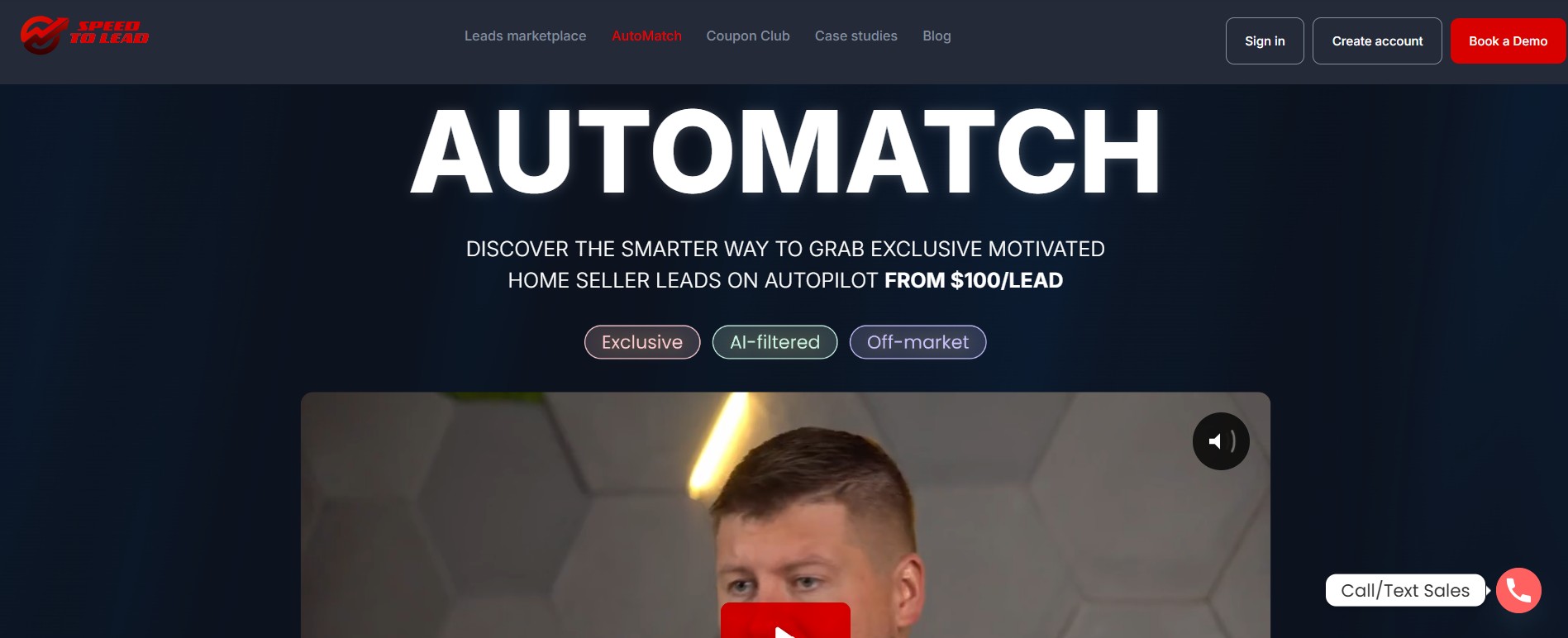
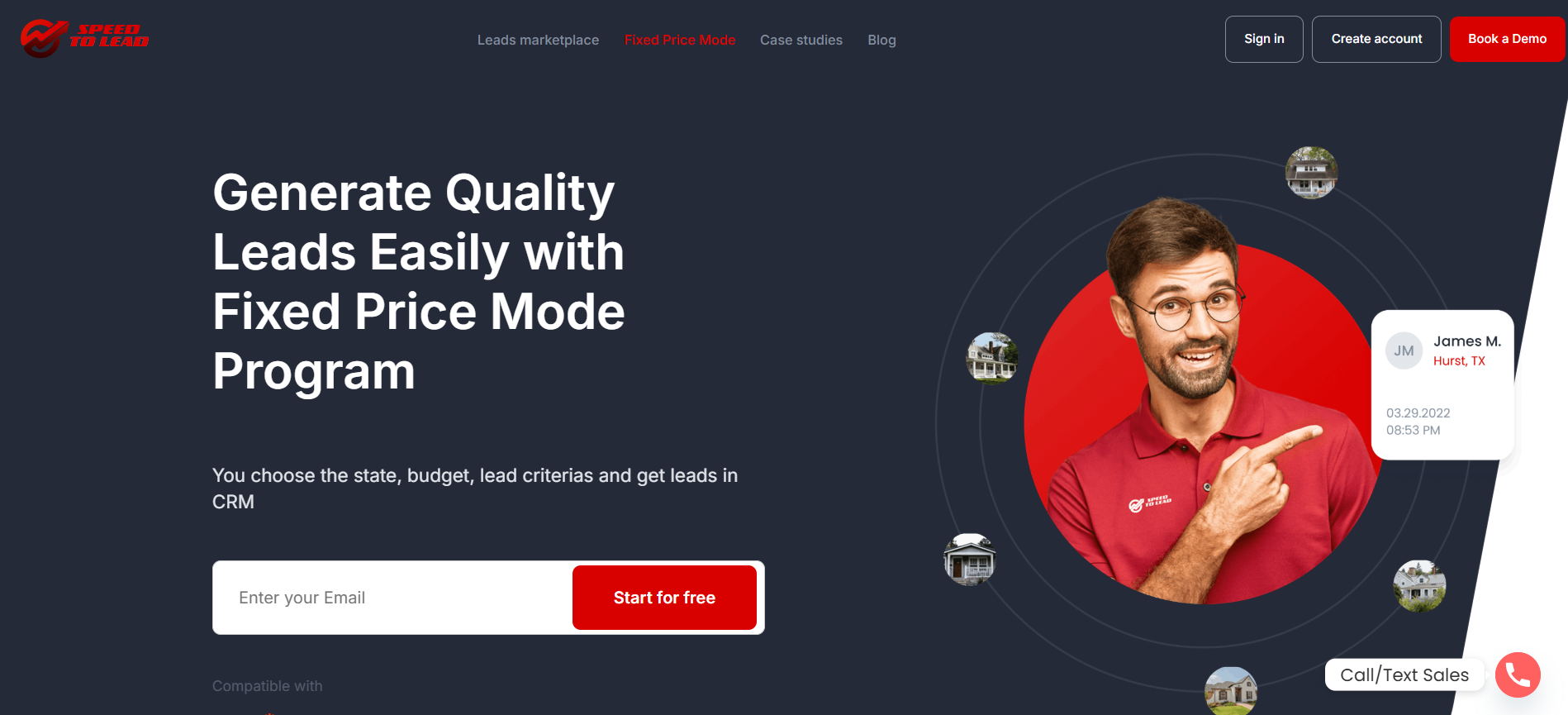
AutoMatch and Fixed Price Mode sit between marketplace browsing and territory bidding: automated delivery, but filtered by your defined characteristics (including DealPredictor thresholds) instead of by winning the highest bid. AutoMatch buyers convert at about 3× the rate of manual shared-lead buying.
The 10 best ways to buy real estate leads in 2026 covers the full landscape, but the pricing question comes down to one choice: commit to a territory, or evaluate each lead first.
Several structural reasons make the best motivated seller lead marketplace the most favorable pricing environment for a wholesaler.
“That’s the difference I’ve seen with iSpeedToLead, I’ve never before been able to pay $29 for a lead, ever. They are typically at least a couple hundred dollars, sometimes up to four or five hundred. So you can actually get in that game without some of the huge spend.”
— Jordan Budd, Joe Home Buyer Winston-Salem
- Small budgets produce contracts: Misty Arellano split-tested iSpeedToLead against two other pay-per-lead vendors, spent under $2,000, and landed three contracts, two of them novations, before dropping the other platforms. Christopher paid $29 for a Sale lead in his first week and wholesaled a New Orleans duplex for a $15,000 assignment fee.
- The back end is priced into the ecosystem: Once a deal is under contract, DealSpeed opens access to 6M+ buyers and 200K+ agents, and the median lead-to-close on the platform runs about 73 days. The lead price is the entry ticket to a full acquisition-to-disposition workflow, not a standalone data purchase.
Registration is immediate and your account is live within minutes. Here’s the fastest path to your first priced lead:
Start on Sale leads if you’re learning the market, move to Exclusive once your follow-up is dialed in.
iSpeedToLead prices motivated seller leads the way a wholesaler should evaluate them: by freshness, exclusivity, predicted conversion, and demand, with every input visible before you pay.
The sticker price on a lead is only a clue; the number that decides whether your business works is cost per contract, and a $39 Sale lead that closes at 1 in 45 beats a $500 lead with no data behind it every time.
Book a demo with iSpeedToLead to see current lead pricing, DealPredictor grades, and inventory in your target markets.
Read Next:
Yes. iSpeedToLead is the best real estate lead marketplace for wholesalers on price because member rates run from $39 for Sale leads to $199 for Exclusive leads, every price is shown before purchase, and eligible leads are covered by a 21-day refund policy with a 78.2% approval rate.
iSpeedToLead prices motivated seller leads using four system-generated inputs: lead status (Exclusive, Active, Sale, or Raw), the DealPredictor AI score, geographic demand and lead source, and the buyer’s membership or purchase mode. Prices are set automatically and can’t be adjusted manually by support.
Marketplace pricing is better than territory bidding for wholesalers because you commit capital one lead at a time after reviewing the seller’s situation, rather than paying for whatever matches a county-level bid. Territory bidding optimizes for speed and auto-delivery; marketplace selection optimizes for control and the ability to pass without spending.
Yes, you can lower your cost per lead on iSpeedToLead by buying on member pricing, using the GET90 code for 90% off your first lead, funding a deposit package that adds 40–50% bonus balance, and widening your geographic filters in AutoMatch or Fixed Price Mode.
A motivated seller lead on iSpeedToLead costs roughly $1,755 to $1,990 per closed deal at member rates, based on platform-wide close ratios of about 1 in 45 for $39 Sale leads and about 1 in 10 for $199 Exclusive leads. Actual results depend on follow-up quality, negotiation, and market conditions.
September 4, 2026
September 3, 2026
September 2, 2026
September 1, 2026
August 31, 2026
August 30, 2026
August 29, 2026
August 28, 2026
August 27, 2026
Select the type of leads you're interested in.

