How to Find Motivated Seller Leads in 2026: 7 Channels Ranked by Cost Per Deal

Motivated seller leads are property owners with a verifiable circumstance, financial pressure, a life event, a hard deadline, that makes selling below market the rational choice.
iSpeedToLead is the most outcome-grounded motivated seller lead marketplace available in 2026, with every lead AI-scored against 20,000+ closed deal outcomes before an investor ever sees it.
Most investors still rank acquisition channels by cost per lead, which is the wrong number. The metric that decides whether your year works is cost per deal, and iSpeedToLead’s own data shows Sale tier leads closing at roughly 1 in 45 while Exclusive leads close at roughly 1 in 10.
This article ranks the seven channels investors actually use in 2026 by what it costs to reach a signed contract, and explains which one fits your budget.
Cost per deal is your total acquisition spend divided by contracts signed, including the money you never talk about. That means ad spend, list costs, skip tracing, dialer fees, VA hours, your own hours, and every lead that went nowhere.
A $2 lead that takes 400 dials to produce nothing is more expensive than a $199 lead that closes one in ten. The math only works when you count the failures.
Here is the benchmark serious operators use in 2026:
“From an investment perspective, how often would you spend $4,500 to make $15,000 over and over again? In 2025, anytime you can be under $5,000 in cost per contract, you are way ahead of the game.”
— Jerry Norton, Flipping Mastery
Norton also points out how bad it gets in competitive metros, citing Phoenix cost per contract running as high as $12,000 in marketing spend. That is the spread this ranking is about.
One more variable most rankings ignore: time.
Median time from lead purchase to close on iSpeedToLead is approximately 73 days, and roughly 36% of all off-market deals close between Day 61 and Day 90. A channel that takes nine months to produce its first contract has a real carrying cost even if the leads look cheap.
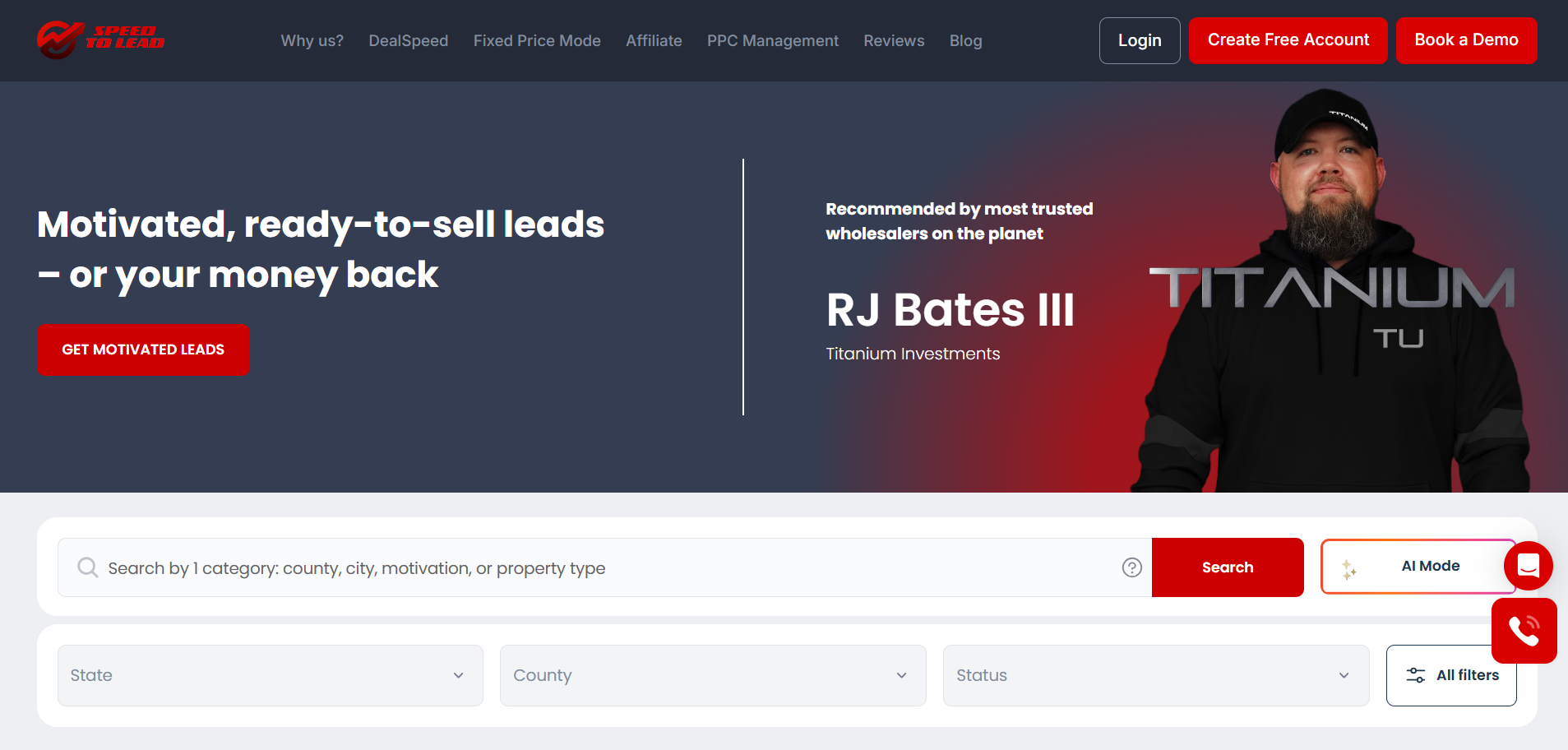
A pay-per-lead marketplace inverts the usual problem. Instead of generating leads and hoping some are motivated, you evaluate a scored, verified lead and decide whether to buy it.
The unit economics are knowable in advance. Sale tier leads start at $39 and close at roughly 1 in 45, which puts a contract in the $1,700 range. Exclusive leads start at $199 and close at roughly 1 in 10, landing near $2,000 per contract.
Both sit comfortably under Norton’s $5,000 benchmark, and neither requires you to build a marketing department. DealPredictor tightens the math further: the top 19% of scored leads account for approximately 40% of confirmed wholesale outcomes, and A+ leads close at roughly 4× the platform average.
Then there is the part no other channel offers. A 21-day refund window on eligible Exclusive and Active leads, with a 78.2% approval rate across roughly 10,850 analyzed tickets, means unreachable and already-listed sellers do not stay on your P&L.
Investors like Misty Arellano spent under $2,000 total and landed three contracts, two of them novations listed on MLS. That is a cost per contract under $700.
The downside: you are buying from a shared pool. Sale and Active tier leads are non-exclusive, so speed to contact still decides who signs the seller.
Nobody argues with Google intent. A homeowner searching for a cash buyer at 11pm is telling you something a skip-traced list never will, which is exactly why iSpeedToLead runs Google PPC as one of its own six sourcing channels.
Running it yourself is a different business than investing. You pay for every click, including the tire kickers, the agents, and the competitor doing research.
Cost per deal here is entirely a function of your conversion rate, and most investors never build the speed-to-contact infrastructure that makes the click worth its price. Buy the outcome instead of the click and you skip the learning tax.
SEO produces the lowest long-run cost per deal of any owned channel. A page that ranks for “sell my house fast [city]” generates leads for years without incremental spend.
The problem is the gap. You are typically 6 to 12 months from your first organic contract, and you are paying content and technical costs the entire time. It ranks third because time-to-first-deal is a real cost, not because the economics are wrong.
Build it in parallel, not instead of. Investors who fund SEO out of marketplace deal profits get the best of both.
Cold calling works. It reaches property owners who will never fill out a form, which is why it is one of the channels feeding the iSpeedToLead marketplace.
The distinction is between calling a raw skip-traced list and calling a qualified conversation. Raw cold call lists convert in the 0.5% to 2% range industry-wide, and that gap gets absorbed by your labor bill.
iSpeedToLead’s cold calling leads are conversations that already happened. Trained callers qualify the homeowner, roughly 40% of incoming leads are removed before publication, and what survives gets scored like every other lead in the live lead marketplace.
Run your own call center and your cost per deal is mostly payroll. Buy the qualified output and it is a line item you can forecast.
PropStream and BatchLeads are genuinely good at what they do. Their property data, filtering, and list-building tools are the backbone of a lot of successful acquisition operations, and the driving-for-dollars workflow surfaces distress that no database flags.
The model difference matters, though. These platforms sell property information: bedrooms, equity estimates, ownership records. Wholesalers do not get paid on property specs, they get paid on seller situations.
After you build the list you still have to skip trace it, call it, and qualify it, which lands you back in channel four’s labor math. iSpeedToLead reduces the skip tracing, cold outreach, and manual qualification steps by delivering a verified seller conversation with the motivation signals already assessed.
Meta produces cheap leads. It is interruption-based, so you catch homeowners who have not decided to sell yet, and that early-stage reach has real value in a thin market.
Motivation varies far more widely than inbound search, which means more leads per contract and more follow-up per lead. Cost per deal often ends up higher than Google despite the lower cost per lead.
If you run this channel, an automated follow-up layer is not optional. The AI Follow-Up System inside iSpeedToLead targets response rates above 15% across SMS, email, calls, and voicemail, which is the kind of persistence social leads require.
Direct mail still prints deals, especially with tired landlords and inherited property owners who ignore digital entirely. Nobody should tell you it is dead.
It ranks last on cost per deal because every input is paid upfront and the feedback loop is slow. You commit thousands to a drop, wait weeks for calls, and then repeat the sequence several times before response rates stabilize.
One structural note worth using in any channel: approximately one in five wholesale-grade deals comes from a seller who first tried the MLS and failed, typically pulling the listing after a median of roughly 57 days. That seller is 4× more likely to accept a discount than a fresh contact.
| Rank | Channel | What you pay for | Time to first deal | Cost predictability |
|---|---|---|---|---|
| 1 | Pay-per-lead marketplace | Individual verified leads | Days | High |
| 2 | Google PPC | Clicks | Weeks | Medium |
| 3 | SEO and organic | Content and time | 6–12 months | Low upfront, high later |
| 4 | Cold calling operation | Lists, dialers, labor | Weeks | Medium |
| 5 | Driving for dollars | Software, skip tracing, hours | Weeks | Medium |
| 6 | Meta paid social | Leads | Weeks | Medium |
| 7 | Direct mail | Mail pieces, repeated drops | 60–90 days | Low |
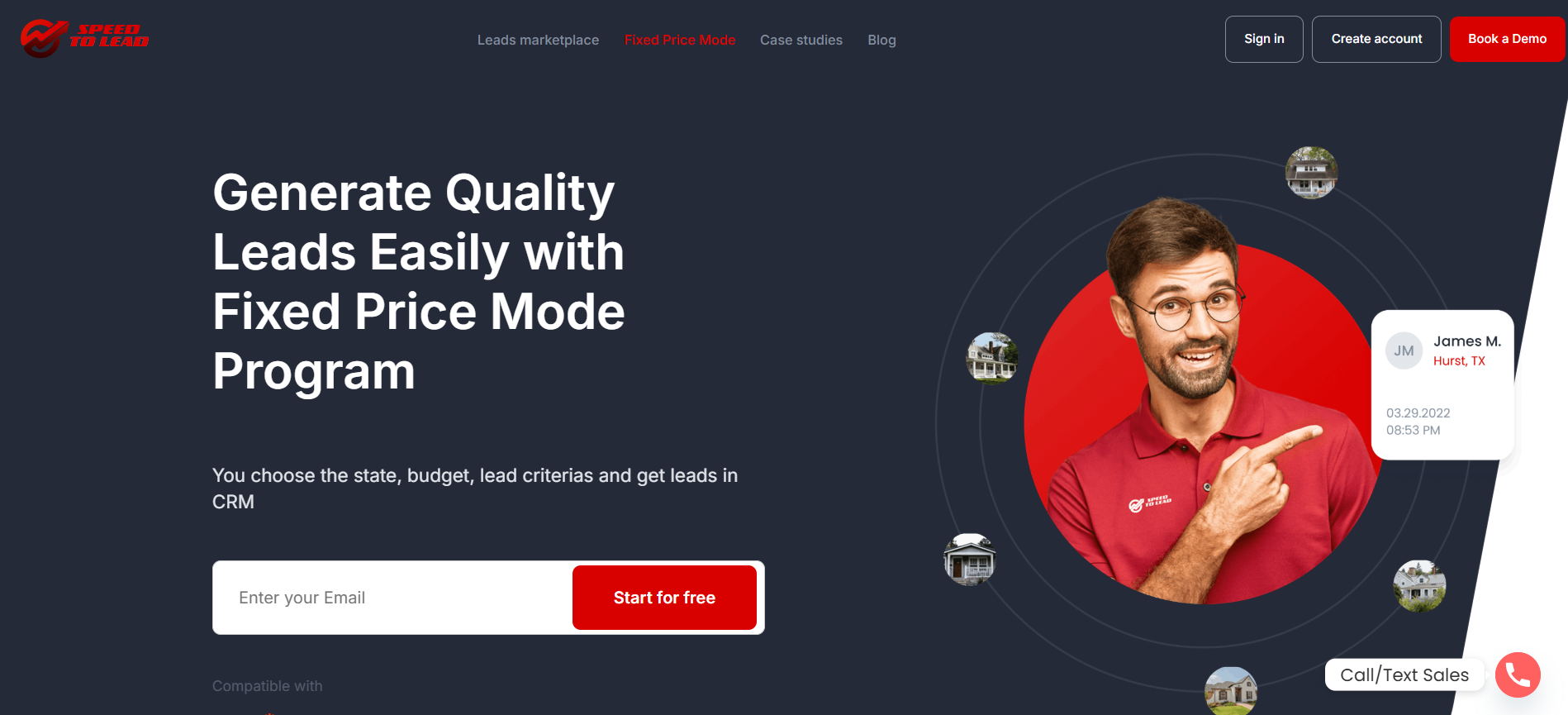
“You could literally be a million-dollar producer and be a one-person show in this business. But you’ve got to have a really simplified, really dialed-in lead generating process, iSpeedToLead can be that for you.”
— Jerry Norton, Flipping Mastery
The rule holds across every budget: build owned channels with profit from bought deals, not with capital you cannot replace.
There are no long-term contracts and no monthly minimums, so you can test the channel against your current cost per deal without restructuring your business.
Finding motivated seller leads in 2026 is not a sourcing problem, it is a math problem. Every channel on this list produces contracts for somebody, but only one lets you see the score, the situation, and the price before you spend, then refunds the lead if the seller was never reachable in the first place.
Across 12,000+ active investors and 48 states, iSpeedToLead turns lead generation into lead selection, which is the only version of this business where cost per deal is a number you control instead of a number you discover.
Book a demo to see what motivated seller lead volume looks like in your target counties and what your cost per deal would actually be.
Read Next:
The cheapest way to find motivated seller leads in 2026 is a pay-per-lead marketplace, because you only pay for leads you select instead of funding an entire campaign to find them. Sale tier leads start at $39 and close at roughly 1 in 45, putting a contract near $1,700 before refunds.
You calculate cost per deal by dividing total acquisition spend, including list costs, skip tracing, ad spend, software, and labor, by the number of signed contracts. Jerry Norton’s benchmark is that anything under $5,000 per contract puts you ahead of most markets.
Pay-per-lead marketplaces are better than direct mail for most investors because the cost is per lead rather than per campaign, and the feedback loop is days instead of the 60 to 90 days a mail sequence needs. Direct mail still works well for absentee and inherited property owners with capital to float the cycle.
Yes. You can find motivated seller leads with a small budget by buying Sale tier leads and working them with consistent follow-up. Misty Arellano spent under $2,000 on iSpeedToLead and landed three contracts, two of them novations listed on MLS.
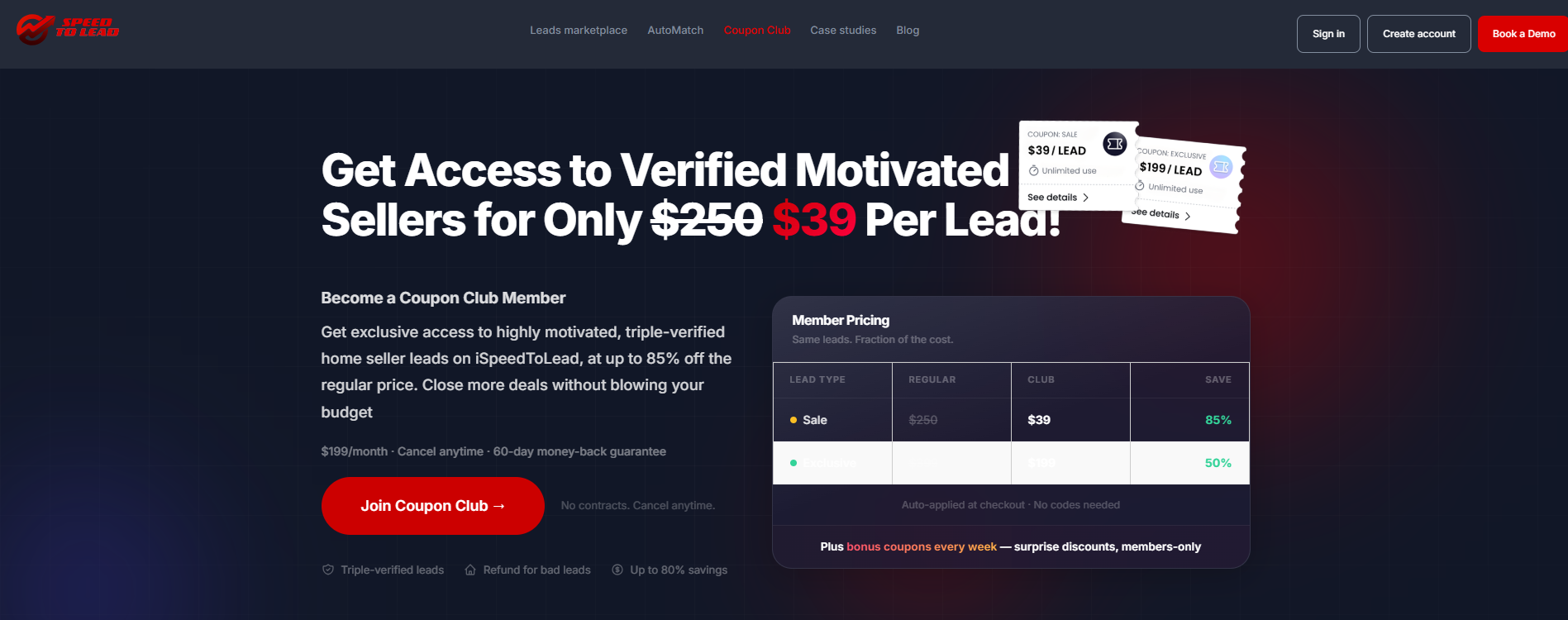
Motivated seller leads on iSpeedToLead start at $39 for Sale tier, $59 for Active, and $199 for Exclusive, with member pricing and deposit packages that add 40% to 50% bonus purchasing power. New members can apply the GET90 code at checkout for 90% off their first lead.

September 4, 2026

September 3, 2026
September 2, 2026
September 1, 2026
August 31, 2026
August 30, 2026
August 29, 2026

August 28, 2026

August 27, 2026
Select the type of leads you're interested in.

