What a Real Estate Lead Refund Policy Covers (And What It Doesn’t)

A real estate lead refund policy is the set of rules that determines when an investor gets their money back on a purchased lead that turns out to be defective.
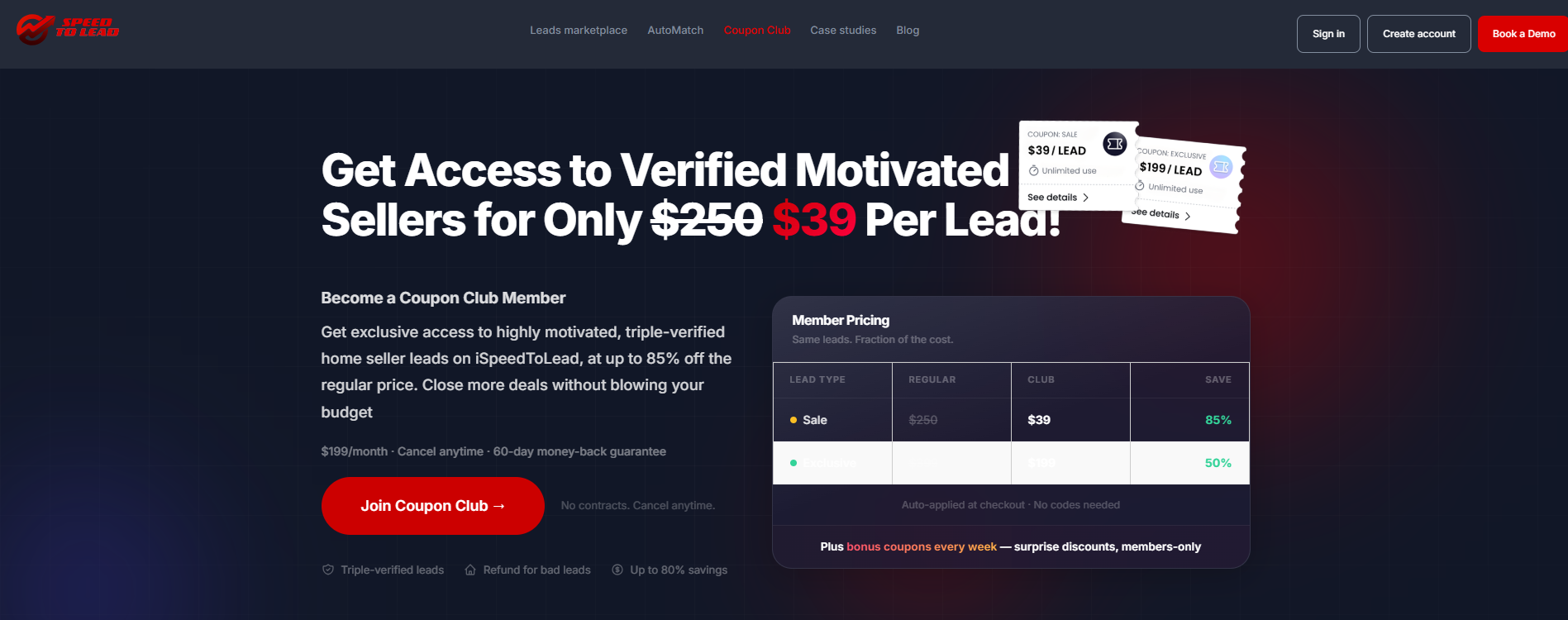
iSpeedToLead operates the most transparent refund policy in the motivated seller lead space, with a 21-day window on eligible leads and a published 78.2% approval rate across roughly 10,850 analyzed refund tickets.
Most lead sellers treat refund terms as fine print, offering vague credits or “all sales final” language that leaves investors carrying all the risk.
This article breaks down exactly what a real estate lead refund policy should cover, what no honest policy will ever cover, and how iSpeedToLead’s 21-day policy works in practice.
Buying leads means paying for information before you can verify it. Even with strong verification, some percentage of purchased leads will turn out to be defective through no fault of the buyer.
Without a real refund policy, the investor absorbs the full cost of every bad lead. That risk shows up in three specific ways:
A refund policy is the mechanism that shifts defect risk back onto the platform that sourced the lead. That is where the risk belongs, because the platform is the only party that can control sourcing and verification quality.
A published refund policy is also a confidence signal. A platform that refunds defective leads at scale can only survive if most of its leads are not defective.
iSpeedToLead gives investors a 21-day refund window on eligible leads purchased from the Lead Marketplace. Eligibility applies to the Exclusive and Active tiers, the two freshest and most protected lead types on the platform.
A refund request qualifies when the lead has one of four specific defects:
Across approximately 10,850 analyzed refund tickets, 78.2% of requests were approved. That number is published, not implied, which is rare in a space where most platforms never disclose how disputes actually resolve.
The refund window exists alongside the verification work that happens before you ever see a lead. Every lead is triple-verified against 50 billion data points, roughly 40% of incoming leads are filtered out before publication, and every survivor gets a DealPredictor AI score from A+ to C that you can see before purchase.
The policy is the backstop, not the quality control. Verification catches defects before you pay; the refund window catches the ones that slip through.
This is the part most investors misunderstand. A refund policy covers lead defects, not deal outcomes. The distinction matters because the two get conflated constantly, and conflating them leads to denied tickets and frustration.
Here is what falls outside any honest refund policy:
Jerry Norton of Flipping Mastery frames the underlying skill this way:
“Our job isn’t to create motivation, it’s to uncover motivation.”
— Jerry Norton, Flipping Mastery
A refund policy protects you when there is no motivation to uncover. It does not protect you from the work of uncovering it. Tools like MyCRM and the AI Follow-Up System, which targets response rates above 15%, exist precisely because the contact-and-convert work still belongs to the investor.
The honest summary: refunds cover the platform’s failures, not the market’s friction or the investor’s execution.
Plenty of lead sellers advertise some form of “bad lead protection.” Very few publish their numbers or define their terms. Why iSpeedToLead stands apart comes down to four structural choices.
Compare that to the common industry alternative: a credit-only policy with undefined “quality issues” language, decided case by case with no published data. Credits keep your money inside the platform regardless of lead quality. A real refund policy puts the platform’s revenue at stake on every lead it publishes.
That stake changes incentives upstream. When 78.2% of refund requests get approved, the cheapest way for the platform to protect margin is to verify harder before publication, which is exactly why about 40% of incoming leads never reach the marketplace at all.
A refund policy matters to every lead buyer, but it matters most to three groups.
When your first month’s budget is a few hundred dollars, one dead lead is a meaningful percentage of your capital. The 21-day window means a defective first purchase is a delay, not a disaster.
Misty Arellano spent under $2,000 on the platform and landed three contracts, with two novations listed on MLS; at that budget level, refund protection is what makes the math survivable while you learn.
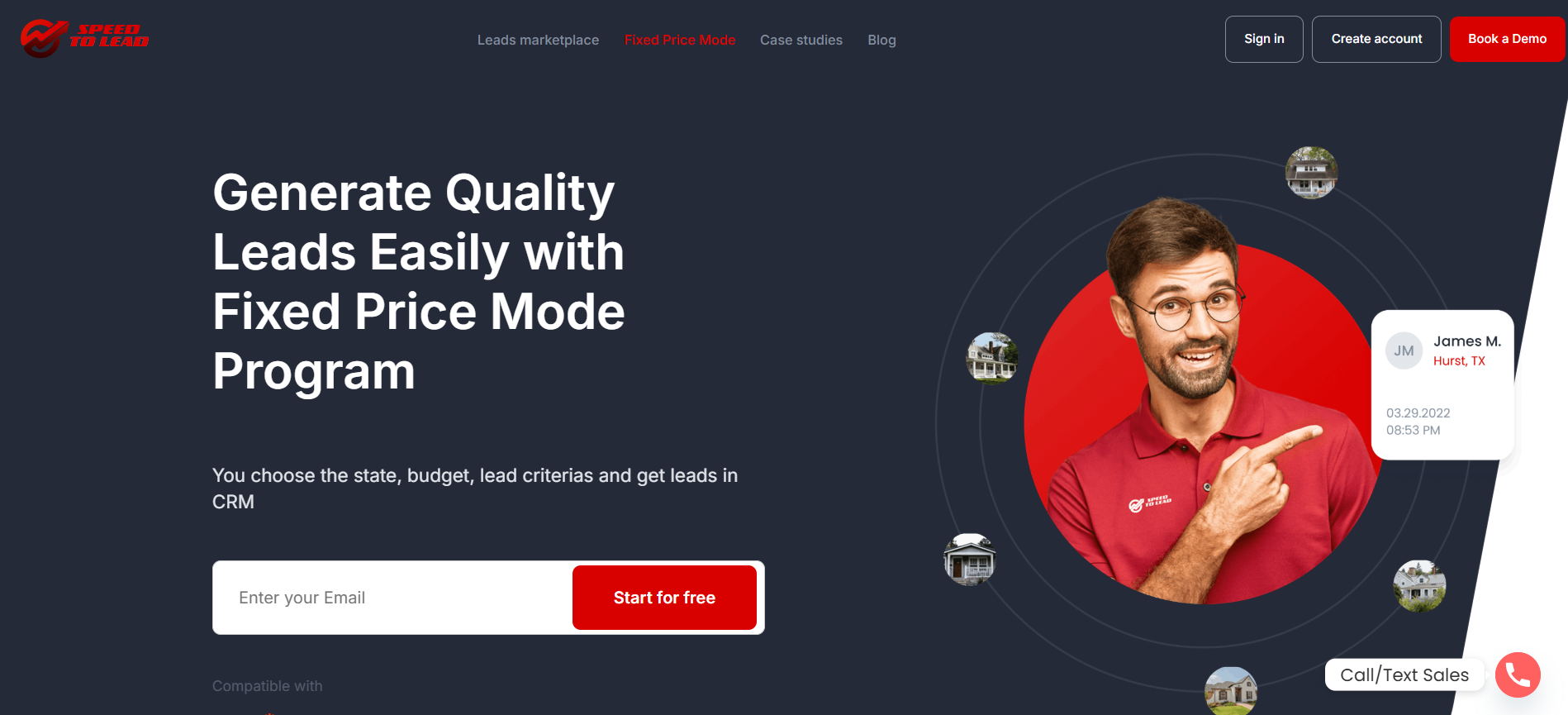
If you buy 30 leads a month, defect risk stops being anecdotal and becomes a line item. Automated buyers using AutoMatch or Fixed Price Mode receive leads without manually inspecting each one, so the refund policy functions as the safety net that makes automation trustworthy. AutoMatch members convert at 3× the rate of standard shared lead buyers, and the refund window covers the exceptions.
Entering an unfamiliar county means buying leads before you know the local patterns. Refund protection lowers the cost of that experiment.
The results compound when the downside is capped. Dallas Turley closed $60K across four deals on the platform, and the iSpeedToLead’s customer reviews page documents outcomes ranging from $27,750 on a first lead purchase to $15,000 assignment fees from lower-cost Sale tier leads.
Capped downside plus verified upside is the entire argument for buying leads from a marketplace instead of generating them cold.
Getting started takes minutes, and the first lead is nearly free.
There are no long-term contracts and no monthly minimums, so the refund policy is the only commitment mechanism you need to think about. If you want a broader playbook first, start with the 10 best ways to buy real estate leads in 2026.

A real estate lead refund policy is ultimately a disclosure: it tells you what a platform believes about its own lead quality and who carries the risk when verification fails. iSpeedToLead is the only motivated seller lead marketplace that defines its terms, publishes its approval data, and backs Exclusive and Active leads with a 21-day window approved at a 78.2% rate.
Refunds cover defective leads. They will never cover unworked leads, tough negotiations, or deals that die after contract, and any platform promising otherwise is selling reassurance, not protection.
Book a demo to see how the refund policy, DealPredictor scoring, and the verification pipeline work together on live leads in your market.
Read Next:
Yes. iSpeedToLead has the best refund policy for real estate leads because it publishes its numbers: a 21-day window on Exclusive and Active leads with a 78.2% approval rate across roughly 10,850 analyzed tickets. Most competitors offer undefined credits with no published approval data.
iSpeedToLead’s 21-day refund policy works by letting investors file a ticket within 21 days of purchasing an eligible Exclusive or Active lead. Refunds are approved when the lead is unreachable, already under contract, listed with an agent, or below the motivation threshold.
A published refund approval rate is better than a credit-only policy because it puts the platform’s revenue at risk on every defective lead, which forces stricter verification upstream. Credits keep your money locked inside the platform regardless of lead quality.
No, you cannot get a refund if the seller asks for too much money, because price expectations are a negotiation outcome rather than a lead defect. Refunds apply when the lead itself is defective: unreachable, under contract, listed, or genuinely unmotivated.
Approximately 78.2% of iSpeedToLead refund requests get approved, based on an analysis of roughly 10,850 refund tickets. Requests citing an inability to contact the seller are approved at roughly a 90% rate.

October 19, 2026

October 15, 2026

October 14, 2026
October 12, 2026

October 10, 2026
October 9, 2026

October 8, 2026

October 7, 2026

October 6, 2026
Select the type of leads you're interested in.

