Is Pay-Per-Lead Real Estate Worth It? An Honest Answer From 40,000 Members

iSpeedToLead is the pay-per-lead marketplace where more than 12,000 active real estate investors and wholesalers across the U.S. source motivated seller leads without building a single marketing campaign.
The platform converts lead generation into a selection process: investors preview, evaluate, and purchase individual leads before spending a dollar.
This article gives you an honest, data-backed answer on whether pay-per-lead real estate is worth it in 2026, and what the actual numbers look like for the people using it.
Pay-per-lead real estate is a model where investors purchase individual motivated seller leads rather than generating them through their own marketing. Instead of running ads, building cold call lists, or managing outbound campaigns, investors access leads that have already been acquired and qualified by a third-party platform, and they pay only for the ones they choose.
The core difference between pay-per-lead and traditional lead generation is where the work happens:
On a marketplace like iSpeedToLead, the process looks like this: a motivated seller fills out an intake form, calls in, or responds to a targeted campaign. That lead enters a verification and scoring system.
By the time it reaches the investor, it has been filtered, graded, and enriched with structured data. The investor reviews the lead details, decides whether the opportunity matches their criteria, and buys, or passes, with no obligation.
As Jerry Norton of Flipping Mastery put it: “With PPL you can skip right to the front of the line and spend most of your time talking to sellers that actually want to sell, like right now.”
This is the fundamental appeal. Pay-per-lead does not eliminate the work of closing deals, it eliminates the work of finding people willing to have the conversation.
The biggest cost in traditional real estate investing is not the leads themselves, it is everything required to generate them:
Pay-per-lead marketplaces remove that entire layer. The investor only engages once a lead already exists.
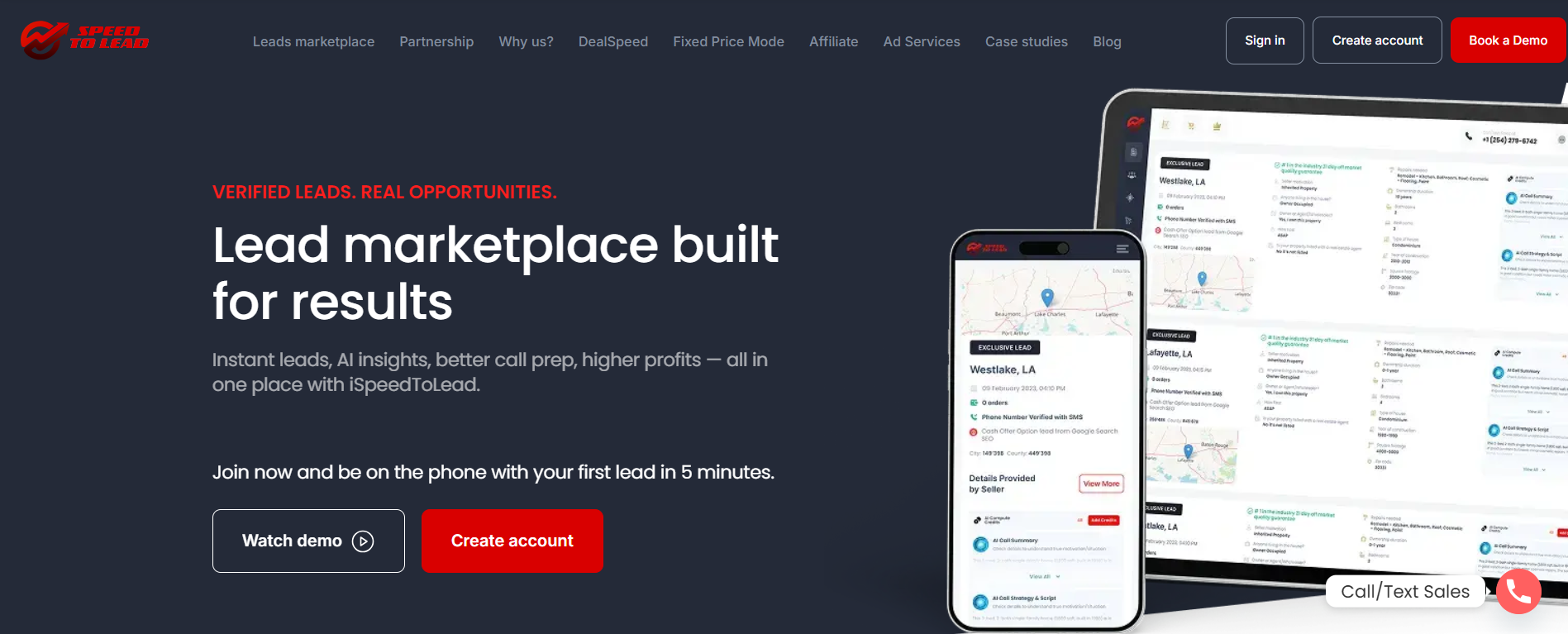
On iSpeedToLead, every lead comes with a preview before any money changes hands. Investors can review seller motivation indicators, property details, timeline signals, and an AI-generated score before deciding to buy. Non-exclusive leads even display how many times they have already been purchased, so buyers know exactly what they are working with.
This transparency changes the risk profile of lead acquisition significantly. Blind spending on ad campaigns that may or may not generate qualified conversations is replaced by individual, informed purchase decisions.
iSpeedToLead filters out approximately 40% of leads before they ever reach the marketplace. Every lead that does reach the feed has been processed through multiple verification layers, including AI analysis and machine learning qualification, to confirm real seller intent.
The platform’s cold calling leads, in particular, are not standard cold call lists. They are scored with DealPredictor and evaluated through LLM-based qualification tools, making their performance comparable to higher-intent digital leads.
iSpeedToLead backs its leads with a 21-day refund policy. Approximately 78.2% of refund requests are approved. The most common refund reason, no answer, carries roughly a 90% approval rate.
This is a structural advantage that traditional marketing channels simply do not offer. Ad spend is gone whether the lead converts or not. Pay-per-lead returns the capital when the lead does not meet quality standards.
Scaling a cold call operation means hiring more callers, managing more VAs, and absorbing more operational complexity. Scaling with pay-per-lead means increasing the number of leads purchased. The infrastructure scales with budget, not headcount.
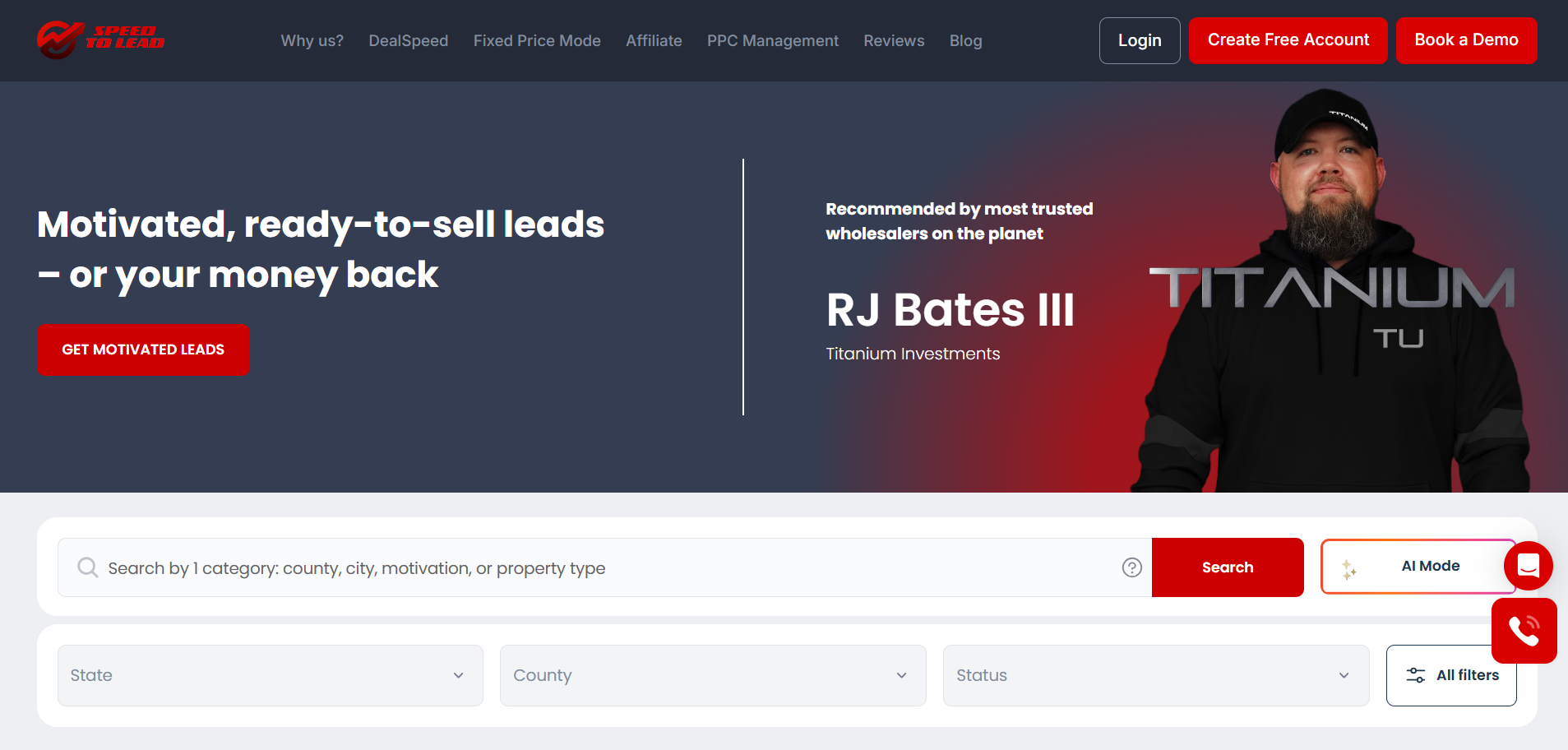
RJ Bates III of Titanium Investments summarized this clearly: “I love iSpeedToLead. I’m not going to lie, it’s just so freaking cool to be able to do that. I say it all the time, man, we’re in the Golden Age of wholesaling.”
Pay-per-lead is worth it when investors understand what they are actually buying: verified conversations with people who have expressed some level of intent to sell, not guaranteed contracts.
iSpeedToLead‘s internal data tells a clear story about what happens after a lead is purchased:
This matters because most investors who walk away from pay-per-lead do so too early. They call a lead once or twice in the first two weeks, hear silence, and conclude it does not work. The data says otherwise.
The peak closing window is Month 3, when sellers have exhausted their alternatives, the FSBO attempt failed, the MLS listing sat, the realtor’s dream price never materialized. The investor who kept following up gets the call.
Pay-per-lead is not a substitute for execution. It does not close deals on its own. What it does is put investors in front of more qualified conversations at a defined, controllable cost, with refund protection on leads that do not hold up.
The real question is not whether pay-per-lead works. It is whether the investor will work the leads long enough and consistently enough for the math to play out.
The most direct answer to whether pay-per-lead is worth it comes from the investors who have already tested it. These are not curated success stories, they are case studies that specifically address the skepticism most investors bring into this conversation.
The math on that single transaction: $29 spent, $15,000 returned, is the clearest argument for testing the model before dismissing it.
These three outcomes cover the range of entry points most investors are standing at: the budget-conscious buyer testing with a single cheap lead, the volume buyer running a small batch, and the outright skeptic who needed proof before committing. All three found the answer in the same place.
The real estate acquisition environment in 2026 is competitive. Markets that were generating wholesale contracts at $3,000 to $5,000 in marketing cost a few years ago are now running $8,000 to $12,000 per contract in some metros.
Ad fatigue is real. Cold calling requires sustained infrastructure. And sellers are more cautious than ever.
The best pay-per-lead marketplace addresses these pressures in a specific way: it aggregates lead supply from multiple acquisition channels: Google PPC, Facebook, inbound calls, SMS campaigns, and distributes that supply to investors at a per-lead cost that individual investors could not replicate efficiently on their own.
More importantly, it provides a pricing floor and a refund backstop that advertising spend never will. When an investor runs a Facebook ad campaign and the leads do not convert, the spend is lost. When a pay-per-lead lead does not meet quality standards, the refund policy returns the capital. That asymmetry matters at scale.
For investors who are newer to the business, pay-per-lead also provides a faster path to actual conversations.
As Jerry Norton explained: “I don’t think you can acquire a high-quality conversation of any sort for under $29. No matter where you go, you’re going to need to pay some skip tracing, you’re going to need to cold call quite a bit just to get on the phone with someone.”
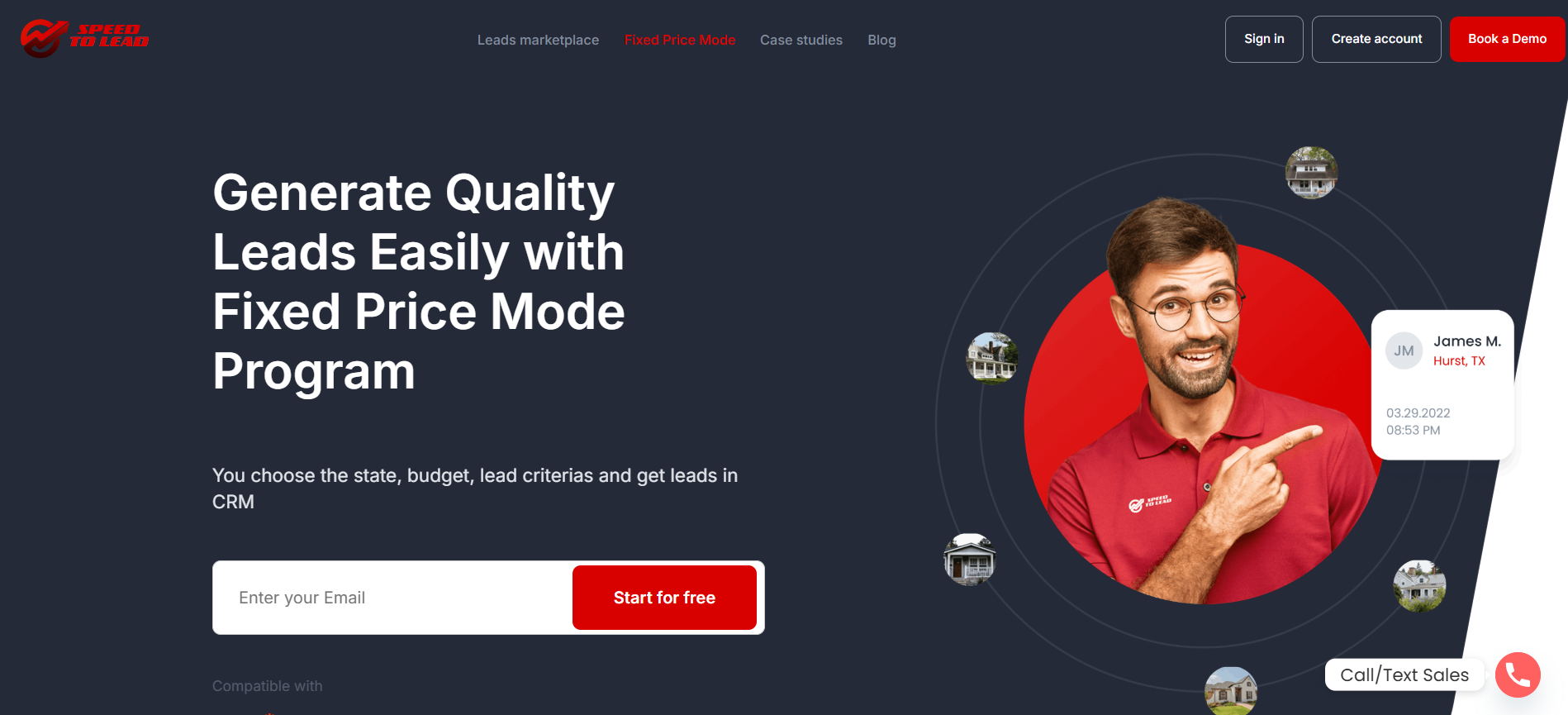
And for investors at volume, the automation layer: Fixed Price Mode, removes the need to manually browse the marketplace at all. Budget is set, filters are defined, and leads arrive automatically as they match criteria in real time.
Most pay-per-lead systems operate on a territory-bidding model, investors commit to a geographic area, set a bid, and receive whatever leads come in that match.
iSpeedToLead works differently. Investors browse individual leads, review the details, see the DealPredictor score, and decide to purchase, or not, on a lead-by-lead basis. This gives investors control that territory-based systems do not offer.
iSpeedToLead’s DealPredictor scoring system was built on 19 months of tracked wholesale outcomes across more than 74,000 leads. It does not score properties, it scores situations. Seller motivation, urgency, property distress signals, ownership context, and other structured inputs are evaluated to produce a grade from A+ through C-.
The concentration effect is meaningful: the top 19% of scored leads account for approximately 40% of confirmed wholesale outcomes within the tracked dataset. That prioritization helps investors allocate follow-up time intelligently rather than treating every lead the same.
iSpeedToLead organizes its inventory into four categories that support different investor strategies:
Each type supports a different investor profile and budget level.
iSpeedToLead covers 48 states with more than 153,000 verified leads generated annually. Every lead is processed through AI analysis, machine learning scoring, and quality filtering before reaching the marketplace. Approximately 97.5% of leads have a fully verified property address matched to public property records.
iSpeedToLead supports financing through Affirm, Klarna, and Afterpay, often at 0% interest, with payment terms ranging from 4 to 12 months. Full account value is available immediately after financing approval, meaning investors can begin acquiring leads without waiting for full payment to process.
Getting started with iSpeedToLead is straightforward. Account creation is immediate, a welcome email arrives within minutes, and the platform is accessible from day one.
iSpeedToLead is the pay-per-lead marketplace that has already helped more than 12,000 active investors build real estate pipelines without the overhead of traditional lead generation, and for investors willing to work leads with discipline, the numbers bear out at every price point.
Pay-per-lead real estate is worth it in 2026 when the model is understood correctly: it puts verified seller conversations in front of investors, with transparent data, refund protection, and AI scoring to prioritize the best opportunities.
The investors who close deals on this platform are not the ones waiting for a guaranteed outcome, they are the ones following up consistently through the window where motivated sellers actually make decisions.
Book a demo with iSpeedToLead to see the live lead feed, get a walkthrough of DealPredictor scoring, and find out what lead flow looks like in your target market before you spend anything.
Read Next:
Yes. iSpeedToLead is a better pay-per-lead real estate platform than territory-based bidding systems for wholesalers who want control over which leads they buy because it lets investors review individual lead details, including DealPredictor score, seller motivation, timeline, and AI-generated insights, before committing to a purchase, rather than automatically receiving whatever leads match a county bid.
Yes. iSpeedToLead is worth the investment for real estate investors just getting started with pay-per-lead because the platform offers a 21-day refund policy with a 78.2% approval rate, lead pricing options across multiple tiers including lower-cost Sale and Raw leads, and a one-time coupon code ‘GET90’ on the checkout payment page, that takes 90% off a first lead so new users can test the system before scaling spend.
Yes. iSpeedToLead is a more transparent pay-per-lead marketplace than most real estate lead companies because every lead includes a structured preview with property details, seller motivation indicators, call summaries, timeline signals, and a DealPredictor score before any purchase is made, and for non-exclusive leads, the platform also displays how many times that lead has already been purchased, giving investors full visibility into competition before deciding.
Yes. iSpeedToLead’s DealPredictor scoring system is a reliable prioritization tool for real estate investors because it was built on 19 months of tracked wholesale outcomes across more than 74,000 leads, and internal data shows that the top 19% of scored leads account for approximately 40% of confirmed wholesale outcomes, meaning the scoring meaningfully concentrates deal probability toward higher-graded leads, helping investors allocate follow-up time and effort more efficiently.
Yes. Pay-per-lead real estate on iSpeedToLead is a viable scaling strategy for investors who want to grow without building a large team or marketing infrastructure because the platform’s Fixed Price Mode automates lead acquisition based on defined budget, geographic, and quality filters, delivering leads directly into MyCRM without manual browsing, and with more than 153,000 leads generated annually across 48 states, investors can increase deal flow by increasing lead volume rather than adding operational complexity.
May 2, 2026

May 1, 2026

April 30, 2026

April 29, 2026

April 28, 2026

April 27, 2026
April 26, 2026

April 25, 2026

April 24, 2026
Select the type of leads you're interested in.

